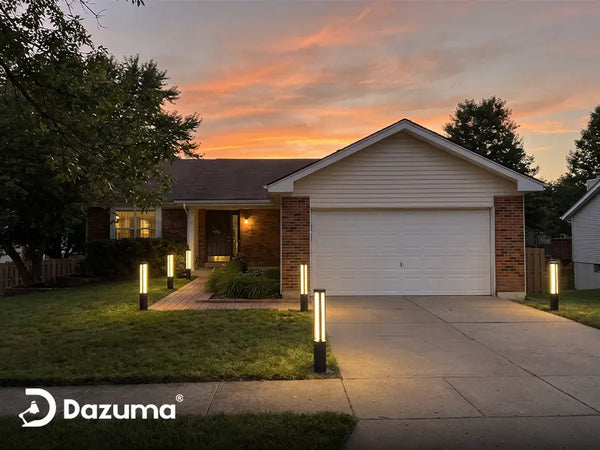

Who This Is For: This guide is for homeowners who are planning a front walkway, updating curb appeal, or trying to make the walk from driveway to front door feel safer and more welcoming at night. If you are choosing between low voltage path lights and solar path lights and you are not sure which one will actually work better once it is installed, this is written for you.
Low Voltage Vs Solar Path Lights: Why This Choice Feels So Confusing
Front walkway lighting sounds simple until you actually start shopping. You see solar lights that promise easy installation with no wiring. Then you see low voltage path lights that look more permanent, brighter, and more professional. One option feels convenient. The other feels more reliable. The hard part is knowing which one will make your home feel better every night, not just look good in a product photo.
As a lighting consultant, I usually tell homeowners to start with the problem they are trying to solve. Are you trying to keep guests from missing a step, make the path feel warmer, or add a more finished look from the street? The answer depends on how the walkway is used, how much sun it gets, and how polished you want the lighting to feel at night.
For a front walkway that needs steady brightness every night, low voltage path lights are usually the stronger long-term choice. For a simple, no-wiring update in a sunny location, solar path lights can be practical and charming. The goal is not to make every homeowner choose the same system. The goal is to choose the one that will not disappoint you after the first rainy week, cloudy stretch, or dark winter evening.

Quick Answer: Which Works Better For Front Walkways?
Low voltage path lights usually work better for front walkways when you care about consistent brightness, reliable performance, and a more finished curb appeal look. They connect to a transformer and wiring system, so they are not dependent on daily sun exposure. That matters if your walkway is shaded by trees, faces north, gets cloudy winters, or needs to look polished every night.
Solar path lights work better when you want the easiest installation, lower upfront effort, and flexible placement without running wire. They are best for sunny walkways, garden edges, casual paths, rental homes, or areas where you want a soft decorative glow rather than dependable task lighting.
A helpful way to think about it is this: low voltage is a lighting system; solar is a convenient lighting solution. If your walkway is the main route for guests, kids, older family members, or deliveries, dependable lighting matters. If porch lights already cover the path and you only want a gentle accent, solar may be enough.
What You Are Really Comparing: Power, Placement, And Nighttime Trust
The biggest difference between low voltage and solar path lights is not style. You can find attractive options in both categories. The real difference is how each light gets power, and that affects almost everything else: brightness, runtime, maintenance, installation, and where you can place the fixture.
Low voltage path lights use a transformer and outdoor-rated wire to power each fixture. This setup takes more planning, but it gives you more control. You can place lights where the walkway needs visibility, not only where the sun happens to hit. It also works well with broader Path Lights layouts along a walkway, garden bed, or front entry approach.
Solar path lights store energy from sunlight during the day and use that stored energy at night. That makes them wonderfully simple. No trenching. No transformer. No electrician for basic stake-in models. But the light output depends heavily on sun exposure, panel quality, battery condition, season, and shade from plants or the house itself. This is why a solar light that looks bright in June can feel weak in December.

Start With The Walkway, Not The Product
Before choosing a light, walk your front path at night. Notice where people slow down, where the path curves, where steps begin, and whether porch light already covers part of the route. Those observations will tell you more than product photos.
The phrase I use with clients is “nighttime trust.” Do you trust the lights to turn on, stay bright, and guide people clearly? Low voltage usually wins that test. Solar can win convenience, flexibility, and simplicity. The right choice depends on which kind of trust your front walkway needs.
Low Voltage Path Lights: Best When You Want Consistent Front Walkway Lighting
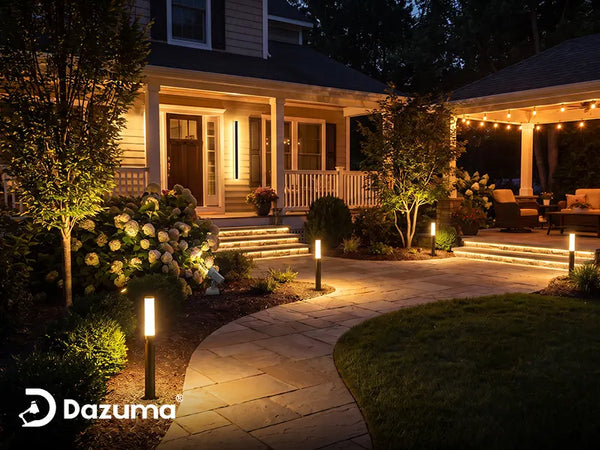
Low voltage path lights are often better for a true entry path. If guests park on the street, your path has steps or curves, or the house sits back from the driveway, you want lighting that feels intentional and predictable.
The main benefit is consistency. Because these lights are wired, they are not waiting for a sunny day to recharge. The look also feels more architectural when fixtures are spaced evenly and the light points downward instead of into people’s eyes.
There is one detail many first-time homeowners miss: wire length and voltage drop. On longer runs, lights at the end of the line can appear dimmer if the wire gauge, transformer size, or layout is not planned correctly. This does not mean low voltage is difficult, but it does mean the system should be thought through. If you are lighting a short, straight front walkway, it is usually simple. If your layout wraps around a long garden bed or driveway, read a planning guide such as How to Plan Low Voltage Landscape Lighting for Beginners before buying everything.
A Low Voltage Style For Polished, Reliable Walkways
For homeowners who want the front approach to look finished every evening, a hardwired low voltage path light can make the walkway feel more stable and designed. This type of fixture is especially useful when your front yard has mulch beds, stone edging, modern plantings, or a longer approach where soft solar lights may not feel strong enough.
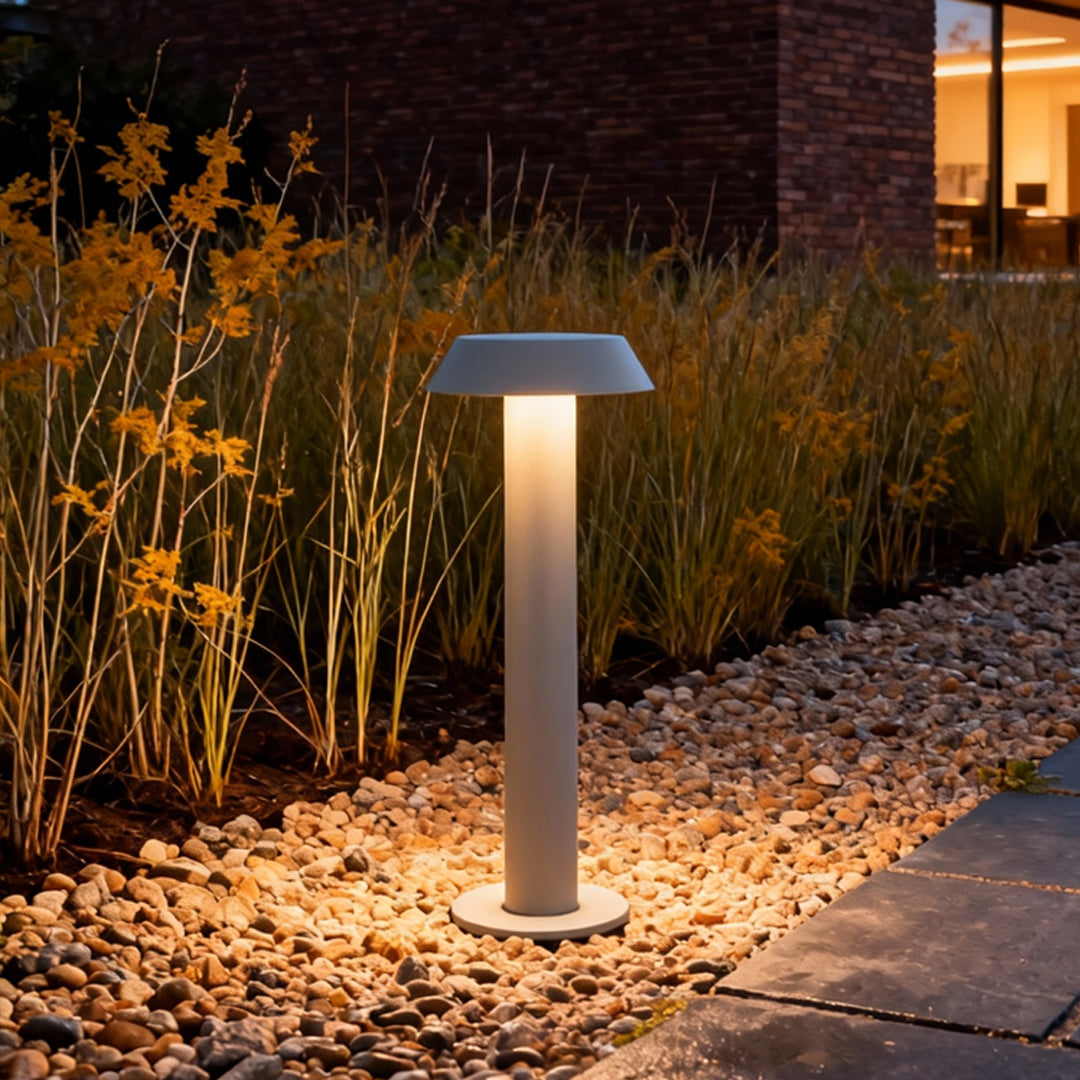
For steady front walkways
Path Lighting LED Outdoor Simple Waterproof Landscape Light
Price: $217.99
Best for front walkways, garden paths, and modern landscape edges where you want a more permanent lighting layout with reliable warm white illumination.
- Integrated LED design with warm white light for a clean residential walkway look.
- Available in Coffee and Gray finishes, with multiple height options for different path scales.
- Aluminum body, PC shade, and IP65 rating suit outdoor walkway and landscape use.
Low voltage is not always the quickest option, but it often feels better once the home is finished. For a larger front yard update, a cleaner architectural rhythm can make the whole entry feel more intentional.
Solar Path Lights: Best When You Want Simple, Flexible, No-Wiring Placement
Solar path lights are popular because they remove the part of outdoor lighting that makes many homeowners nervous. No wire, no transformer, no trenching along the planting bed. You can place them in an afternoon and see the difference after sunset.
For early-stage homeowners, this flexibility is valuable. Maybe the front yard is a rental, a temporary home, or a budget-conscious refresh before a bigger project. Maybe you simply want a warm glow, not a full landscape lighting system. In those situations, Solar Path Lights make sense.
The catch is that solar lights must be placed for sun, not only for beauty. A fixture tucked under a shrub may look perfect at noon but charge poorly. In real homes, the common frustration is uneven performance: one light is bright, one is dim, and one fades early because that corner gets less sun.
Solar Works Best Where The Sun Is Honest
If the front walkway gets direct sun for much of the day, solar lights can create a relaxed, friendly look with very little installation effort. If the path is shaded by the house, trees, or porch roof, be more cautious.

A Solar Style For Easy Curb Appeal Updates
If your main goal is to soften a sunny walkway without wiring, a solar set can be the most realistic starting point. It is especially useful when you want to test spacing, add charm near a lawn edge, or create a welcoming glow for guests without committing to a full wired layout.
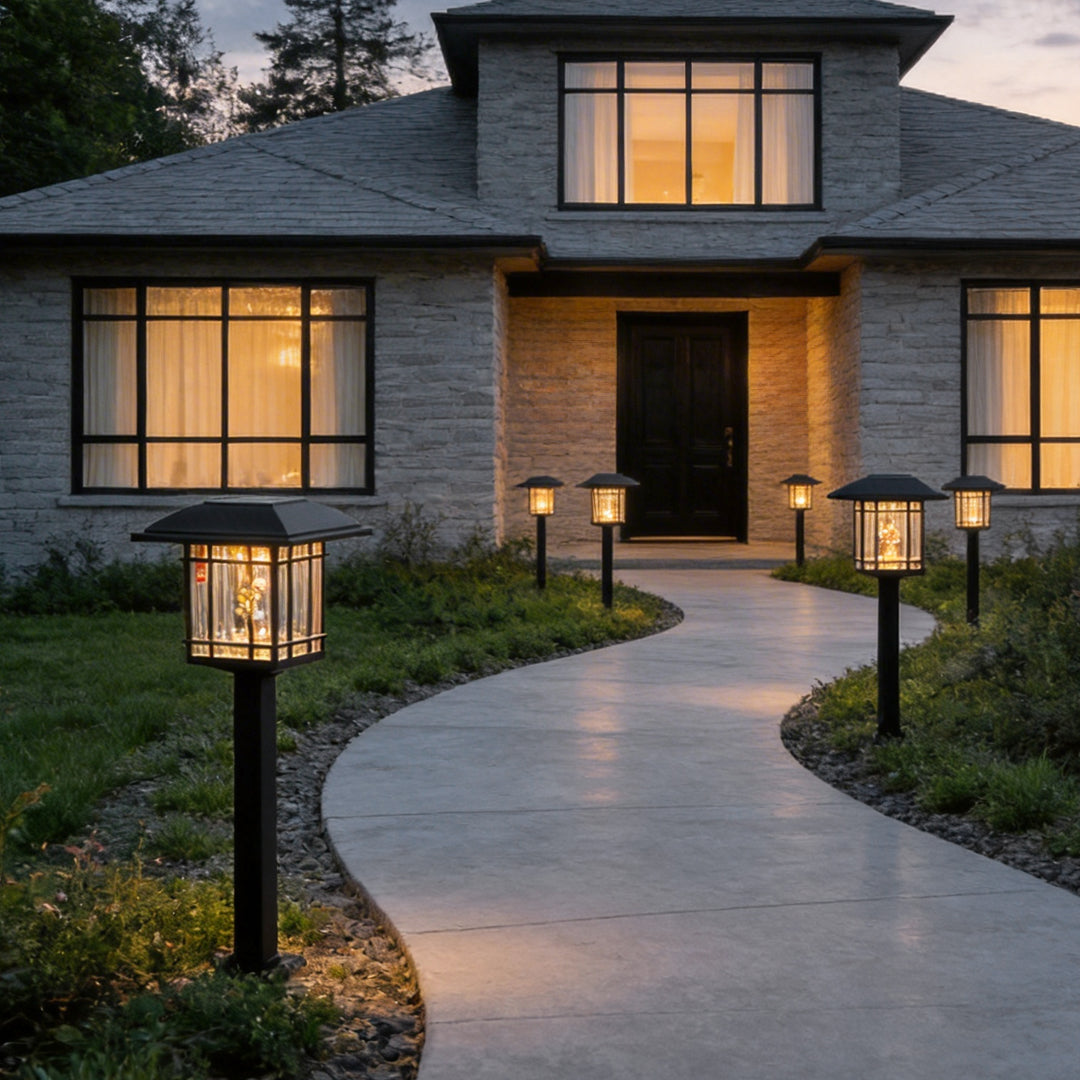
For sunny, no-wiring paths
2-PCS Solar Outdoor Lawn Lights Vintage Square Waterproof Lamp
Price: $88.99
Best for sunny front walkways, lawn edges, garden paths, and casual curb appeal updates where no-wiring installation is the main priority.
- Charges during the day and turns on at night without external wiring.
- Warm white light helps create a softer, more inviting entry path.
- Vintage square black design works well with lawn edges and front garden beds.
Solar path lights are also useful if you are still learning what your front yard needs. Try them for a season and you may discover where a permanent low voltage fixture would eventually make more sense.
Front Walkway Comparison: Low Voltage Vs Solar Path Lights
The table below is how I would explain the choice during an early design consultation. It focuses on real homeowner concerns, not just technical labels.
| Decision Point | Low Voltage Path Lights | Solar Path Lights |
|---|---|---|
| Best Use | Main front walkway, steps, long paths, polished landscaping | Sunny garden paths, casual accents, quick curb appeal updates |
| Brightness Reliability | More consistent night to night | Depends on sun exposure, battery, and season |
| Installation | Requires wire planning, transformer, and more careful layout | Simple stake-in placement with no wiring |
| Placement Freedom | Place for lighting need and visual balance | Place where the solar panel can receive enough sun |
| Maintenance | Check connections, fixture alignment, transformer settings | Clean solar panels, replace batteries over time, watch for shade |
| Long-Term Feel | More permanent and professionally designed | Flexible, easy, and decorative |
If you are comparing broader outdoor choices beyond the walkway, it may also help to read Solar Pathway Lights vs Wired: Honest Comparison 2026. The same basic principle applies: solar is convenient, while wired lighting is usually more consistent.
Where Each One Works Better Around A Real Front Walkway
Choose Low Voltage If Your Walkway Is The Main Route To The Front Door
If people actually depend on this path after dark, choose reliability first. A main front walkway is not the place where you want half the lights fading early. Low voltage is especially helpful if the walkway includes steps, uneven stone, a long curve, or a transition from driveway to porch. It also pairs better with professional Outdoor Lighting plans that include porch lights, wall lights, tree accents, or driveway lighting.

Main Entry Paths Need Rhythm
For a primary walkway, think of path lights like quiet guideposts. They should create a gentle rhythm toward the front door, not a runway or a row of harsh dots.
Choose Solar If You Want A Fast Upgrade For A Sunny Walkway
Solar is a smart choice when the path gets strong sun and the lighting goal is gentle guidance. It can be especially charming along lawns, flower beds, and informal garden walkways. I would not rely on solar alone for a steep front step or a dark side entrance unless you know the fixtures charge well in that specific spot.
Solar is also useful for homeowners who are still experimenting. You can test whether lights look better closer to the path, tucked into the garden bed, or staggered from side to side. Later, if you decide to install a permanent system, that experience helps you design it better.
Use Both If Your Front Yard Has Different Lighting Jobs
Some homes benefit from a hybrid approach: low voltage along the main walkway, then solar accents near a sunny flower bed or secondary path. Just keep the color temperature similar so the front yard does not feel mismatched.
A good rule is to keep front walkway lighting in the warm white family. Around 2700K to 3000K usually feels inviting for residential entries. If you are browsing Outdoor Solar Lights, check the listed color temperature so the glow does not clash with your porch light.
Mixing Systems Can Work
A main route can use low voltage for reliability, while a sunny side planting bed uses solar for decorative depth. The trick is keeping the brightness and color temperature visually related.

Common Mistakes That Make Front Walkway Lights Disappointing
Placing Solar Lights Where They Look Good During The Day But Charge Poorly
This is the most common solar mistake. A light can look perfectly placed under a shrub or beside a porch column, but if the panel is shaded, nighttime performance will suffer. Before final placement, watch the sun pattern for a day. In winter, expect less charging time.
Using Too Many Lights Too Close Together
More lights do not automatically make a walkway look better. Too many fixtures can create a dotted runway effect. For most front paths, the goal is to guide the eye and reveal the walking surface, not flood the yard. Start with key points: beginning of the path, curves, steps, and the final approach to the porch.
Ignoring Fixture Height
Short fixtures can work beautifully near narrow paths and low plantings. Taller fixtures may work better beside wider beds, deeper lawns, or taller ornamental grasses. The low voltage option above offers multiple heights, which is useful because a 13-inch light and a 35-inch light can create very different front yard impressions.
Forgetting About Maintenance Access
Path lights live near mulch, grass, irrigation, pets, delivery drivers, and snow shovels. Leave enough room to clean, adjust, and maintain them. With solar, wipe the panel occasionally. With low voltage, check that wires and connections stay protected and that fixtures remain upright after heavy rain or yard work.

Summary: The Better Choice Depends On How Much You Need To Trust The Light
For most front walkways, low voltage path lights are the better long-term choice when safety, consistency, and curb appeal matter. They take more planning, but they give you steadier light where the walkway actually needs it.
Solar path lights are better when you want an easy, no-wiring upgrade in a sunny area. They are flexible and often enough for soft decorative guidance. For a main walkway, treat solar as accent lighting unless you have tested the location and know it performs well.
My designer advice is simple: choose low voltage for the path people depend on, and choose solar for the areas where flexibility and charm matter more than perfect consistency. That approach gives you a front yard that feels both practical and welcoming.