
Who This Article Is For
This guide is for homeowners, remodelers, interior designers, and anyone asking, “what size ceiling light do I need?” It is especially useful if you are choosing a ceiling light for a living room, bedroom, dining room, kitchen, hallway, foyer, or open-concept space.
A ceiling light should do more than fill an electrical box. It should feel proportional to the room, provide enough usable light, clear the walking path, and support the design style you already have. That balance is where many buying decisions go wrong.
Introduction
Choosing ceiling light size sounds simple until the fixture is installed. A small light can make a room feel unfinished, even if the style is beautiful. A fixture that is too large can crowd the ceiling, lower the room visually, or make the furniture look underscaled.
In residential lighting design, I usually size ceiling fixtures by looking at four things together: room dimensions, ceiling height, furniture layout, and brightness needs. A 24-inch fixture can be perfect in one room and awkward in another. The difference is usually not the number on the product page. It is how that number interacts with the room.
To estimate ceiling light size, add the room length and width in feet, then use that number in inches as the approximate fixture diameter. A 12-by-14-foot room usually works well with a ceiling light around 26 inches wide, adjusted for ceiling height, furniture placement, and fixture depth.

The Basic Ceiling Light Size Formula
The easiest starting point is the length-plus-width rule:
Room Length In Feet + Room Width In Feet = Suggested Fixture Diameter In Inches
For example, a 10-by-12-foot bedroom gives you 22. That means a ceiling light around 22 inches wide is a practical starting point. A 12-by-14-foot living room gives you 26, so a 24-to-28-inch fixture will usually feel close to the right scale.
This formula works well for round chandeliers, flush mounts, semi-flush mounts, drum fixtures, and many decorative LED ceiling lights. It is less reliable for long dining tables and kitchen islands, where the furniture length matters more than the full room size.
If the room has an 8-foot ceiling, stay near the smaller side of the recommended range. If the room has a 10-foot ceiling, open sightlines, or oversized furniture, you can often size up without making the fixture feel too heavy.
For a faster estimate, use Dazuma’s lighting size guide and fixture calculator. It can help you estimate fixture diameter, hanging height, and brightness needs before you compare styles.
Ceiling Light Room Size Guide
If you are asking, “what size ceiling light do I need for this specific room?” use the table below as a practical room-by-room guide. These ranges reflect common U.S. residential spaces, not showroom ceilings.
| Room Type | Approx. Room Size | Suggested Fixture Diameter | Best Fixture Types |
|---|---|---|---|
| Hallway / Laundry Room | 50–100 sq ft | 12–18 in | Flush mount, compact LED ceiling light |
| Small Bedroom | 100–140 sq ft | 18–24 in | Flush mount, semi-flush mount |
| Standard Bedroom | 140–200 sq ft | 22–28 in | Semi-flush mount, small chandelier |
| Living Room | 180–300 sq ft | 24–36 in | Modern chandelier, large flush mount, LED ceiling light |
| Open-Concept Room | 300+ sq ft | 30–48 in or multiple fixtures | Statement chandelier, layered ceiling lighting |

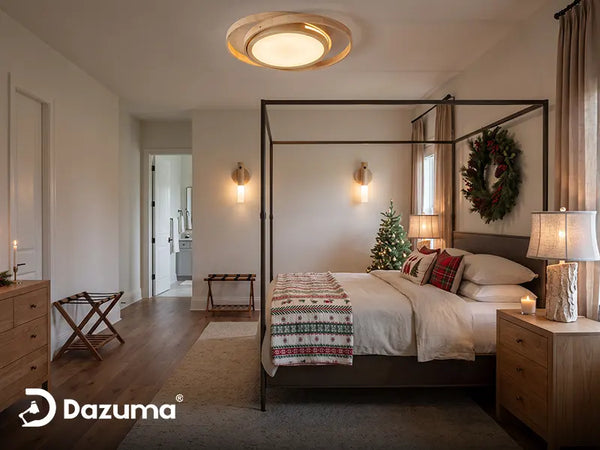
Bedrooms usually need a calmer ceiling light scale than living rooms. A 10-by-12-foot bedroom may calculate to a 22-inch fixture, but if the ceiling is only 8 feet high, a flush mount or low-profile semi-flush fixture often feels better than a hanging chandelier.
For low ceilings, browse flush mount ceiling lights. They work especially well in bedrooms, hallways, closets, laundry rooms, and small entries where walking clearance matters.
Ceiling Height And Clearance
Fixture width is only one part of the decision. Ceiling height controls how low the light can hang and whether the right choice is a flush mount, semi-flush mount, chandelier, or pendant.
For walk-through spaces, the bottom of the fixture should typically sit at least 7 feet above the floor. Over a dining table, kitchen island, bed, or coffee table, the fixture can hang lower because people are not walking directly underneath it.
| Ceiling Height | Recommended Fixture Style | Clearance Guidance |
|---|---|---|
| 7–8 ft | Flush mount or very low semi-flush | Keep the fixture close to the ceiling and avoid deep shades. |
| 8–9 ft | Semi-flush mount, compact chandelier, LED ceiling light | Leave about 7 ft of clearance in walkways. |
| 9–10 ft | Chandelier, pendant, larger semi-flush | Use more fixture height if the room feels tall or open. |
| 10+ ft | Statement chandelier or layered lighting | Scale up diameter and drop length for visual balance. |
For most U.S. homes with 8-foot ceilings, avoid deep chandeliers in bedrooms, hallways, and small living rooms unless the fixture hangs over a table or bed area. A fixture can look beautiful online but feel too low once it is installed.

If the fixture will hang over a dining table, table proportion matters as much as room size. A helpful rule is to keep the chandelier about 12 inches narrower than the table width. For deeper dining-room guidance, read how high a chandelier should be over a dining table.
Lumens And Color Temperature
A ceiling light can be the correct size and still fail the room if it does not provide enough usable light. Size affects proportion. Lumens affect brightness. Color temperature affects mood.
Living rooms usually benefit from layered lighting, so the ceiling fixture does not need to do every job. Kitchens, laundry rooms, bathrooms, and home offices need brighter task-friendly light. Bedrooms and dining rooms can be softer, especially when lamps, sconces, or dimmers are included.
| Room | Suggested Lumens Per Sq Ft | Recommended Color Temperature | Design Note |
|---|---|---|---|
| Bedroom | 10–20 | 2700K–3000K | Soft, relaxing light works best. |
| Living Room | 15–25 | 2700K–3000K | Use lamps or sconces for layers. |
| Dining Room | 15–25 | 2700K–3000K | Add dimming for meals and entertaining. |
| Kitchen | 30–50 | 3000K–4000K | Combine ceiling light with under-cabinet lighting. |
| Home Office | 30–50 | 3000K–4000K | Reduce shadows around desks and screens. |
Many homeowners buy a ceiling light based only on diameter. The fixture may look proportional but still leave the room dim. Always check lumen output, bulb type, wattage, or integrated LED specifications before deciding the size is right.
Warm white light usually feels better in bedrooms, dining rooms, and living rooms. Neutral white light can be useful in kitchens and offices where visibility matters. Very cool light can look harsh in relaxed spaces unless the interior is intentionally crisp and modern.
If you are comparing LED options, separate fixture size from light output. A larger fixture does not always mean brighter light, especially with decorative shades or low-output bulbs.

Which Fixture Type Fits Your Room?
The best ceiling light size also depends on fixture shape. A 26-inch flush mount and a 26-inch crystal chandelier will not feel the same. One sits close to the ceiling. The other adds depth, reflection, shadow, and visual weight.
Flush Mount Ceiling Lights
Flush mounts are the safest option for low ceilings, bedrooms, hallways, closets, laundry rooms, and small entries. If the room is compact, stay near the lower-to-middle side of the recommended diameter range.
Semi-Flush Mount Ceiling Lights
Semi-flush fixtures are useful for 8-to-10-foot ceilings. They add more character than flush mounts while still keeping the space practical.
Chandeliers
Chandeliers work well in dining rooms, living rooms, foyers, staircases, and open spaces. For clean contemporary interiors, explore modern chandeliers with simple lines, LED forms, and sculptural silhouettes.

For open living rooms, a modern ring chandelier can make the ceiling feel intentional without adding heavy ornamentation. This is especially helpful in homes with neutral walls, wide sofas, simple furniture lines, and black metal accents.
If you like a stronger architectural outline, black chandeliers can define the center of a room while pairing well with wood, stone, white walls, and black window frames.
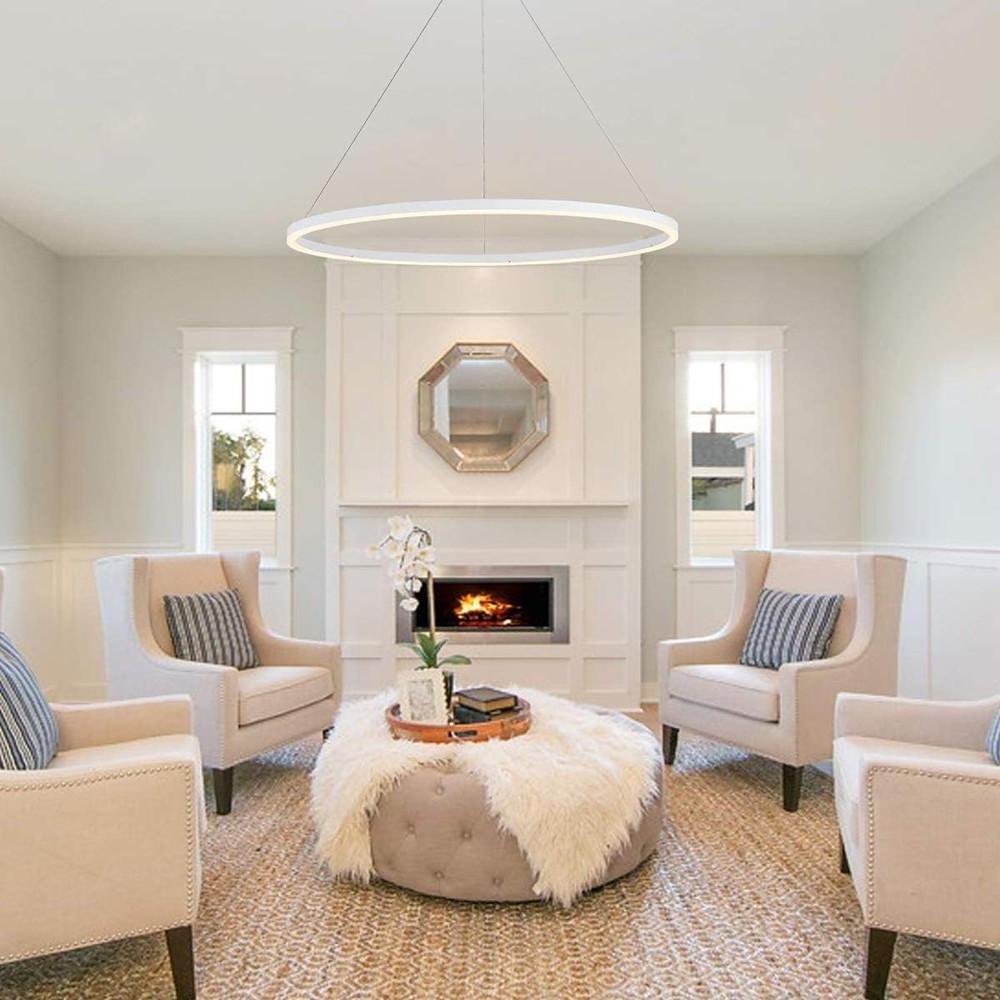
Black LED Ring Chandelier Modern Aluminum Ceiling Light
A slim, modern LED ring chandelier for living rooms, dining rooms, bedrooms, and open spaces where clean proportion matters.
| Sizes | 16'', 24'', 31'' |
| Finish Options | White, Black, Gold, Coffee |
| Light Source | Integrated LED with acrylic diffuser |
| Best For | Modern living rooms, dining tables, kitchen islands |
Real Room Examples
The formula gives you a starting point. Real rooms need a little judgment. Here is how I would apply a ceiling light room size guide in common home settings.
Example 1: A 12 x 14 Ft Living Room
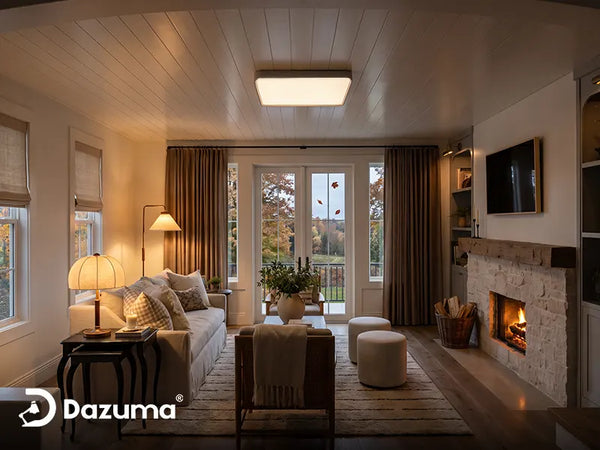
A 12-by-14-foot living room calculates to a 26-inch fixture. If the ceiling is 8 feet high, I would usually look at a 24-to-28-inch flush or semi-flush light. If the ceiling is 9 or 10 feet high and the room has a large sectional sofa, a 30-to-32-inch chandelier can work well.
This is a good place to browse broader ceiling lights, because the right solution could be a flush mount, chandelier, pendant, or LED ceiling fixture depending on the furniture plan.
In living rooms, do not center the ceiling light only by the room dimensions if the seating area is off-center. The fixture should usually relate to the main furniture grouping, not just the mathematical center of the ceiling.
Example 2: A 10 x 12 Ft Bedroom
For a 10-by-12-foot bedroom, the basic formula suggests a 22-inch ceiling light. If the room has a queen bed, two nightstands, and an 8-foot ceiling, a 20-to-24-inch low-profile fixture usually feels right. A fixture larger than 28 inches may feel visually heavy unless the room has a very simple design.
Example 3: A Dining Room With A 72-Inch Table
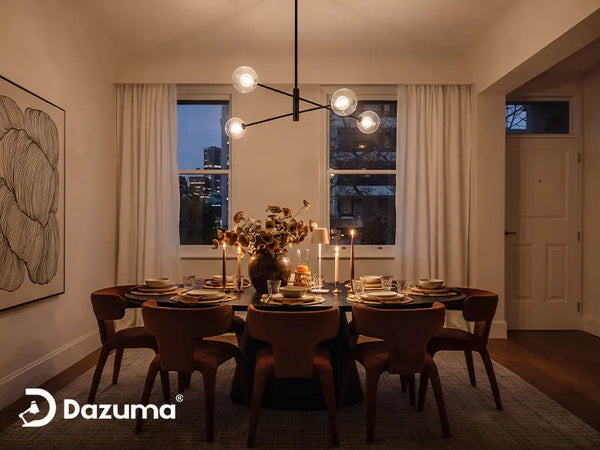
For a dining table that is 72 inches long and 38 inches wide, I would usually look for a round chandelier around 26 to 32 inches wide, or a linear fixture around 36 to 48 inches long. The chandelier should feel tied to the table rather than floating independently in the room.
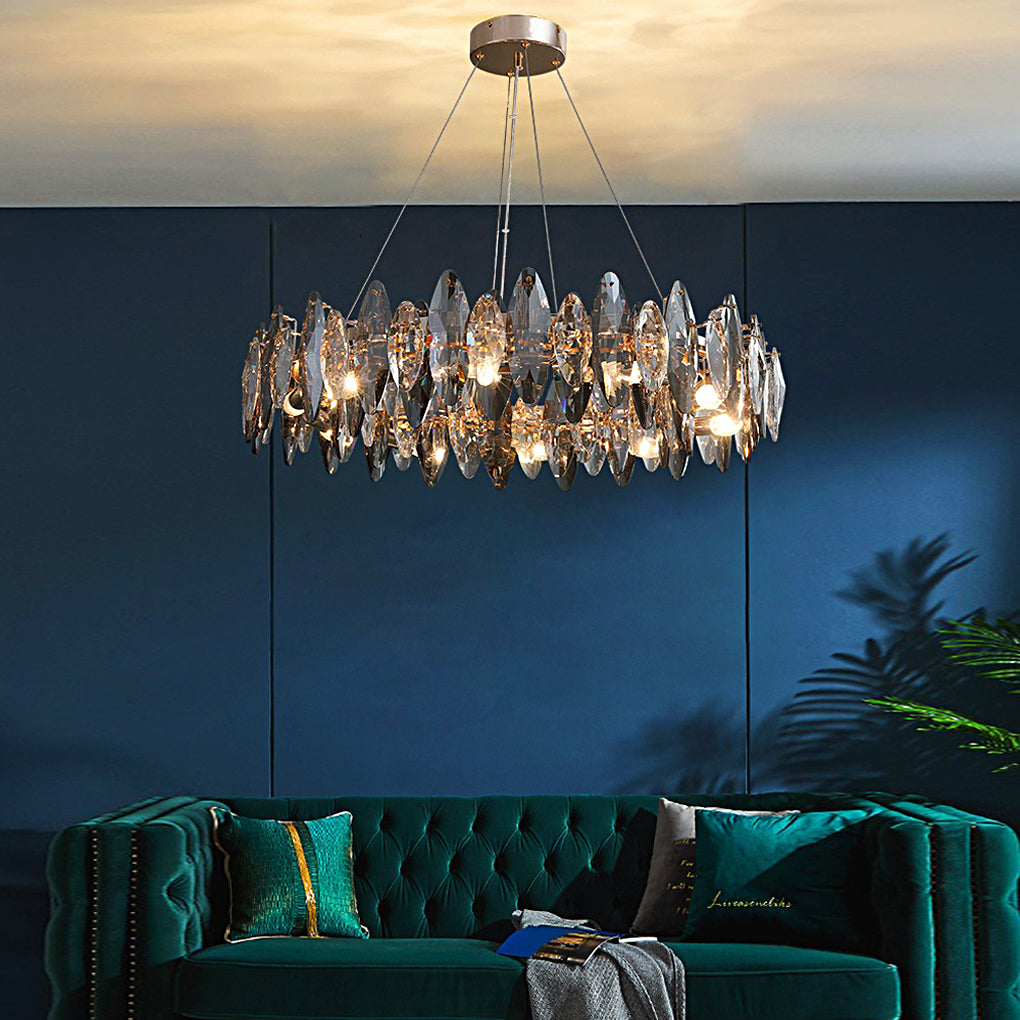
Round Iron LED Oval Crystal Decor Smoke Gray Modern Chandelier Light
A decorative crystal chandelier with strong visual presence for dining rooms, living rooms, foyers, bedrooms, and refined open spaces.
| Sizes | 20'', 24'', 31'', 39'' |
| Material | Iron and K9 crystal |
| Light Tone | Warm white 3000K |
| Best For | Dining rooms, living rooms, foyers, bedrooms |
If your room needs sparkle or a more decorative focal point, crystal chandeliers can add brightness and reflection, especially in dining rooms, formal living rooms, and foyers.
Example 4: Kitchen Or Breakfast Nook
In kitchens, ceiling light size depends on the work zones. A single central fixture may be enough for a breakfast nook, but a larger kitchen usually needs recessed lights, pendants, or under-cabinet lighting. For a small breakfast area, a 16-to-24-inch fixture often works. Over a kitchen island, choose pendants or a linear fixture based on island length and spacing.
For kitchen islands, avoid choosing pendants that are too wide for the countertop. Leave visual breathing room between each fixture and keep the outer pendants set in from the island ends.
A practical starting point is to hang pendants about 30 to 36 inches above the countertop, then adjust based on sightlines, shade depth, and family height.

Maintenance And Safety
Ceiling lights are long-term fixtures, so size is not the only practical issue. Think about cleaning access, bulb replacement, weight, dimmer compatibility, electrical box support, and whether the fixture is rated for the room where it will be installed.
For hardwired ceiling lights, turn off power at the breaker before installation or maintenance. If the fixture is heavy, oversized, or replacing an older electrical box, hire a licensed electrician to confirm the box is properly rated and securely mounted.

Large chandeliers, especially crystal or multi-ring designs, can weigh much more than basic ceiling lights. Before buying, check the product weight and confirm your ceiling box can support it. This matters most in dining rooms, foyers, vaulted ceilings, and older homes.
If your fixture uses integrated LEDs, review the color temperature, dimming type, and control method before installation. It is much easier to solve compatibility issues before the fixture is mounted.
Dust ceiling lights every few months with a dry microfiber cloth. For crystal chandeliers, clean gently in sections and avoid spraying cleaner directly onto electrical parts. In kitchens, wipe fixtures more often because cooking residue can reduce brightness over time.
If you are between two ceiling light sizes, choose the larger option for open rooms, high ceilings, and statement dining areas. Choose the smaller option for bedrooms, hallways, low ceilings, and rooms with several other light sources.
Final Thoughts
The best answer to “what size ceiling light do I need?” starts with room length plus room width, but the final decision should also include ceiling height, furniture placement, fixture depth, light output, and the feeling you want in the room.
For small rooms and low ceilings, stay close to the recommended size and choose a flatter fixture. For living rooms, dining rooms, and open spaces, you can often size up if the ceiling height and furniture layout support it. If the room needs one central design feature, a well-scaled chandelier can make the entire space feel more finished.
Use the formula, check your lumens, confirm your clearance, and compare a few styles before deciding. To continue planning, explore Dazuma’s indoor ceiling lights, or browse chandeliers if you want the ceiling fixture to become a true focal point.