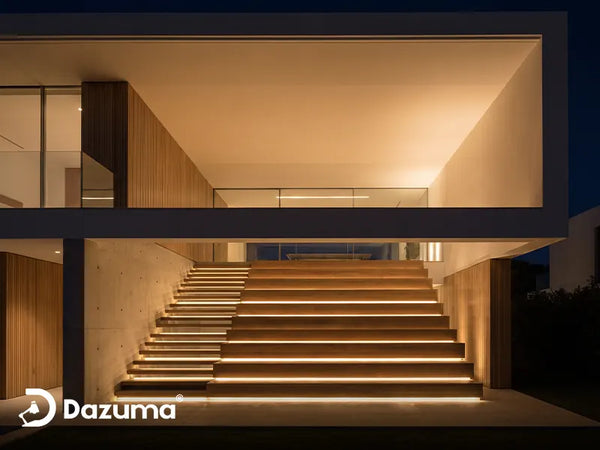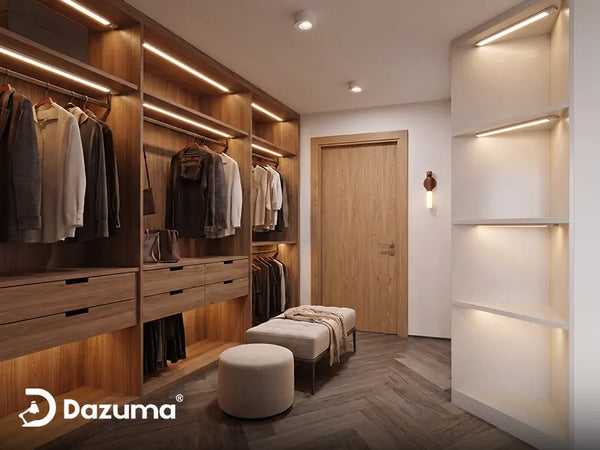

Who This Is For: This guide is for homeowners who have one dim, forgotten part of the backyard—a shadowy fence line, an unlit tree, a dark masonry wall, a side gate, or a planting bed that disappears after sunset. It will help you decide whether that corner needs broad wall washing, a focused spotlight, low-level path lighting, or a combination of layers.
Quick Answer
A dark backyard corner rarely needs the brightest fixture you can find. It needs the right light distribution. Use a wall wash light when the corner contains a fence, stone wall, retaining wall, or architectural surface that should appear wider and more inviting. Use an adjustable outdoor spotlight when you want to highlight a tree, sculpture, shrub group, or vertical garden feature. Add low-level path lighting only when people actually walk through the area.
For a comfortable result, light one or two surfaces instead of flooding the entire corner. Warm white light around 3000K usually feels natural near wood, stone, and plants. Aim beams away from seating positions, neighboring windows, and direct eye level. A well-lit corner should reveal depth and improve orientation without becoming the brightest part of the yard.
Homeowners comparing solutions can begin with the broader Outdoor Lighting collection, then narrow the choice according to the object being illuminated and whether reliable wiring is available.

Diagnose the Dark Backyard Corner Before Buying a Light
Walk outside after full darkness, not at dusk. Stand at the patio door, primary seating area, kitchen window, and any pathway that faces the corner. The problem may not be a lack of total brightness. It may be that the yard ends in a blank black surface, the path edge is hard to read, or a beautiful tree disappears at night.

Look From the Places You Actually Use
A fixture that looks subtle from the lawn may create glare from the dining table. Test the view from indoors as well. Backyard lighting is part of the nighttime interior view, so the corner should look composed from both sides of the glass.
Identify the Main Job
- Orientation: You need to see a gate, turn, step, or end of a path.
- Security awareness: You want to remove a deep visual void near a fence or access point.
- Architectural atmosphere: You want to reveal brick, stone, stucco, or a retaining wall.
- Landscape emphasis: You want to highlight a tree canopy, specimen shrub, sculpture, or planter.
- Outdoor living: The corner contains a bench, grill, table, or activity area that needs usable light.
Do not expect one decorative spotlight to perform all five jobs. Safety and task lighting need dependable coverage. Accent lighting is more selective. The best plans often use one accent layer and one quiet navigation layer rather than one oversized floodlight.
Which Outdoor Light Works Best for the Corner?
| Backyard Condition | Best Starting Fixture | Placement Approach | Watch Out For |
|---|---|---|---|
| Blank fence or masonry wall | Linear wall wash light | Place close enough to create a controlled vertical wash | Hot spots, exposed wiring, light spilling over the fence |
| Tree, tall shrub, or sculpture | Adjustable spotlight | Aim upward or across the feature from outside the main sightline | Beam entering windows or shining into people's eyes |
| Path or side gate | Low path or step light | Mark changes in direction and elevation | Too many fixtures creating a runway effect |
| Bench or grill area | Shielded task light plus ambient accent | Illuminate the work or seating surface from above or the side | Relying only on an uplight for usable illumination |
| No nearby electrical route | Solar spotlight | Position the panel in direct sun and aim the head independently | Shaded charging location and seasonal runtime changes |
Use Wall Wash Lighting When the Corner Ends at a Broad Surface
A dark wall makes a backyard feel smaller because the eye cannot read where the space ends. A linear wash reveals that boundary and can make the corner feel intentionally designed. It is especially effective on textured stone, board-formed concrete, brick, stucco, or a retaining wall with planting in front.
Unlike a narrow spotlight, a long wall washer distributes light across a broader section. That reduces the number of isolated bright circles and creates a continuous backdrop. Browse Wall Wash Lighting when the wall itself is the main nighttime feature. The guide What Is a Wall Washer Light Fixture? A Homeowners’ Guide explains the basic effect in more detail.

Best for Stone Walls and Fence Lines
LED Strip Lights on Wall Outdoor Waterproof Lights
Price Shown: $128.99
Best for a backyard corner where a long wall, retaining wall, or architectural surface needs an even warm-white backdrop.
- The 6063 aluminum housing and tempered-glass cover are specified for outdoor use.
- The fixture is approximately 39.21 inches long and produces a uniform linear light effect.
- It requires a DC24V transformer, and the product page states that the transformer is not included.
Place a linear washer where it can illuminate the wall without becoming a trip hazard or an exposed object in the planting bed. The best distance from the wall depends on beam distribution, wall texture, and the effect you want. Very close placement emphasizes texture and can create stronger shadows. Moving the light farther away usually produces a broader, softer wash. Test the effect temporarily before final installation.
Use Texture to Make the Corner Feel Deeper
Light placed near stone or brick reveals small shadows that disappear during the day. That texture gives the eye something to read and makes the far edge of the yard feel richer without adding excessive brightness.

Use an Adjustable Solar Spotlight for Trees, Shrubs, and Remote Corners
A solar spotlight is useful when the dark corner contains a single focal object and running cable would be disruptive or expensive. It can highlight a small tree, tall grass, sculpture, planter, or garden wall feature. Because the beam is adjustable, you can aim the light independently from the solar panel instead of choosing between good charging and good illumination.
The key limitation is sunlight. A dark nighttime corner may also be a shaded daytime corner. Place the solar panel where it receives direct sun, even when the lamp head points toward a shaded feature. Before choosing from a Solar Spotlight collection, observe how nearby trees, fences, and the house shade the area from morning through afternoon. The article Do Solar Lights Need Direct Sunlight? An Actual Guide for Shaded Homes is helpful when charging conditions are uncertain.
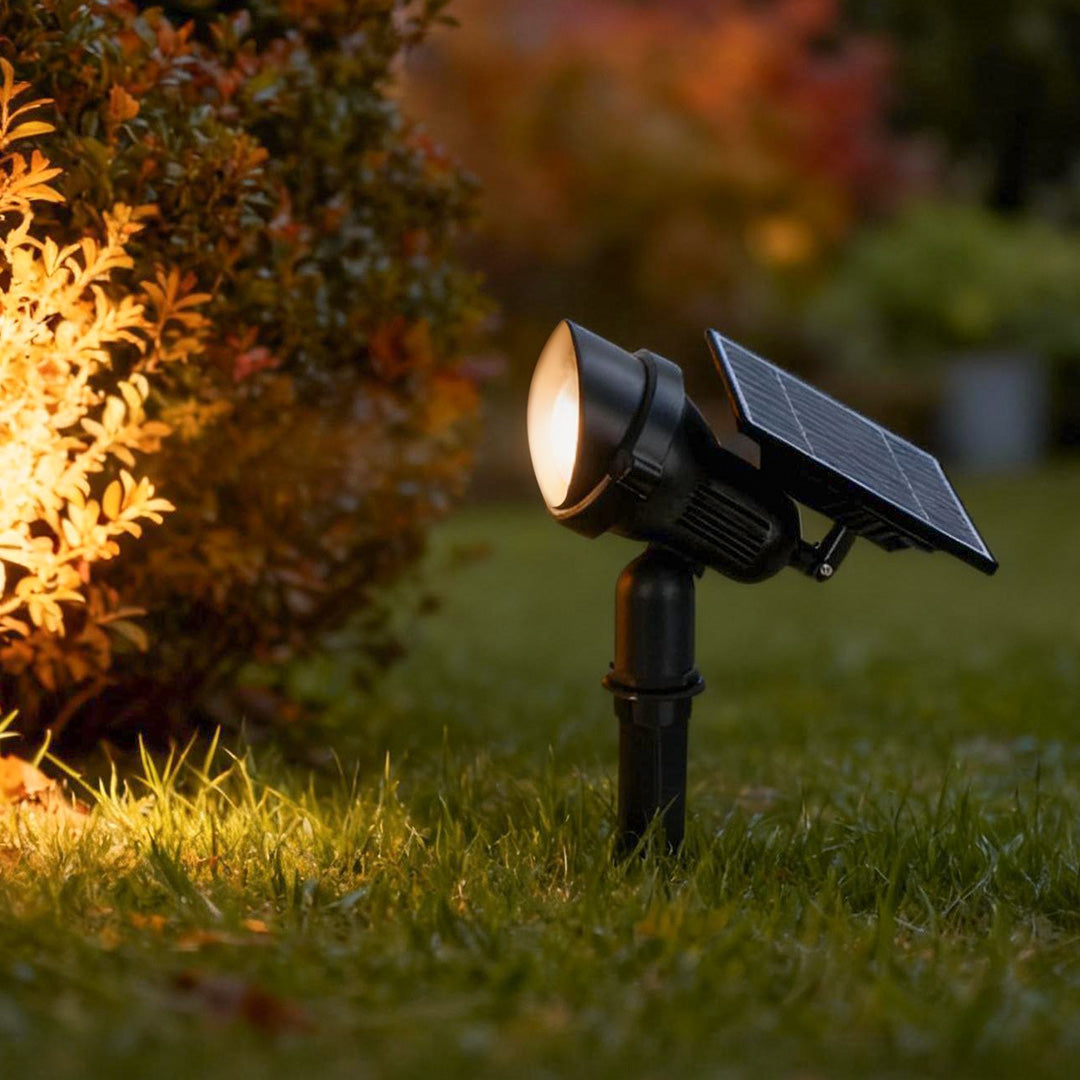
Best for Trees and No-Wire Corners
Lawn Spot Lights Outdoor Adjustable Solar Tree Light
Price Shown: $109.99
Best for a tree, shrub group, garden feature, or remote corner where the solar panel can receive direct sun.
- The lamp head and solar panel can be adjusted independently.
- The page lists ground-insert and base-mounted options for different surfaces.
- A five-hour direct-sun charge is listed for approximately ten hours of illumination under stated conditions.
For everyday use, warm white normally integrates more naturally with planting and residential architecture. RGB can be useful for parties, holidays, or seasonal accents, but a constantly changing saturated color may make a small corner feel busier. Use color as an optional scene, not the only identity of the landscape.

Aim Across the Feature, Not Straight Up the Trunk
A slightly off-center beam often reveals more branch structure and leaf texture than a light placed directly against the trunk. It also makes it easier to hide the fixture from the main patio view.
Placement, Glare, and Color Temperature
Keep Bright Sources Out of Direct Sightlines
Stand at eye level from the patio, doorway, and neighboring side of the yard. If you can see the bright LED source, rotate, lower, shield, or relocate the fixture. A small amount of glare can make the rest of the yard appear darker because the eye adapts to the bright source.
Light Vertical Surfaces to Improve Perceived Brightness
People often add more light to the ground when the real problem is a black vertical boundary. A softly illuminated wall, hedge, or tree canopy can make the whole corner appear brighter while using less direct light on the walking surface.
Use 3000K for a Relaxed Residential Mood
Warm white around 3000K flatters wood, warm stone, brick, and most planting. Cooler white can make a modern concrete wall look crisp, but it may feel harsh beside warm patio lighting. Try to keep the backyard within a coordinated color-temperature family unless a deliberate contrast is part of the design.
Add Path Lighting Only Where Movement Requires It
If people walk to the corner, use low, shielded Path Lights near turns, steps, and changes in surface. Do not line every edge at equal intervals unless the path truly needs continuous guidance. Strategic pools of light usually feel more residential and less like a commercial runway.

Common Mistakes When Lighting a Dark Backyard Corner
Using One Harsh Floodlight
A high-output floodlight may remove darkness, but it can also flatten plants, create deep shadows behind objects, and disturb neighbors. Reserve broad security lighting for situations that genuinely require it. For everyday atmosphere, smaller controlled beams usually create a more comfortable result.
Putting a Solar Panel in the Same Shade as the Light
The object you want to illuminate may be shaded all day. Use the adjustable relationship between the panel and lamp head. A solar light cannot deliver dependable nighttime runtime when its panel never receives enough direct sunlight.
Ignoring Transformers and Electrical Planning
Low-voltage does not mean installation requires no planning. Confirm transformer capacity, cable route, voltage drop, waterproof connections, switching, and local electrical requirements. The featured linear wall washer requires a DC24V transformer that is not included. A qualified installer should handle work when the existing system, cable sizing, or outdoor connections are uncertain.
Overlighting Every Plant
Select one focal tree, one wall, or one sculptural planting group. Darkness between illuminated features is useful—it creates contrast and depth. When every shrub has its own bright beam, the yard loses hierarchy and starts to feel cluttered.
Choosing Color Before Solving Visibility
RGB effects are fun, but first establish where people walk and what they need to see. A color-changing accent should support the plan after basic orientation, glare control, and fixture placement are working.
A Simple Lighting Plan for One Dark Backyard Corner
- Choose one focal surface: a stone wall, fence panel, tree, or sculptural plant.
- Select the distribution: use a linear wash for a broad surface or a spotlight for one vertical feature.
- Test the view: temporarily position the fixture and check it from the patio, indoors, and the path.
- Control glare: hide the source behind planting, angle it away from eye level, and keep beams within your property.
- Add navigation light only if needed: mark a gate, step, or turn rather than illuminating every foot of the route.
- Verify power: confirm direct sunlight for solar products or transformer and cable requirements for low-voltage products.
Use the linear IP65 wall washer when the corner needs a warm architectural backdrop and a DC24V system is practical. Use the adjustable IP54 solar spotlight when the main feature is a tree or planting group and the panel can receive direct sunlight. In a larger corner, the two can work together: a low, broad wall wash establishes the boundary while one focused beam gives the planting a visual center.
The goal is not to eliminate every shadow. It is to replace an unreadable black void with a clear, comfortable nighttime composition. When the wall, focal feature, and path each receive only the light they need, the backyard feels larger, calmer, and more intentional.