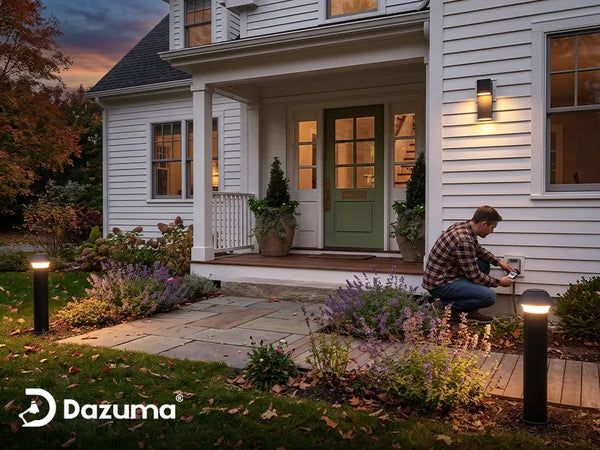

Who This Is For: This guide is for homeowners, renters, and small-property owners who want to make a front yard safer and more welcoming at night, but do not have a convenient outdoor outlet near the path, porch, driveway, mailbox, garden bed, or entry steps.

Quick Answer: How Do You Light A Front Yard With No Outlets?
The easiest way to light a front yard with no outlets is to combine solar path lights, solar spotlights, battery-powered accent lights, and carefully placed motion-sensor fixtures. Solar works best for paths, garden beds, driveways, mailbox areas, and small trees. Battery-powered lights are useful where sunlight is weak, such as a covered porch, shaded side yard, or entry corner. If you want a more permanent system, a licensed electrician can add a weather-rated outlet or install a low-voltage transformer in a safe location.
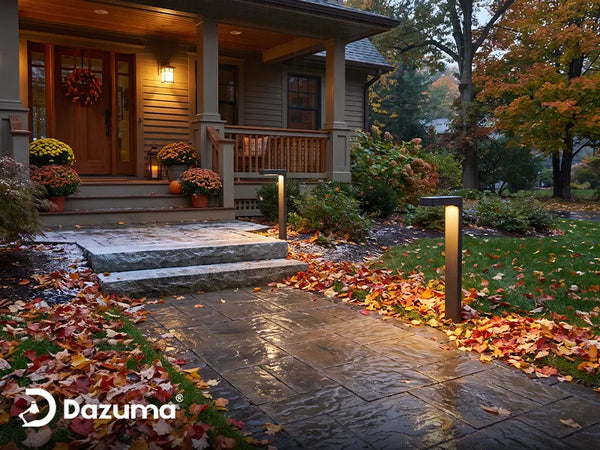
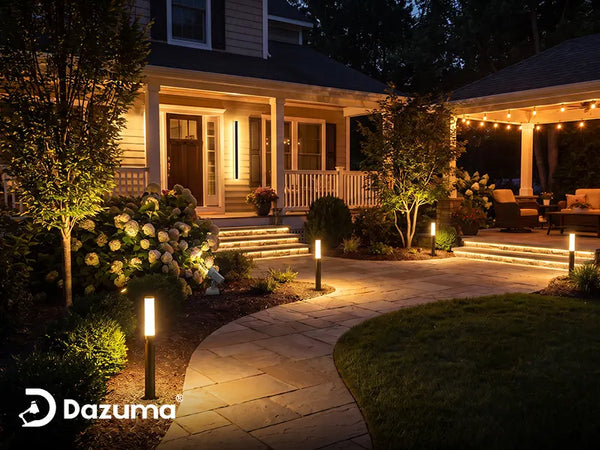
The key is not to treat “no outlet” as one big problem. Break the front yard into lighting zones: the walking route, the front door, the driveway edge, the landscape features, and the house facade. Each zone may need a different kind of fixture. For example, Solar Path Lights can guide guests from the sidewalk to the entry, while a small solar spotlight can lift the look of a tree or address number. If you are comparing this approach with a wired system, Dazuma's guide to Solar vs Wired Outdoor Lights gives a helpful overview of the trade-offs.
Start With Front Yard Lighting Zones, Not Fixtures
A common mistake is buying individual lights before deciding what each part of the yard should do at night. A front yard usually has several jobs: it needs to help people walk safely, make the address or entry visible, improve curb appeal, and avoid shining glare into windows or a neighbor's property. Once you know the job, choosing a no-outlet lighting option becomes much easier.

Think In Layers
Use path lighting for movement, accent lighting for plants or architecture, and task lighting near the door or steps. This layered approach keeps the yard from looking flat, even when every fixture is solar or battery powered.
Start by walking your front yard at dusk. Notice where people hesitate, where steps disappear into shadow, and which features are worth showing. You may discover that the yard does not need a dozen lights. Often, five well-placed fixtures look better than fifteen scattered ones. In small front yards, fewer lights with warmer output can feel more upscale than bright white dots everywhere.
For a front yard with no outlets, the most useful zones are usually the sidewalk-to-door path, the driveway edge, the front steps, the address area, and one focal point such as a tree, column, planter, or stone wall. If you are still building a full plan, this step-by-step article on How to Plan Landscape Lighting Layout Step by Step can help you map the yard before buying fixtures.
Best No-Outlet Lighting Options For A Front Yard
No-outlet lighting does not mean you are limited to cheap plastic stakes. The right choice depends on sun exposure, how much brightness you need, whether the light must stay on all night, and how permanent you want the setup to be.
| Lighting Option | Best For | Main Advantage | Watch Out For |
|---|---|---|---|
| Solar Path Lights | Walkways, garden edges, driveway borders | Easy installation with no wiring | Needs enough direct sun during the day |
| Solar Spotlights | Trees, signs, address numbers, facade accents | Creates depth and drama | Poor aiming can cause glare |
| Battery Lights | Covered entry corners, shaded planters, temporary setups | Works where solar charging is weak | Batteries need checking or replacing |
| Motion-Sensor Solar Lights | Side gates, steps, garage approach, security zones | Saves energy and increases visibility when needed | Can feel harsh if too bright or badly placed |
| Professional Wired Upgrade | Long-term front yard systems | Most consistent brightness and control | Requires proper electrical work |
Solar Path Lights: The Easiest First Step
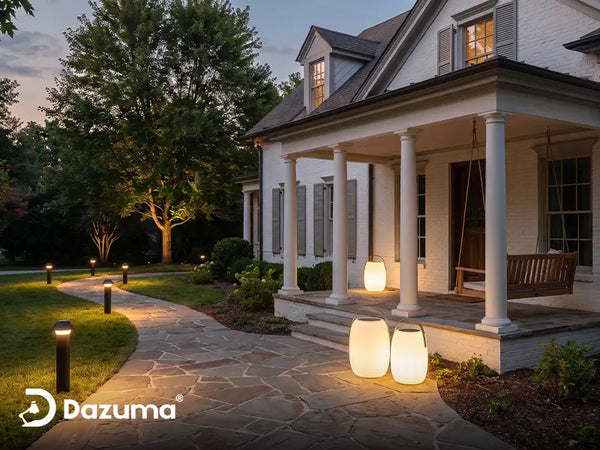
For most homes, solar path lights are the fastest improvement. Place them where the path changes direction, where the ground level changes, or where guests naturally look down. You do not need a light every foot. A spacing of roughly 6 to 8 feet often feels natural for a straight path, while tighter spacing may help around steps or curves. For more focused curb appeal ideas, see Dazuma's guide to Best Pathway Lights for Front Yard Curb Appeal.
Solar Spotlights: Better For Trees, Address Numbers, And Texture
If your path is already visible but the yard still looks dark, add one or two solar spotlights. Aim them at a tree canopy, stone column, textured wall, or house number. This gives the front yard vertical light, which is what makes it feel designed instead of simply marked. Explore Solar Spotlight options when you need a fixture that can highlight a feature without running a wire from the house.
Use Solar Where The Sun Actually Lands
The solar panel matters as much as the fixture. A light placed under a deep eave, dense tree, or north-facing shrub line may look good during the day but fail at night because it never receives enough charge.

Battery-Powered Lights: Useful In Shade Or Covered Areas
Battery-powered lights are not always the first choice for a whole front yard, but they solve specific problems well. A covered porch, shaded mailbox area, or deep entry alcove may not support solar charging. In those areas, a battery lantern, battery puck light, or motion-activated battery sconce can provide targeted light without adding wiring. The trade-off is maintenance: you need to check batteries before vacations, winter storms, or long stretches of cloudy weather.
How To Plan A No-Outlet Front Yard Lighting Layout
Good front yard lighting is less about maximum brightness and more about sequence. A guest should be able to read the path from the street, recognize the entry, and feel comfortable walking to the door. That sequence can be created with a few well-placed lights.
- Mark the path first. Put temporary markers where a person needs guidance: beginning of path, curves, steps, and the final approach to the door.
- Add one vertical accent. Light a tree, column, address number, or wall texture to keep the yard from looking flat.
- Check the front door view. The entry should be the visual destination, even if you are not using a hardwired porch light.
- Stand across the street. Review the whole scene from the curb. If the yard looks dotted instead of calm, remove a few fixtures.
- Test for glare. Walk toward the door and make sure no light shines directly into your eyes.

Use The “Three Point” Rule For Small Front Yards
For a compact front yard, start with three points of light: one at the path entrance, one near the step or turn, and one near the front door or address area. This creates a readable route without overcrowding the yard. If the design feels too quiet, add a single accent light for a tree or planter. This method is especially useful for townhomes, duplexes, narrow lots, and homes where the driveway takes up most of the frontage.
Use The “Soft Edge” Rule For Larger Yards
For a larger front yard, avoid lighting only the center path. Add soft points at the edge of the driveway, near a front bed, or beside a low wall. These lights help define the property line at night. You can use path lights for structure, then add solar accents only where the yard needs depth.
Safety And Weather Tips For Lighting Without Outlets
Any outdoor lighting plan should respect weather, moisture, foot traffic, and lawn care. No-outlet lighting may feel simple, but fixtures are still exposed to rain, irrigation, heat, cold, and physical contact from people, pets, and garden tools.
| Situation | Best Practice | Why It Matters |
|---|---|---|
| Wet lawn or irrigation spray | Choose outdoor-rated fixtures and avoid low pockets where water collects | Moisture shortens fixture life and can create unsafe conditions |
| Walkways and steps | Place lights beside the route, not in the walking path | Reduces trip hazards and protects fixtures |
| Shaded front yards | Use battery lights or remote-panel solar lights | A shaded solar panel may not recharge enough for reliable nighttime use |
| Temporary extension cords | Avoid using them as a permanent lighting solution | Cords can be damaged, tripped over, or exposed to moisture |
| Permanent electrical upgrade | Hire a qualified electrician for new outlets or buried wiring | Outdoor electrical work needs proper protection and code-compliant installation |
Do not run indoor extension cords through windows, under doors, across wet grass, or under mulch to create a “temporary” front yard lighting system. It may seem easy, but it can become a trip hazard, a moisture problem, and a maintenance headache. If your real goal is a permanent wired front yard, it is better to treat that as an electrical project rather than a decor shortcut.

Keep Light Low, But Not Hidden
Low fixtures are good for glare control, but they still need to be visible enough that people do not kick them. Place them outside the walking line and away from lawn mower paths whenever possible.
Style And Curb Appeal: Make No-Outlet Lighting Look Intentional
The biggest visual risk with no-outlet lighting is a random mix of fixtures. One solar lantern, two plastic stakes, a cool-white motion light, and a decorative string light can make the front yard feel accidental. To avoid that, choose one finish family and one light color. Black, bronze, and dark gray finishes usually disappear into planting beds at night, while warmer metal finishes can look nice near brick, stone, or traditional architecture.
For most front yards, warm white light feels more welcoming than cool blue-white light. It also tends to look better against wood doors, brick, stone, greenery, and mulch. Use brighter light only where people need to see clearly, such as steps, changes in grade, and address numbers. For decorative areas, softer light usually looks more expensive.
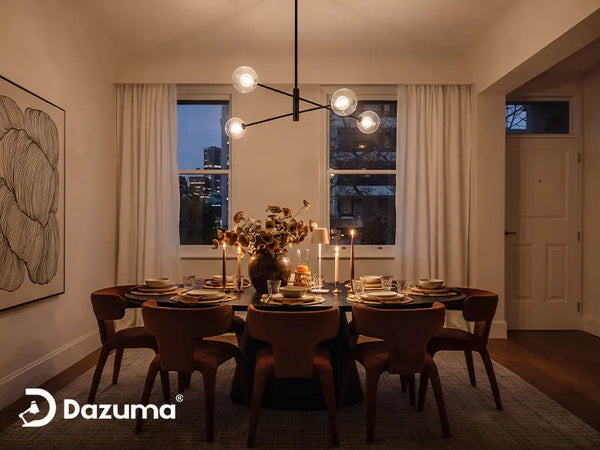
If you are browsing decorative lighting for an enclosed entry, sunroom, or interior window view, styles such as Glass Pendant Lights can help you understand how glass, shape, and glow affect the mood of a space. Just do not treat indoor pendant lighting as a substitute for outdoor-rated front yard fixtures. Outside, weather rating, mounting method, and glare control matter as much as appearance.
Match The House Before Matching The Plants
Plants change through the seasons, but your architecture stays. Choose fixtures that work with the home first. A modern black fixture can suit clean siding, metal railings, or dark-framed windows. Softer lantern shapes can suit cottages, farmhouses, and traditional homes. For homes with minimal exterior detail, Outdoor Solar Lights with simple shapes usually look more refined than ornate fixtures.

Common Mistakes When Lighting A Front Yard With No Outlets
Mistake 1: Expecting Solar Lights To Perform The Same Everywhere
Solar fixtures depend on exposure. A light that works well in an open yard may struggle under a porch roof or beside a dense hedge. Before buying a full set, test one fixture for several nights in the real location. Watch how long it stays bright and whether the output still looks useful after midnight.
Mistake 2: Making The Path Too Bright
A front path should be visible, not theatrical. Overly bright lights create glare and make the surrounding yard look darker by contrast. Instead of buying the brightest possible stakes, use moderate output and better spacing. A warm, even rhythm of light is more inviting than a row of harsh dots.
Mistake 3: Ignoring The Front Door
People naturally look for the destination. If the path is lit but the front door is dark, the yard can feel unfinished. Use an existing porch fixture if you have one. If not, consider a battery-powered or solar motion light near the entry, as long as it is suitable for the location and does not shine directly into visitors' faces.
Mistake 4: Using Cords As A Permanent Solution
Extension cords may be useful for a short-term event, but they should not become the hidden backbone of your front yard lighting. If you need reliable, all-season lighting with timers, smart controls, or consistent brightness, consider a professional outlet or low-voltage landscape lighting installation.
Test Before You Commit
Place your lights temporarily for two or three nights before pushing stakes fully into the ground. Small changes in angle and spacing can make the difference between “cheap solar dots” and a calm, designed front yard.

Final Advice: Build A Reliable No-Outlet Lighting Plan Slowly
The best way to light a front yard with no outlets is to start small and improve the layout after seeing it at night. Begin with the walking path and front door, then add one accent for curb appeal. Once those pieces work, you can decide whether the yard needs more solar path lights, a brighter address light, a solar spotlight, or a professional electrical upgrade.
Think of no-outlet lighting as a design problem, not just a power problem. Solar, battery, and motion-sensor fixtures can work beautifully when each one has a clear purpose. Keep the light warm, avoid glare, respect weather exposure, and choose fixtures that match the home. With a simple plan, even a front yard with no exterior outlet can feel safer, more polished, and more welcoming every evening.