
Who This Is For: This guide is for hosts planning a Thanksgiving dinner at home, especially if the dining table gains an extension leaf, a sideboard becomes a serving station, or the room must feel comfortable from the first appetizer through a long evening of conversation.
Introduction
Thanksgiving lighting has a surprisingly practical job. Guests need to see the food, find their places, pass serving dishes, and move between the kitchen, table, and buffet. At the same time, nobody wants to sit under a brilliant ceiling light for three hours. The room changes as the evening unfolds: natural light fades, the centerpiece appears, extra chairs are pulled out, and dessert may move to another surface.
A good plan puts the main fixture at a comfortable height, gives the table usable light, supports the edges of the room, and keeps sources a similar warm white. The result looks inviting and remains easy to use when guests are seated.

The Quick Answer: Start With the Table, Then Light the Room
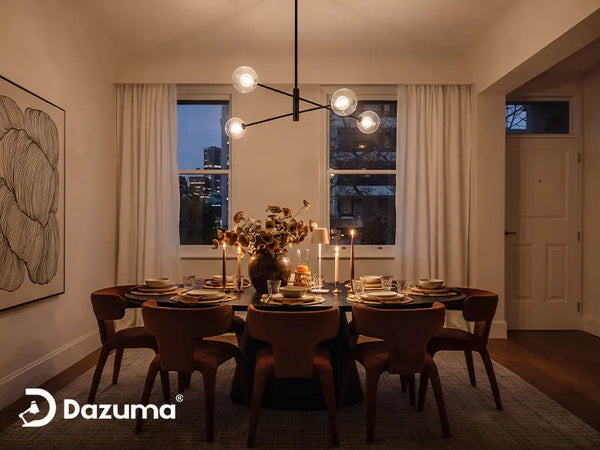
For an approximately eight-foot ceiling, a common starting point is to place the bottom of a chandelier about 30 to 36 inches above the tabletop. Measure to the lowest part of the installed fixture, then sit in every chair and check whether it blocks conversation or puts a bulb in someone's eyes. This is a starting range, not a rule that overrides the fixture's dimensions, ceiling height, or the manufacturer's instructions.
Choose a warm white appearance, typically around 2700K to 3000K, and keep the nearby lamps close in color. Put the main table light on a compatible dimmer if possible. Add a separate, gentler source near the buffet or perimeter so the chandelier does not have to illuminate every corner at full output. Set the room brighter while guests are serving food and lower it once everyone is settled.
If you are shopping rather than rearranging existing lighting, browse dining room lighting by the shape of your everyday table and the expanded Thanksgiving arrangement. A beautiful fixture that only covers the table in its smallest configuration may leave holiday place settings in shadow.
Set the Chandelier Height for Seated People and Tall Centerpieces
Measure upward from the tabletop to the bottom of the fixture, not to its center, canopy, chain, or highest branch. Under a typical eight-foot ceiling, the 30-to-36-inch range often leaves space for faces to remain visible while keeping the light visually connected to dinner. Taller ceilings, deep chandelier bodies, and unusually tall guests may call for an adjustment. Make the decision from the chairs before shortening a chain or committing to a fixed stem.
Test two sightlines. Across the table, can you see a guest's face? Along the table, can you see food without staring into a bulb? Sideways lamps may pass one test but fail the other.
Thanksgiving centerpieces make the height question more complicated. A tall vase or branch arrangement can block conversation even when the chandelier is correctly hung. Lower the centerpiece, split it into smaller groups, or move taller decorations to a sideboard before raising a well-positioned light to compensate. You want both the conversation plane and the food plane visible.

Measure the Finished Fixture
Confirm the installed height with the actual shades, diffusers, and bulbs in place. A long decorative element can hang below the main light source. If the table is moved for the holiday, center the fixture over the table's usable eating area rather than assuming the ceiling box is in the right place.
For more detailed sizing and ceiling-height scenarios, see how high a chandelier should hang above a dining table. Here, the important holiday-specific check is whether the extended table and extra place settings still receive useful light.
What If the Fixture Is Outside the Table?
The familiar table clearance does not apply to a pendant hanging above a walking route. Guests must be able to pass comfortably beneath any fixture in the circulation path. If moving the table exposes a low chandelier to traffic, change the layout or seek an appropriate adjustment; do not assume a safe over-table position is also safe in open floor space. Keep the fixture centered over furniture that will remain beneath it.
Build Brightness in Layers, Not With One Harsh Source
Brightness is easier to control when the room has two or three independent layers. The chandelier or pendant defines the dining surface. A sideboard lamp or wall sconces illuminate the serving area and faces near the perimeter. A nearby kitchen or hall light makes travel and cleanup comfortable. Each layer has a different job, and the levels can change without turning the entire room on or off.
There is no single useful lumen target for every Thanksgiving dining room. Output printed on a bulb package describes the bulb, not the amount of light that reaches a dark wood table after passing through a shade. A cluster of exposed bulbs can look dazzling even if the room corners remain dim; an opaque drum shade may soften glare but direct less light onto the food. Compare fixture distribution, shade material, ceiling reflectance, and the number of other sources before treating total lumens as a complete answer.
For the main light, ask whether guests can identify food and read a place card while seated. For the perimeter, ask whether a guest can navigate to the sideboard and find a serving utensil without their body casting a deep shadow. A dimmer makes those tests easier to satisfy at both dinner and dessert, provided the lamp or integrated LED, driver, and control are actually compatible.
Chandeliers with several lamps can spread light along a larger table, while a concentrated downward beam may create one very bright spot. If the buffet needs a dedicated layer, wall sconces can lift the wall and serving area without adding another object to the crowded tabletop. Judge each option by where its light goes as well as how it looks when turned off.
Separate the Buffet From the Table
A serving station has different needs from a seated dinner. Keep enough light there to distinguish labels, dishes, and utensils. When guests return to their seats, the buffet source can remain as a soft background layer while the chandelier is lowered. This prevents the far side of the room from becoming a black void in photographs or in conversation.
Before using a portable lamp, check that its cord cannot be caught by a chair or crossed by a guest carrying a hot dish. Keep it away from spills and the edge of the buffet.

Adjust the Lights as Thanksgiving Dinner Unfolds
Instead of choosing a single level for the whole gathering, plan three simple scenes. You can make these changes manually with separate switches; smart controls are optional. Set them during a practice evening so the host is not testing controls while the turkey is being carved.
| Moment | Table Light | Supporting Light | What to Check |
|---|---|---|---|
| Arrival and serving | Bright enough to see dishes and place settings | Buffet and walking route clearly lit | Food labels, serving utensils, and chair clearance |
| Seated dinner | Moderate, comfortable light with no exposed glare | Soft perimeter glow | Faces and food visible from every chair |
| Dessert and conversation | Lower if guests are lingering | Maintain useful light where dessert is served | No dark route to kitchen or restroom |
| Clearing and cleanup | Raise as needed for work | Kitchen and sideboard fully usable | Glassware, crumbs, and carried dishes visible |
Do not forget cleanup. Lighting that suits a seated meal may frustrate someone clearing plates. Keep the ability to restore practical brightness.
Choose Warm Light That Makes Dinner Look Natural
Color temperature describes whether white light appears warm or cool; it is measured in kelvins. Around 2700K often reads cozy, while 3000K is still warm but can look a little crisper. Either can suit a Thanksgiving table. Very cool white light may make the dining room feel more like a task area, especially when the room outside the fixture's beam is dim.
Consistency is usually more valuable than debating a small difference between two warm-white options. A 2700K chandelier over the table and a conspicuously cool buffet lamp can divide the room into unrelated zones. If bulbs are replaceable, compare them at night in the actual shades, then keep adjoining visible sources reasonably close in appearance. If an integrated LED has fixed color temperature, check that specification before ordering; changing the wall dimmer will not necessarily change the light's color.
Light quality matters alongside kelvins. Color rendering describes how naturally objects appear under a source, and it can affect the look of food, linens, and faces. When comparing bulbs, a high color-rendering rating is useful, but a number on a box does not replace looking at your actual table. Put a plate with colorful food, a white napkin, and a person in the scene and compare the result before guests arrive.

Keep Candles as an Accent
Candles can add a pleasant low glow, but they cannot replace light that lets people serve food safely. Keep any flame clear of greenery, paper decorations, and passing sleeves, and never leave it unattended. Flameless candles can create a similar decorative layer where a busy table makes open flame impractical.
For broader room-by-room ideas, the guide to cozy ambient lighting at home explains why lower, separate sources often make a gathering feel more relaxed than a single bright ceiling fixture.
Adapt the Lighting to an Expanded Holiday Table
Many dining rooms are designed around the table's everyday size. Add one or two leaves, and the guests at the ends may sit outside the central pool of light. Test the full Thanksgiving setup, including all chairs and the centerpiece, before deciding the existing fixture is sufficient.
Long Rectangular Tables
A linear chandelier may distribute light along the length more evenly than a small round pendant, but its ends should not extend awkwardly beyond the eating surface or block guests entering chairs. If you already have a centered fixture and only the extended ends are dim, use a gentle supporting layer at the room's edges rather than installing temporary hanging lights over one dinner.
Round or Square Tables
A central fixture can work well when its light spreads across the full setting. Move a tall centerpiece off center or lower it if it casts a dark ring around the outer plates. Check from the seat farthest from the buffet as well as the host's chair.
Open-Plan Dining Areas
In a room open to a brightly lit kitchen, the eye adapts to the kitchen first. A relatively dim dining table may then seem darker than it really is. Reduce the kitchen's general light when the meal begins, retaining enough illumination for anyone still using the counters. This can make the table feel more balanced without increasing the chandelier's output.
Test With the Extension Leaf In
Lay out plates at every seat, switch on the lights, and ask someone to stand where serving bowls will be passed. If the center is bright but end settings disappear, the problem is distribution, not necessarily insufficient total wattage. A wider shade, a different beam, or a perimeter layer may help more than brighter bulbs.
When shopping for a long table, compare the proportions of linear chandeliers with both the everyday and extended lengths. Keep enough clearance for chairs and guests to move naturally.

Check Glare, Reflections, and Real-World Safety
The most revealing test is to sit at the table, not to stand in the doorway admiring the fixture. Look toward the opposite guest and toward the serving station. A bare lamp may be acceptable from standing height but uncomfortable from the chair directly beneath a low branch. A diffuser, shade, lower-output bulb, or small height adjustment can solve the problem. Do not exceed the fixture's lamp rating or use a bulb shape that puts a hot or bright source outside its intended shade.
Polished tabletops, mirrors, and framed art can reflect a bulb into someone's line of sight. Check these after dark with the full place settings installed; a reflective charger plate may introduce a new bright spot. Shifting the table light slightly or reducing output can make a greater difference than adding another fixture.
Keep floor and table lamps stable and out of the path of children, pets, and carried dishes. Do not run an extension cord through a chair route or under a rug as a permanent lighting solution. If a fixture needs rewiring, relocation, or a new dimmer, follow its instructions and use a qualified electrician where appropriate. Verify dimmer compatibility before the holiday, since LED flicker or a narrow dimming range is difficult to fix when guests have arrived.
A Fifteen-Minute Lighting Rehearsal
- Set the full table: Add leaves, all chairs, a representative centerpiece, plates, and serving dishes.
- Turn on the lights at dinner time: Do the test after sunset, when daylight cannot conceal weak spots.
- Sit in every seat: Look for blocked faces, exposed bulbs, dark place settings, and reflected glare.
- Walk the serving route: Carry an empty tray from kitchen to table and buffet; inspect cords and chair clearance.
- Try three scenes: Set serving, seated dinner, and dessert levels, then restore cleanup brightness.
- Compare colors: Look at a white napkin and colorful food under the chandelier and buffet light.
- Leave the settings simple: Label controls or note the preferred dimmer positions so another family member can operate them.
The Seat Test Is the Final Test
A room can look beautiful from the doorway and still be tiring from the chair under an exposed bulb. Sitting down also reveals whether the centerpiece, fixture, and sideboard compete in one sightline. Make small changes before buying more light.
If only one adjustment is possible, fix the most uncomfortable viewpoint first. For most hosts, that means getting the table light clear of faces and making every plate visible at a comfortable level.
Final Advice
Thanksgiving dining room lighting works best as a sequence rather than a fixed setting. Hang the main fixture in relation to the table and seated people; light the food and serving area; keep the color warm and coherent; then lower the output as dinner becomes conversation. Use the extended table in your test, since that is the room your guests will actually experience.
Once the lighting is comfortable from every chair, stop adjusting. The aim is for guests to see one another and the meal easily, while the room recedes into a gentle, welcoming glow.