
Who This Is For: This guide is for homeowners choosing exterior lighting for a porch, driveway, walkway, patio, or yard and wondering which type will be safest, most reliable, and most comfortable after dark. It will help you match the fixture to the job before comparing styles.
Short Answer: Outdoor-Rated LED Is Best, but the Fixture Type Depends on the Area
For most homes, an outdoor-rated LED fixture is the best starting point because it provides useful light with relatively low energy use, produces less heat than incandescent lighting, and is available in forms for almost every exterior task. However, “LED” describes the light-source technology. It does not tell you whether you need a wall light, path light, floodlight, spotlight, step light, or decorative string light.
The best outdoor light is the one that puts the right amount of light on the right surface without causing glare. A porch needs comfortable light on faces, the lock, and the landing. A path needs low, repeated guidance. A driveway may need broader coverage or motion activation. A tree needs a controlled accent beam. A patio needs atmosphere plus enough task light for eating and moving safely.

Start With the Task, Not the Fixture Style
Before shopping, walk the property after dark. Begin at the street or driveway and follow the route a guest would take. Note where someone changes direction, finds a gate, climbs a step, reads the house number, unlocks a door, or approaches a seating area. These are the places where light performs real work.
Then separate those needs into three layers:
- Navigation light helps people see paths, steps, edges, and entrances.
- Task light supports a specific activity such as unlocking a door, grilling, parking, or carrying items.
- Accent light reveals trees, planting, masonry, or architectural surfaces and creates visual depth.
This layering method is more useful than selecting one “best” fixture for the entire yard. It also prevents overlighting. When every light has a defined purpose, you can use lower output and better aiming instead of filling the property with flat, uniform brightness.

A Simple Rule: Light the Route, the Task, and One Feature
For a small front yard, begin with the route to the door, add useful entry light, then choose one tree or wall as an accent. That often creates a more finished nighttime view than installing many decorative fixtures. A broader outdoor lighting collection is easiest to use after you have already identified these three jobs.
Best Types of Outdoor Lights by Area
| Outdoor Area | Best Starting Type | Main Job | Key Detail to Check |
|---|---|---|---|
| Front door or porch | Wall sconce or outdoor ceiling light | Faces, lock, landing, welcome | Scale and glare at eye level |
| Walkway or garden path | Path or bollard light | Show direction and edges | Shielding and even spacing |
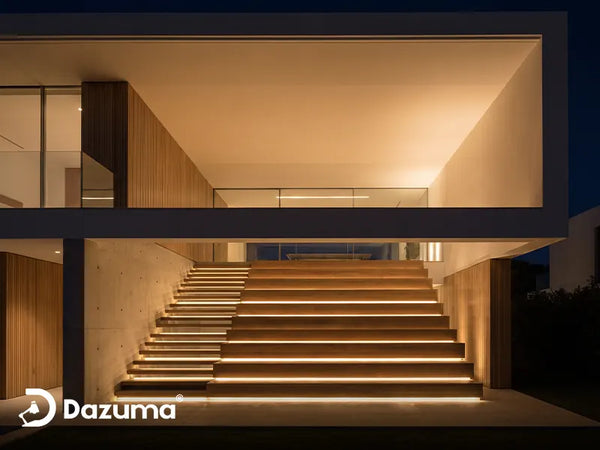
| Steps or deck edges | Step, recessed, or rail light | Reveal elevation changes | No direct glare from below eye level |
| Driveway or garage approach | Wall light or controlled floodlight | Vehicle and pedestrian visibility | Beam direction and motion settings |
| Patio or outdoor dining | Wall, ceiling, pendant, or string light | Atmosphere plus table visibility | Comfort from seated positions |
| Tree or architectural feature | Spotlight, well light, or wall wash light | Create depth and emphasis | Beam width and aiming |
Front Doors and Porches: Wall Lights Are the Most Versatile
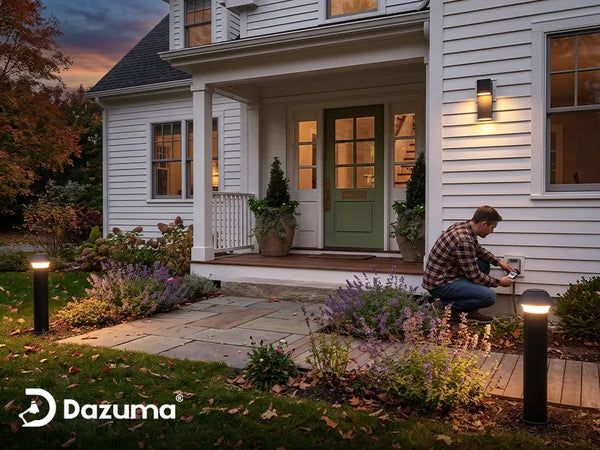
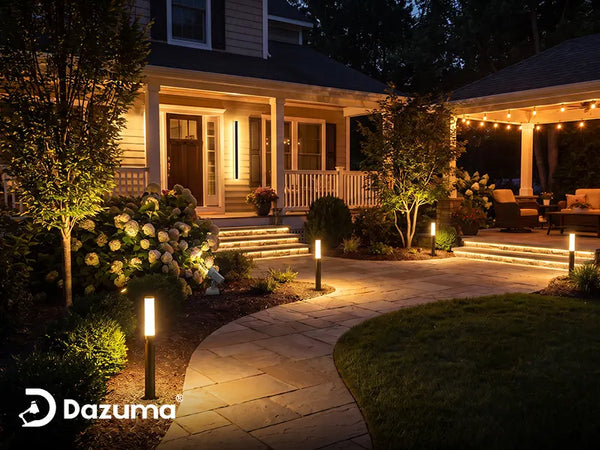
For most entrances, a wall-mounted fixture is the best all-around choice. It can light a visitor's face, door hardware, and the immediate landing while contributing to curb appeal. A pair works well on a wide or symmetrical entry; one properly sized light can be enough on a narrow porch. Covered porches may also benefit from an outdoor ceiling light when the wall space is limited.
Look through outdoor wall lighting by beam direction and fixture dimensions, not only by appearance. A beautiful clear-glass lantern can still be uncomfortable if the bare bulb sits directly at eye level.
Walkways: Shielded Path Lights Create the Clearest Guidance
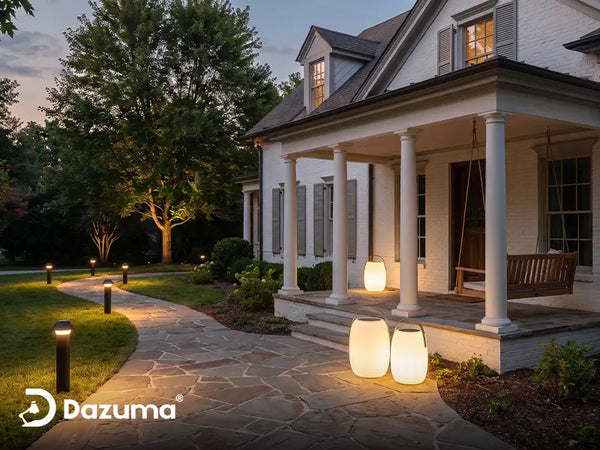
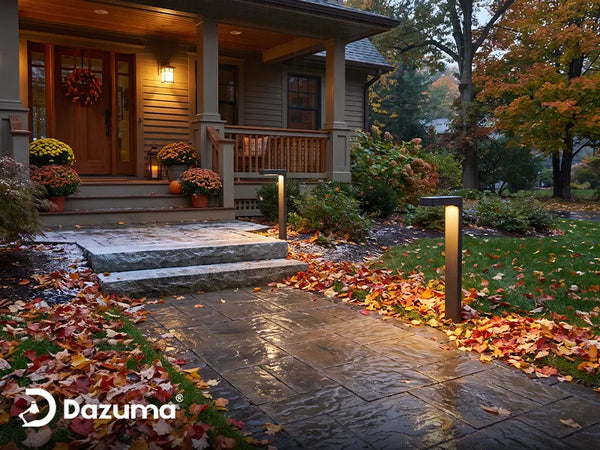
Path lights are designed to put light near the ground, where people need to see changes in direction, surface texture, and planting edges. The best designs shield the source and spread light onto the walking surface instead of into the eyes. Space them according to their actual pool of light rather than creating a rigid runway of closely packed fixtures.
Use path lights at bends, intersections, steps, gates, and uneven areas first. Then fill only the dark gaps that remain. This “decision-point” approach often requires fewer fixtures and produces a calmer landscape.
Driveways and Side Yards: Motion-Controlled Light Is Often Best
A driveway or side passage does not always need full brightness all night. A well-aimed motion-controlled wall light or floodlight can provide stronger visibility when a person or vehicle enters the area, then turn down or off afterward. Aim it across the expected movement path when the sensor design allows, and keep the beam away from bedroom windows, drivers' eyes, and neighboring property.
Broad Coverage Does Not Mean Maximum Brightness
A floodlight spreads light across a wider area, but one excessively bright fixture can create a glaring foreground and deep shadows beyond it. Two modest, carefully aimed sources may provide more usable coverage. Compare flood lights by beam, output, mounting position, and control options rather than wattage alone.

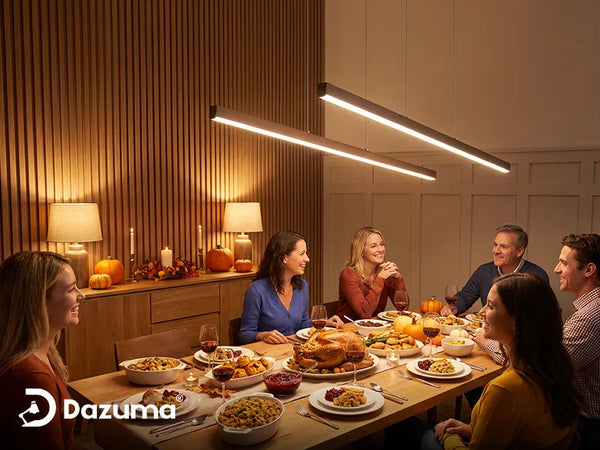
For patios, layered ambient and task lighting feels best. A patio needs a different atmosphere from a driveway. Wall sconces, covered-location ceiling fixtures, pendants, and string lights can create comfortable ambient light, while a focused source near the grill or outdoor kitchen handles task work. Check the scene while seated: a fixture that feels fine when standing may expose a bright bulb directly across the table.
For landscape features, spotlights and well lights add depth. Use a spotlight when you want adjustable aiming toward a tree, sculpture, or facade detail. A well light sits at or near ground level and can create a quieter installation, but its position must suit drainage, maintenance, and the manufacturer's intended use. Wall-wash lighting is better when the goal is an even glow across masonry rather than a narrow highlight.
Why LED Is Usually the Best Outdoor Light Source
LED lighting is usually the most practical technology for residential exteriors. It uses less electricity for comparable useful brightness than older incandescent or halogen lamps, lasts longer under normal conditions, and works well with photocells, timers, and motion controls when the components are compatible.

Compare Lumens, Not “Equivalent Watts”
Lumens describe the amount of light a source produces; watts describe power consumption. An LED package may mention a traditional wattage equivalent, but that number is a brightness comparison, not its actual energy draw. Begin with the visual task and desired light distribution, then compare lumen output and real wattage. Dazuma's outdoor light wattage guide explains this distinction in more detail.
Integrated LED fixtures can provide slim shapes and controlled optics, while replaceable-bulb fixtures make future bulb changes straightforward. Neither format is universally better. For an integrated fixture, consider how the unit is serviced if the light source or driver eventually fails. For a bulb-based fixture, confirm that the bulb is suitable for the enclosure, exposure, controls, and operating conditions described by the manufacturer.
Choose Power and Controls Around Reliability
Hardwired lighting is often the best choice for front entries, steps, garages, and other areas where dependable output matters every night. It supports planned control zones and does not depend on daily sunlight. Installation may require suitable wiring, junction boxes, and professional electrical work.
Low-voltage lighting is common for paths and landscapes. A transformer reduces the supplied voltage for the outdoor system, while cables connect multiple fixtures. It offers consistent performance and flexible zoning, but cable routes, transformer capacity, connections, and voltage drop need to be planned.
Solar lighting is useful where trenching or new wiring is impractical. Its nighttime performance depends on solar-panel exposure, season, shade, weather, battery condition, and the amount of light requested after dark. It is usually easier to rely on for decorative markers than for a critical step or primary entrance unless the specific product and site can support that task.
For controls, choose dusk-to-dawn operation when steady nighttime visibility matters, motion activation when bright light is only needed during activity, and a timer when decorative lighting can turn off after normal evening use. The best plan often combines all three rather than forcing one schedule on the entire property.
Outdoor Suitability Matters More Than the Word “Waterproof”
Outdoor locations are not equally exposed. A fixture beneath a deep porch roof faces different conditions from one on an open wall, beside sprinklers, in a planting bed, or near a pool. Check whether the product is approved for the actual location and exposure described by the manufacturer. Do not assume an indoor fixture becomes safe outdoors because it is under a small overhang.
Durability also depends on material, finish, fasteners, seals, drainage, and installation. Coastal air, intense sun, freeze-thaw cycles, wind-driven rain, and irrigation can be harder on a fixture than ordinary rainfall. Make sure wiring entries and mounting surfaces are properly handled, and follow local electrical requirements. If a new circuit or hardwired connection is involved, use a qualified electrician.
Set Brightness and Color for Visual Comfort
Brightness should follow the task and beam shape. A low-output path light can be effective because it sits close to the ground. A porch light may need enough output to reveal faces and the lock. A broad driveway requires more total light, but aiming and distribution are just as important as the lumen number.
Warm Light Usually Feels More Residential
Warm white light around 2700K to 3000K often feels comfortable on wood, brick, stone, planting, and skin tones. Slightly cleaner neutral light may suit a contemporary task area, while very cool light can feel stark on a home exterior. Keep neighboring fixtures reasonably consistent so the property does not look patchy after dark.

One useful nighttime test is to stand where the light is meant to help. Look toward the fixture, then toward the ground or task surface. If the source dominates your vision and the surrounding area disappears, glare is reducing performance. Shield, reposition, dim, or select a better-distributed fixture before adding more brightness.
Common Outdoor Lighting Buying Mistakes
- Buying one very bright fixture for the entire yard. Layered sources provide better depth and fewer harsh shadows.
- Choosing by style before function. Decide what the light must reveal, then choose an attractive fixture that performs that job.
- Using wattage as a brightness measurement. Compare lumens, beam spread, shielding, and mounting height.
- Ignoring the seated or approaching view. Check glare from the sidewalk, driver's seat, patio chair, and neighboring windows.
- Assuming every outdoor location needs the same rating. Match the product and installation to the exact exposure.
- Spacing path lights like runway markers. Put them at decisions and hazards, then fill genuine dark gaps.
- Mixing too many color temperatures. A consistent nighttime palette makes the exterior feel calmer and more intentional.
Final Outdoor Light Buying Checklist
- Write down the exact route, task, or feature each fixture must illuminate.
- Choose the fixture type that produces the needed beam at that location.
- Confirm the product is intended for the actual outdoor exposure.
- Compare lumens, distribution, shielding, and real wattage.
- Select a comfortable color temperature that coordinates with nearby lights.
- Choose hardwired, low-voltage, or solar power based on reliability and installation constraints.
- Add motion, dusk-to-dawn, or timer controls based on how the area is used.
- Mark fixture positions and walk the route before final installation.
- Test the completed plan at night and correct glare before adding more light.
If you are planning more than one area, sketch the property as separate zones before buying. The guide How to Plan a Landscape Lighting Layout Step by Step provides a useful framework for placement, fixture roles, and final testing.
Final Advice
The best general outdoor light source is an efficient, outdoor-suitable LED, but the best fixture depends on the job. Start with wall lights at entries, shielded path lights along routes, step lights at elevation changes, controlled flood or motion lights for broad activity zones, and spot or well lights for selected landscape features.
Good exterior lighting should make the property easier to understand after dark. You should be able to see where to walk, where to stop, and where the entrance is without feeling surrounded by brightness. Choose the task first, the beam second, the controls third, and the style last. That order usually leads to a safer, calmer, and better-looking result.