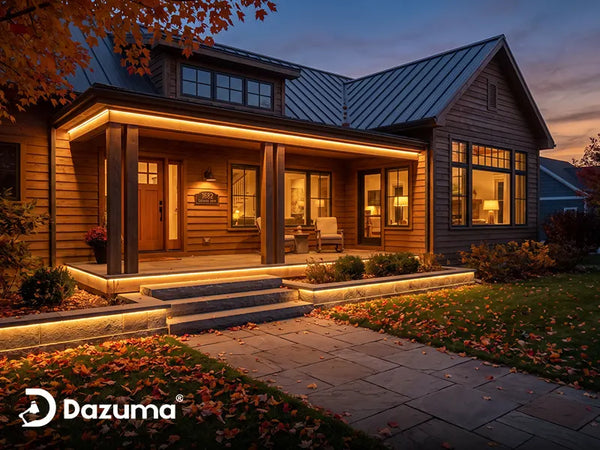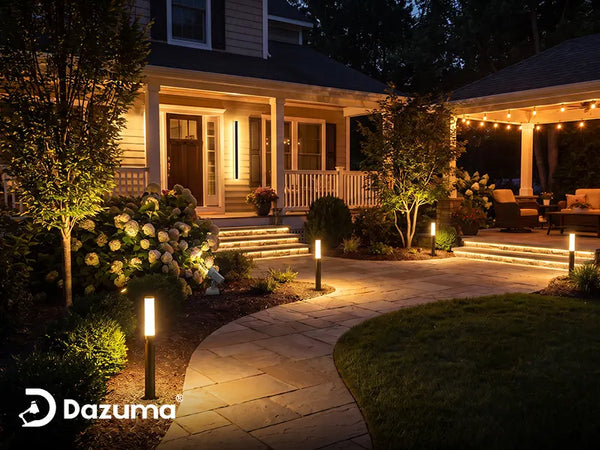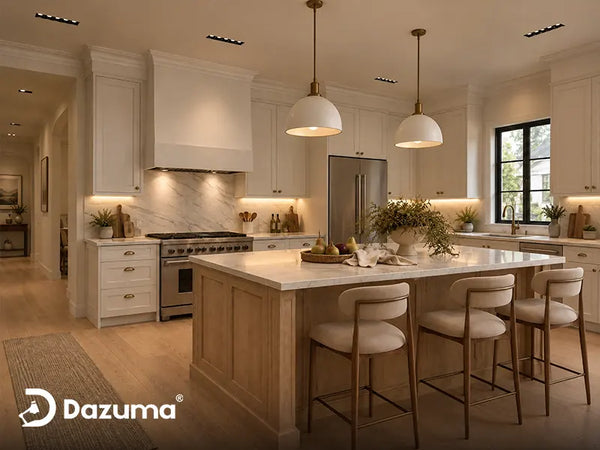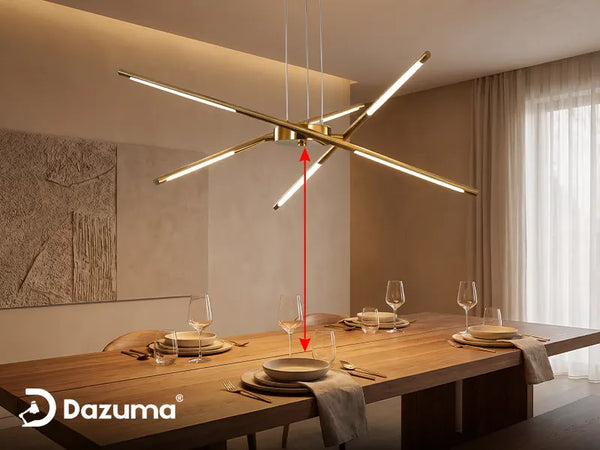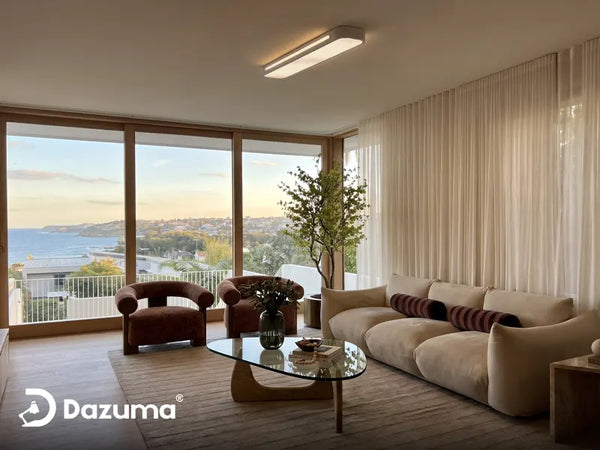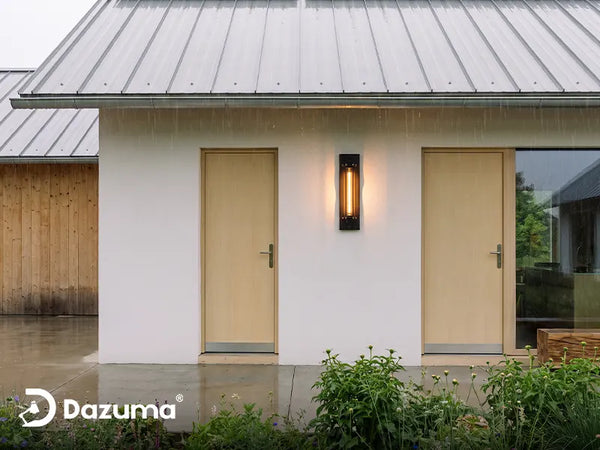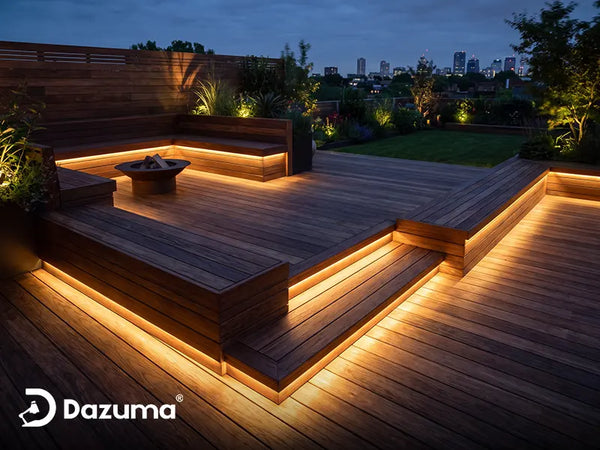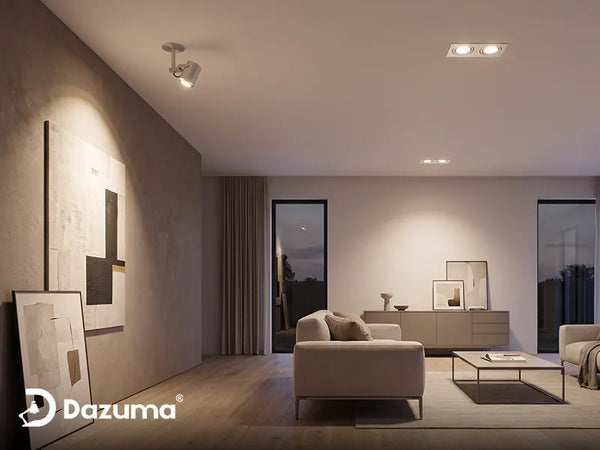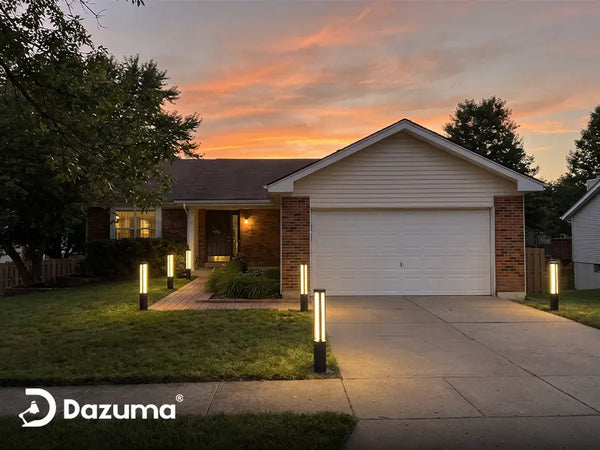

This guide is for homeowners, landscape designers, builders, and outdoor lighting buyers who are choosing between 2700K, 3000K, and 4000K Outdoor Lighting. It is especially useful if you are planning path lights, bollard lights, porch lights, patio lighting, driveway lighting, or garden lighting and want the home to feel safe, welcoming, and visually polished at night.
Key Takeaways
- Quick Answer: Which Color Temperature Is Best?
- What Kelvin Means In Outdoor Lighting
- 2700K Vs 3000K Vs 4000K Comparison Table
- Where To Use Each Color Temperature
- Choose Kelvin Based On Exterior Materials
- Do Not Confuse Kelvin With Brightness
- A Simple Zone Strategy
- Common Outdoor Lighting Mistakes
- Product Recommendations
- Final Advice
Introduction
Outdoor lighting is not only about brightness. The color of the light changes how your home feels after sunset. A fixture with the wrong color temperature can make a beautiful porch feel cold, a garden look washed out, or a walkway feel too dim. That is why comparing 2700K, 3000K, and 4000K matters before buying outdoor fixtures.
In simple terms, 2700K feels warm and cozy, 3000K feels warm but cleaner, and 4000K feels brighter and more neutral. For many residential exterior spaces, 3000K is the most versatile choice because it gives enough clarity for paths and driveways without making the home feel harsh.

Quick Answer: Which Color Temperature Is Best?
3000K is usually the best all-around choice for residential Outdoor Lighting. It is warm enough for curb appeal but clear enough for walking paths, driveways, entryways, and modern landscape lighting. It works especially well with black, bronze, aluminum, stone, concrete, and wood exterior materials.
Choose 2700K when you want a softer, more traditional glow for porches, patios, outdoor dining areas, or garden seating. Choose 4000K when visibility is the priority, such as service areas, side yards, garages, or task-oriented outdoor zones. For most front yards and landscape designs, however, 4000K can feel too cool if it is used everywhere.
What Kelvin Means In Outdoor Lighting
Kelvin, often written as K, describes the color appearance of white light. Lower Kelvin numbers look warmer and more golden. Higher Kelvin numbers look cooler, brighter, and closer to neutral white. It does not tell you how bright the light is; brightness is measured in lumens. A 2700K light and a 4000K light can have the same lumen output but feel very different at night.
That difference matters outdoors because your eye reads light color together with landscaping, exterior paint, stone, plants, and shadows. Warm light can make a patio feel relaxed. Neutral light can make a driveway feel clearer. The goal is not to pick the “brightest looking” color, but to choose the color that fits the space.

Color Temperature Changes The Mood
Think of 2700K as relaxed, 3000K as balanced, and 4000K as crisp. The fixture may be the same style, but the color temperature changes the impression. On a front walkway, 2700K feels soft and classic. 3000K feels refined and usable. 4000K can feel bright and functional, but less cozy.
For outdoor living areas, the best color is usually the one that feels comfortable to look at for several hours.
2700K Vs 3000K Vs 4000K Comparison Table
| Color Temperature | Visual Feel | Best Outdoor Use | Main Watchout |
|---|---|---|---|
| 2700K | Warm, golden, soft, traditional. | Porches, patios, outdoor dining, garden seating. | May feel too soft for long paths or task areas. |
| 3000K | Warm white, clean, balanced, modern. | Path lights, bollard lights, driveways, entryways, landscapes. | Can feel slightly less cozy than 2700K in lounge areas. |
| 4000K | Neutral, crisp, brighter-looking, practical. | Garages, side yards, utility areas, security-focused zones. | May feel too cool or commercial around homes. |

Where To Use Each Color Temperature
2700K: Best For Cozy Outdoor Living
Use 2700K when you want the outdoor space to feel calm, intimate, and close to the warmth of indoor evening lighting. It works beautifully for covered porches, outdoor dining areas, patio seating, pergolas, and traditional homes with warm exterior finishes. It also softens hard materials like brick and natural stone.
3000K: Best For Most Residential Exteriors
Use 3000K for the areas that need both comfort and visibility. This includes Path Lights, Bollard Lights, front walks, driveways, patios, and garden edges. It is warm enough to feel residential but clean enough to support safety and structure.
4000K: Best For Practical Visibility
Use 4000K in places where function matters more than atmosphere. It can work for garage areas, utility paths, service doors, outdoor work zones, and some security lighting. Be careful using it across an entire front yard because it can make plants, walls, and outdoor seating feel cooler than intended.
Match The Color To The Purpose
A front entry should feel welcoming. A driveway should feel clear. A patio should feel relaxing. A side yard should feel safe. These goals are not the same, so the same Kelvin value does not need to be used everywhere.
For a complete exterior plan, many homes look best with 2700K in lounge areas and 3000K along paths, steps, and garden edges.

How Color Temperature Affects Curb Appeal
Curb appeal depends on contrast, comfort, and consistency. If the light is too yellow, the home may look dim from the street. If the light is too cool, the home may look flat or overly commercial. 3000K often works well because it keeps the home warm while still defining architecture, steps, plants, and pathways.
For modern homes with black outdoor fixtures, concrete, metal, and crisp landscaping, 3000K is especially strong. It gives black fixtures a clean look without making the light feel sterile. That is why many modern Outdoor Lighting plans use 3000K as the primary exterior color temperature.
Outdoor Color Temperature Planning Guide
| Outdoor Area | Recommended Kelvin | Reason |
|---|---|---|
| Front Porch | 2700K–3000K | Welcoming glow with enough face-level comfort. |
| Garden Path | 3000K | Balanced warmth and visibility. |
| Patio Dining | 2700K | Soft atmosphere for relaxing and eating outdoors. |
| Driveway Edge | 3000K–4000K | Cleaner visibility for movement and guidance. |
| Utility Side Yard | 4000K | Practical light for function-first areas. |

Why 3000K Is A Safe Default
For homeowners who do not want to overthink the decision, 3000K is usually the safest starting point. It looks warm enough beside planting beds, stone, and wood, but it also keeps walkways and driveways readable.
It also pairs well with modern black exterior fixtures, including Outdoor Low Voltage Lights and hardwired bollard fixtures designed for pathways and courtyards.
Choose Kelvin Based On Exterior Materials
The same light color can look different depending on the materials around it. Warm brick, cedar siding, beige stone, and traditional stucco usually look best with 2700K or 3000K because those tones preserve the warmth of the surface. Modern concrete, black metal, gray stone, and cool white siding often look cleaner with 3000K because it adds definition without becoming icy.
Planting also matters. Trees, lawns, and shrubs tend to look richer under warmer light. If the goal is a soft garden atmosphere, avoid pushing the whole landscape toward 4000K. If the goal is a crisp modern entrance with strong architectural lines, 3000K is usually the better compromise.
| Exterior Material | Suggested Kelvin | Design Effect |
|---|---|---|
| Brick or warm stone | 2700K–3000K | Keeps the home soft and welcoming. |
| Concrete or gray stone | 3000K | Adds clean definition without feeling cold. |
| Black metal fixtures | 3000K | Looks modern, balanced, and residential. |
Do Not Confuse Kelvin With Brightness
A common mistake is choosing 4000K because the yard feels too dark. In many cases, the real problem is not color temperature. It may be fixture spacing, lumen output, beam direction, or poor placement. A well-placed 3000K bollard can feel safer than a poorly placed 4000K fixture because it puts light where people actually walk.
Before changing to a cooler color, check the layout first. Are the fixtures spaced evenly? Are steps and turns visible? Are the lights shielded so they illuminate the ground instead of shining into the eyes? Better placement often improves the space more than simply choosing a cooler Kelvin value.
A Simple Zone Strategy
Instead of forcing one color temperature across the whole property, think in zones. Use 2700K where people gather and relax, 3000K where people walk or arrive, and 4000K only where clear task visibility is more important than atmosphere. This approach keeps the home comfortable while still making practical areas easier to use safely.
For example, a backyard patio can feel best at 2700K, while the garden path leading to it may look better at 3000K. The two tones are close enough to work together, but each supports a different purpose.
Common Outdoor Lighting Mistakes
Using 4000K Everywhere
4000K can be useful, but it can also make a front yard feel too sharp. Use it carefully in functional areas rather than across every decorative outdoor zone.
Mixing Too Many Color Temperatures
A home can use more than one Kelvin value, but too many colors can look messy. Try to keep neighboring fixtures close in color temperature. A 2700K patio and 3000K path can work. A random mix of 2700K, 3000K, 4000K, and cool blue-white light usually does not.
Ignoring Fixture Direction
Even the right color temperature can feel uncomfortable if the light points directly into the eyes. Look for diffused shades, shielded output, and balanced placement, especially with Outdoor Wall Lighting near doors and seating areas.
Product Recommendations
The two bollard lights below both use 3000K warm white light, making them strong examples for residential path, garden, and courtyard lighting where balanced warmth and visibility matter.
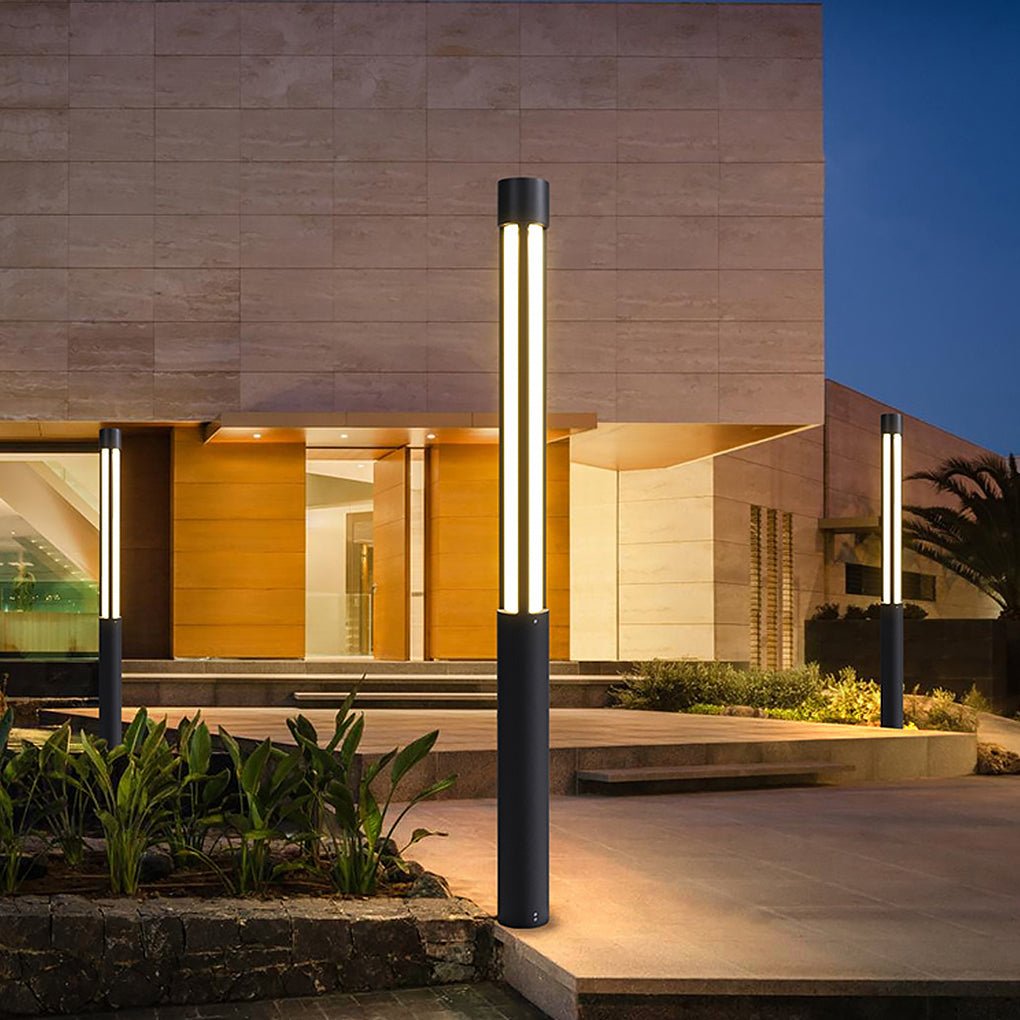
Residential Bollard Lights Modern Cylindrical LED Landscape Light
Best For: Modern walkways, driveway edges, garden paths, courtyards, and villa landscapes.
| Price | $389.99 |
| Power Supply | Hardwired |
| Voltage | 110–220V |
| Color Temperature | 3000K Warm White |
| Waterproof Rating | IP65 |
| Material | Die-Casting Aluminum + PC Shade |
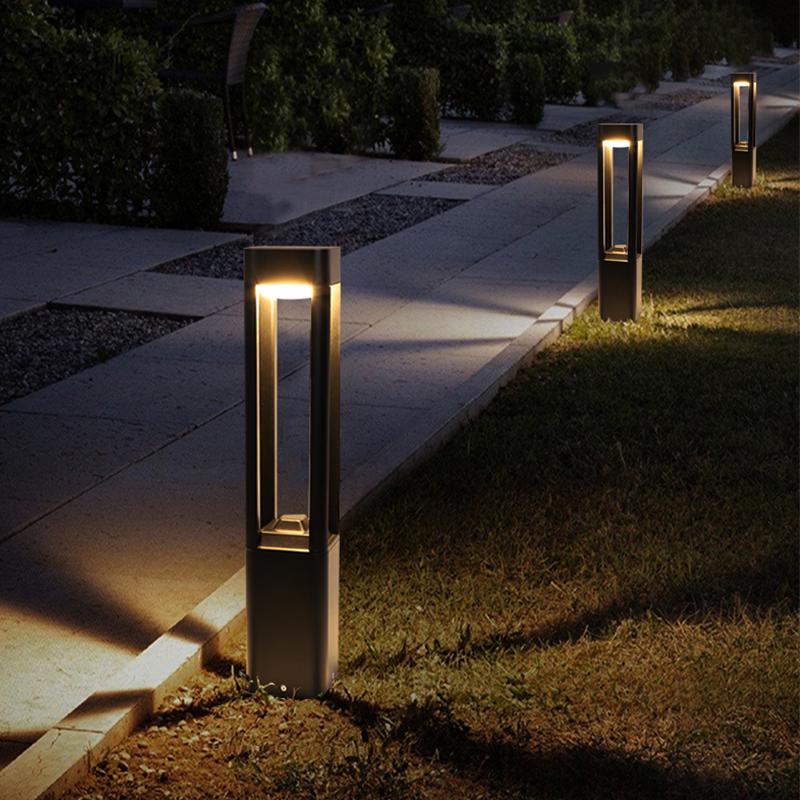
Bollard Landscape Lighting Waterproof Aluminum LED Light
Best For: Garden paths, grass edges, villa lawns, courtyard flower beds, and modern walkway accents.
| Price | $203.99 |
| Power Supply | Hardwired |
| Power / Output | 10W / 700LM |
| Color Temperature | 3000K Warm White |
| Waterproof Rating | IP55 |
| Material | Die Cast Aluminum + PC Shade |
Final Advice: Choose Comfort First, Then Brightness
If you are choosing one color temperature for most of your exterior, start with 3000K. It is the most flexible option for residential paths, bollard lights, front entries, driveways, and landscape edges. Use 2700K where people sit, eat, and relax. Use 4000K only where clearer task visibility is more important than mood.
For a polished exterior, keep the color temperature consistent within each outdoor zone. Browse Dazuma Landscape Lighting, bollard lights, path lights, and outdoor wall lights to build a lighting plan that feels intentional from the street to the patio.