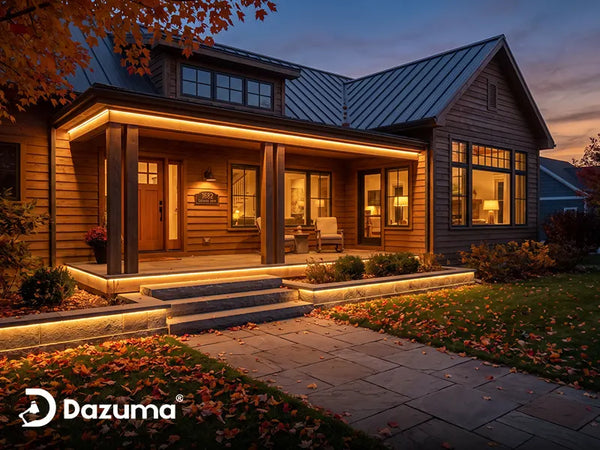

If your nighttime landscaping feels flat, uninspired, or overly dark, the solution rarely lies in adding more basic porch bulbs. The true magic of exterior design happens when you introduce directional illumination. As an experienced lighting designer, I constantly remind homeowners that outdoor spotlights are the most powerful tools in your architectural arsenal. They are the lead actors of your landscape, responsible for establishing drama, creating depth, and highlighting the absolute best features of your property after dusk.
However, knowing how to arrange these powerful fixtures is where the real challenge begins. Simply dropping a few high-wattage lights in the mulch and pointing them at your front door will result in a harsh, glaring environment that resembles a high-security facility rather than a welcoming home. A sophisticated design requires a nuanced understanding of beam spreads, strategic placement, and the delicate balance between light and shadow. By carefully selecting pieces from a premium Outdoor Lighting collection, you can transform an ordinary yard into a breathtaking evening retreat. Let us explore the core designer techniques for arranging your exterior spotlights to achieve a flawless, magazine-worthy aesthetic.

Technique 1: The Art of Uplighting Trees and Columns
Uplighting is arguably the most fundamental and dramatic technique in the landscape lighting playbook. By placing a directional fixture at the base of an object and aiming the beam skyward, you create a majestic, towering effect that completely alters the daytime perspective of the object. This technique is highly effective for illuminating mature trees, tall garden sculptures, and structural columns.
The most common mistake homeowners make is placing the spotlight directly against the trunk of a tree. This creates a severe "hot spot" of glaring light at the base while leaving the beautiful canopy in total darkness. Instead, pull the fixture back 12 to 24 inches from the trunk. Angle the beam so that it gently grazes the bark—highlighting the rough texture—while pushing the majority of the lumens up into the lower branches and leaves. For massive deciduous trees like oaks or maples, a single spotlight will look unbalanced. You will need to utilize two or three fixtures spaced evenly around the perimeter to fully capture the three-dimensional volume of the canopy.
Technique 2: Grazing and Wall Washing for Texture
If your home’s exterior features beautiful stonework, natural brick, or intricate wooden siding, flat lighting will ruin the aesthetic. To emphasize texture, designers use a specialized technique called wall grazing.

To achieve a perfect graze, place the spotlight extremely close to the wall—usually between 6 to 10 inches away—and aim it straight up the vertical surface. As the sharp beam of light travels upward, it catches the bottom edge of every stone, brick, or mortar joint, casting deep, micro-shadows above them. This instantly transforms a flat wall into a highly textured, three-dimensional masterpiece.
However, if you want to illuminate a large, flat surface (like smooth stucco or a wide garage facade) without highlighting imperfections, you need a different approach. This requires stepping the fixtures back several feet and utilizing dedicated Wall Wash Lighting. Unlike standard spots, wall washers emit a much softer, wider beam that bathes the architecture in a gentle, even glow, eliminating harsh shadows entirely.
Technical Guide: Matching Lumens and Beam Angles
A successful landscape design is highly dependent on technical precision. Using a wide-angle floodlight on a narrow flagpole wastes energy and creates severe light pollution, while using a low-lumen narrow spot on a massive oak tree will barely make a visual impact. Below is a professional reference table to help you select the exact specifications required for your specific outdoor elements:
| Target Application | Recommended Lumens | Ideal Beam Angle | Lighting Effect |
|---|---|---|---|
| Tall Palms & Flagpoles | 400 - 600 Lumens | 10° - 15° (Narrow Spot) | Tight, highly focused projection reaching high elevations. |
| Standard Deciduous Trees | 300 - 500 Lumens | 25° - 35° (Standard Spot) | Balanced spread illuminating trunk and mid-canopy. |
| Shrubs & Garden Statues | 150 - 300 Lumens | 35° - 45° (Wide Spot) | Soft highlighting without blinding foreground glare. |
| Wide Architectural Facades | 600 - 1000+ Lumens | 60° - 120° (Flood/Wash) | Broad, diffused light for safety and overall visibility. |
Technique 3: Cross-Lighting and Layered Ambiance
A singular spotlight can sometimes be too aggressive, creating deep, unflattering shadows on the opposing side of your focal point. This is particularly problematic for three-dimensional features like ornate water fountains, intricate statues, or detailed entry gates. The professional solution is cross-lighting.
Cross-lighting involves placing two separate spotlights at opposing diagonal angles to illuminate the exact same object. By striking the focal point from two different directions, the beams naturally wash out the harsh shadows, revealing the full, 360-degree beauty of the piece.
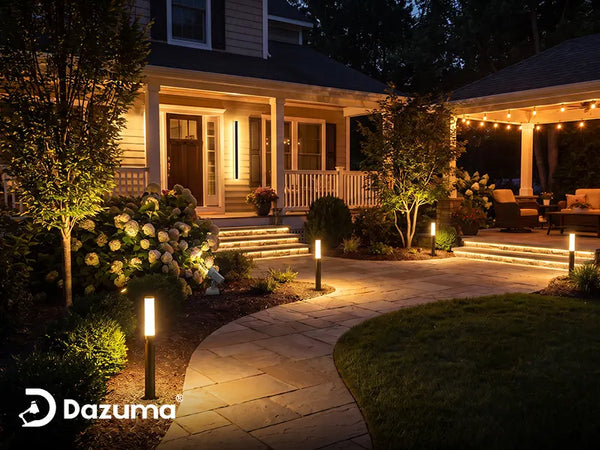
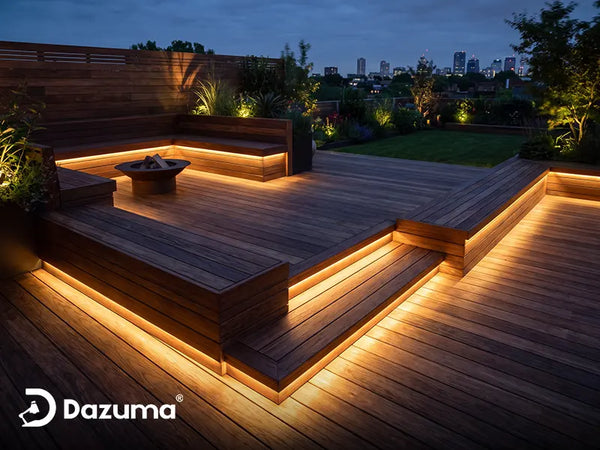
Once your bold spotlighting is established, you must layer the space to connect these bright visual zones. This is where Path Lights become invaluable. Installing subtle, downward-facing path fixtures along your walkways creates a soft horizontal plane of light that guides the eye. If trenching wires to the remote edges of your garden is too destructive or costly, consider integrating premium Outdoor Solar Lights. Modern solar technology provides reliable, wire-free accent lighting that perfectly complements your hardwired spotlighting system.

The Importance of Durability and IP Ratings
Because spotlights live in the dirt—exposed to torrential rain, sprinkler systems, freezing snow, and acidic mulch—their physical construction is just as important as their light output. Never compromise on material quality. Look for fixtures constructed from heavy-duty cast aluminum, solid brass, or marine-grade stainless steel. Furthermore, ensure the fixtures hold a minimum IP65 waterproof rating, meaning they are fully sealed against dust ingress and low-pressure water jets. A fixture with proper silicone gaskets prevents internal condensation, ensuring your LED components last for decades without shorting out.
Bring Your Nighttime Landscape to Life
Stop settling for a yard that vanishes after sunset. By implementing professional uplighting, wall grazing, and strategic layering, you can drastically enhance the security, beauty, and value of your home. Ready to execute your vision? Browse our complete collection of architectural-grade outdoor lighting, designed to endure the elements while delivering uncompromising brilliance.
Explore Premium Outdoor Lighting