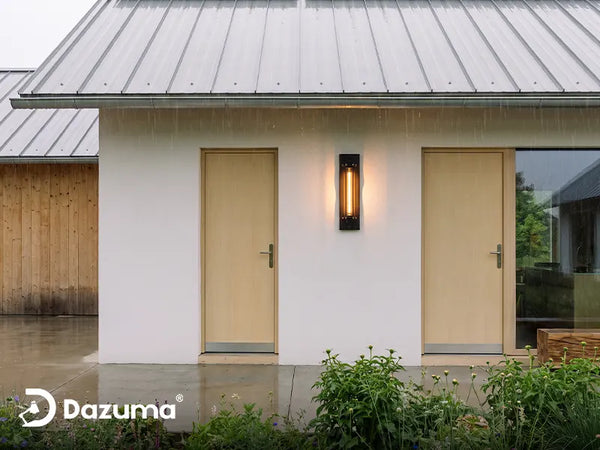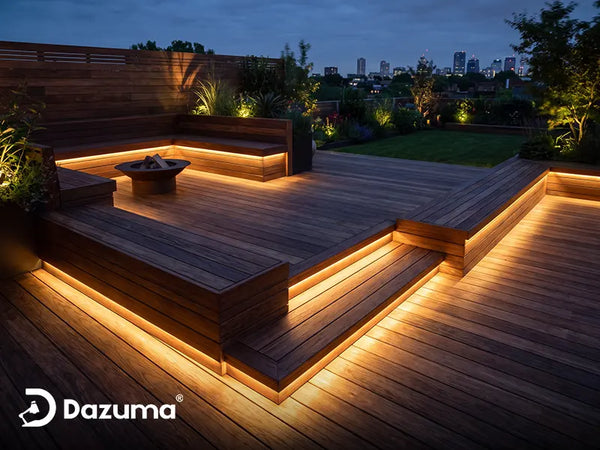

Who This Is For: This guide is for homeowners who want outdoor security lighting that feels safer at night, looks good on the house, and does not turn the front entry into a harsh spotlight zone.
Introduction
Warm white vs daylight is one of those outdoor lighting debates that sounds simple until you actually stand in your driveway at night. Warm white feels comfortable and residential. Daylight looks sharper and more alert. So which one is better for outdoor security? The honest answer is: daylight can feel more noticeable in security zones, but color temperature by itself is not what deters intruders. Visibility, motion activation, coverage, glare control, and fixture placement matter more.
If you only choose the bluest, brightest-looking light, you may create glare, annoy neighbors, and still leave dark pockets beside the garage or side gate. If you only choose a soft warm light, the entry may feel beautiful but not alert enough for a driveway, alley, or backyard corner. The best outdoor security lighting usually uses the right color temperature in the right zone.
In this guide, we will compare warm white, neutral white, and daylight for real residential security situations: front doors, garages, side yards, gates, balconies, corridors, and garden walls. We will also look at two Dazuma outdoor wall light examples: one 4000K neutral linear wall light with motion-sensor options, and one 3000K warm white rectangular wall light for a softer entry and garden-wall look.

Quick Answer: Which Color Deters Intruders Better?
If we are speaking strictly about visibility, daylight or cooler white light can look more alert because it appears crisper and makes hard surfaces easier to read. That is why cooler light is often used near driveways, service doors, side yards, and security-focused areas. But if we are speaking about real deterrence, the better answer is this: a well-placed motion sensor light usually matters more than choosing warm white or daylight.
For most homes, warm white around 2700K to 3000K is better for front porches, main entries, and places where the light stays on for long periods. It feels more welcoming and less aggressive. Neutral white around 4000K is a useful middle ground for garage doors, corridors, balconies, and modern entries where you want more clarity without the cold look of full daylight. Daylight around 5000K to 6500K may be useful for task-heavy security zones, but it should be aimed carefully so it does not create glare.
So the practical rule is simple: use warmer light where people arrive and cooler or neutral light where you need sharper visibility. For fixture categories, start with Motion Sensor Wall Lights for active security and Outdoor Wall Lighting for everyday exterior coverage.
Why Color Temperature Alone Does Not Stop Intruders
It is tempting to ask, “Which color scares people away?” But a light color does not work like a lock, camera, or alarm. Outdoor lighting helps security mainly by increasing visibility, reducing hiding places, and making movement easier to notice. A sudden motion-triggered light can also create a moment of attention, which is useful around doors, side passages, and garages.
The weakness is that more light is not always better. Poorly aimed light can shine into your eyes and make it harder to see past the bright spot. Too much constant light can flatten the scene and create deep shadows behind shrubs, bins, walls, or parked vehicles. A carefully placed 4000K wall light may be more useful than a harsh daylight floodlight aimed straight outward.
Think of security lighting as a system. It should answer four questions: Can you see the approach? Can a camera capture useful detail? Are the dark corners reduced? Does the light avoid glare for residents and neighbors? Color temperature is only one piece of that system.

Motion Response Is The Real Security Upgrade
A light that turns on when someone approaches often feels more security-focused than a light that simply stays on all night. The sudden change draws attention and makes movement easier to notice.
That is why motion-sensor fixtures are a better product match for this topic than purely decorative lanterns or path lights. For front doors and garages, Outdoor Wall Sconces with controlled beams can support both security and curb appeal.
Where Warm White Works Best
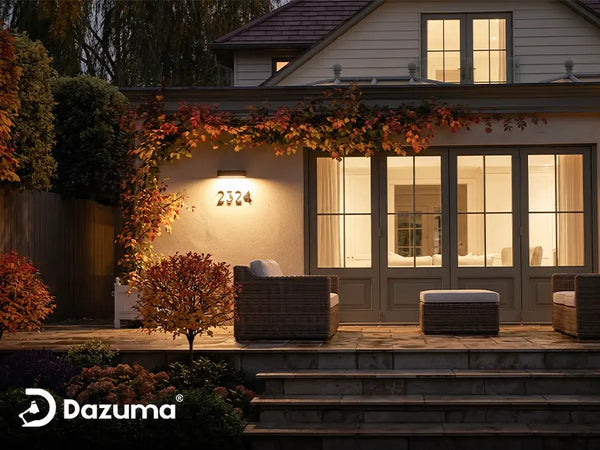
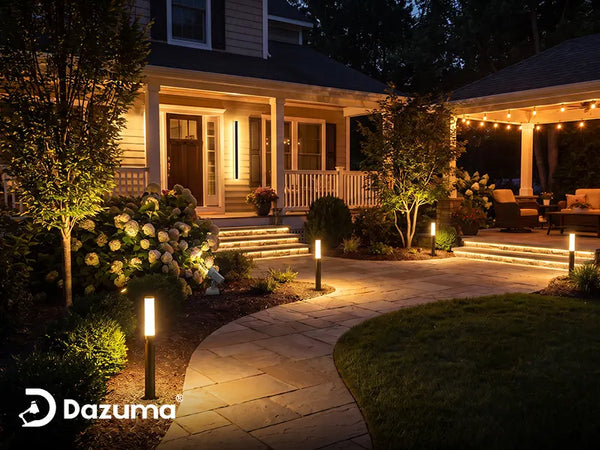
Warm white outdoor lighting usually sits around 2700K to 3000K. It has a softer yellow tone and feels more like home lighting than commercial security lighting. Around the front door, porch, garden wall, or courtyard, warm white creates a comfortable welcome instead of a cold glare.
Warm white is especially helpful when the light stays on for several hours. A front entry that glows softly feels safer without making guests feel like they are standing under a work lamp. It also pairs well with brick, wood, stone, black metal, plants, and warm exterior paint colors. If your home is traditional, transitional, rustic, or warm modern, 3000K is often the easier choice.
The trade-off is that warm white may not feel as visually sharp in a deep driveway, side yard, or camera-focused zone. It can still support security, but it works best when the fixture is close to the task: beside the door, near the lock, next to a garden gate, or along a porch wall. Warm white is about comfort plus visibility, not maximum alertness.
Where Daylight Or Cooler Light Works Best
Daylight outdoor lighting usually means a much cooler tone, often around 5000K to 6500K. It can make an area look brighter and more clinical. For security-focused areas, that crisp look can be useful because it helps people notice objects, movement, and edges more quickly.
Good daylight use cases include long driveways, back-lot corners, service alleys, detached garage areas, and places where a camera needs a clearer scene. But daylight lighting should be used with discipline. A harsh fixture aimed directly outward may bother neighbors, make the house feel less comfortable, and create glare that actually reduces visibility.
For most residential homes, I would not use daylight everywhere. It is better as a targeted layer. Use it where you need extra clarity, then use warm white or neutral white where people gather, arrive, or spend time. For a deeper color comparison, you can also read 2700K Vs 3000K Vs 4000K Outdoor Lighting.

Why Neutral White Is Often The Practical Middle Ground
Neutral white around 4000K deserves more attention in outdoor security lighting. It is not as cozy as 3000K, and it is not as stark as 6000K. For many modern homes, that middle range feels clean, crisp, and usable without making the exterior look cold.
This is why a 4000K fixture can make sense over a front door, garage wall, balcony, corridor, or entrance where both visibility and style matter. It gives more clarity than warm white, but it still feels residential when the beam is controlled. If you are unsure whether warm white is too soft or daylight is too harsh, neutral white is often the safer compromise.
For security writing, this is the important information gain: the best color is not always at the extreme. A neutral light with motion sensing and good placement may outperform a brighter daylight fixture installed poorly. In other words, a smart setup beats an aggressive color temperature.
Use Neutral White For Transitional Security Zones
Some spaces are both decorative and security-related. A front door, garage-adjacent entry, balcony corridor, or covered side passage needs to look good and stay readable. Neutral white works well in those mixed-use zones.
If you are planning garage or side-entry lighting, it also helps to compare fixture type and placement in Front Door Lights Vs Porch Ceiling Lights.

Placement Matters More Than Color
Here is the simple placement rule: aim the light across the area you want to see, not straight into people’s eyes. A security light should reveal movement, not blind the person walking up the path. For doors, place the light so it illuminates the handle, threshold, and approach. For garage walls, aim the beam down or across the driveway edge. For side yards, light the walking line and the hiding places near fences or corners.
Also think about height. A fixture mounted too low may glare into your eyes. A fixture mounted too high may create strong shadows under eaves, vehicles, or shrubs. The best height depends on the wall and fixture shape, but the goal is consistent: controlled light on the useful zone.
| Outdoor Zone | Best Color Direction | Best Product Type |
|---|---|---|
| Front Door | Warm White Or Neutral White | Wall sconce, linear wall light, porch wall light |
| Garage And Driveway | Neutral White Or Daylight | Motion sensor wall light, downlight, security wall light |
| Side Yard | Neutral White Or Daylight | Motion sensor light, spotlight, wall light |
| Garden Gate | Warm White Or Neutral White | Outdoor wall light, gate light, low-glare accent light |

Control Glare Before Chasing Brightness
Glare can make a security light feel powerful, but it does not always make the space easier to see. A controlled beam on the driveway, door, or side path is usually more helpful than a harsh beam pointed outward.
For narrow side yards or darker corners, Outdoor Spotlights can support wall lights when they are aimed carefully and not used as a blanket flood.
Recommended Outdoor Security Wall Lights
The two product examples below show two different approaches. The first uses neutral 4000K light and a downlight beam, making it a stronger fit for entrances, corridors, balconies, and security-minded modern walls. The second uses warm 3000K light with ambient output, making it better for gates, garden walls, villas, and entry areas where comfort matters as much as safety.
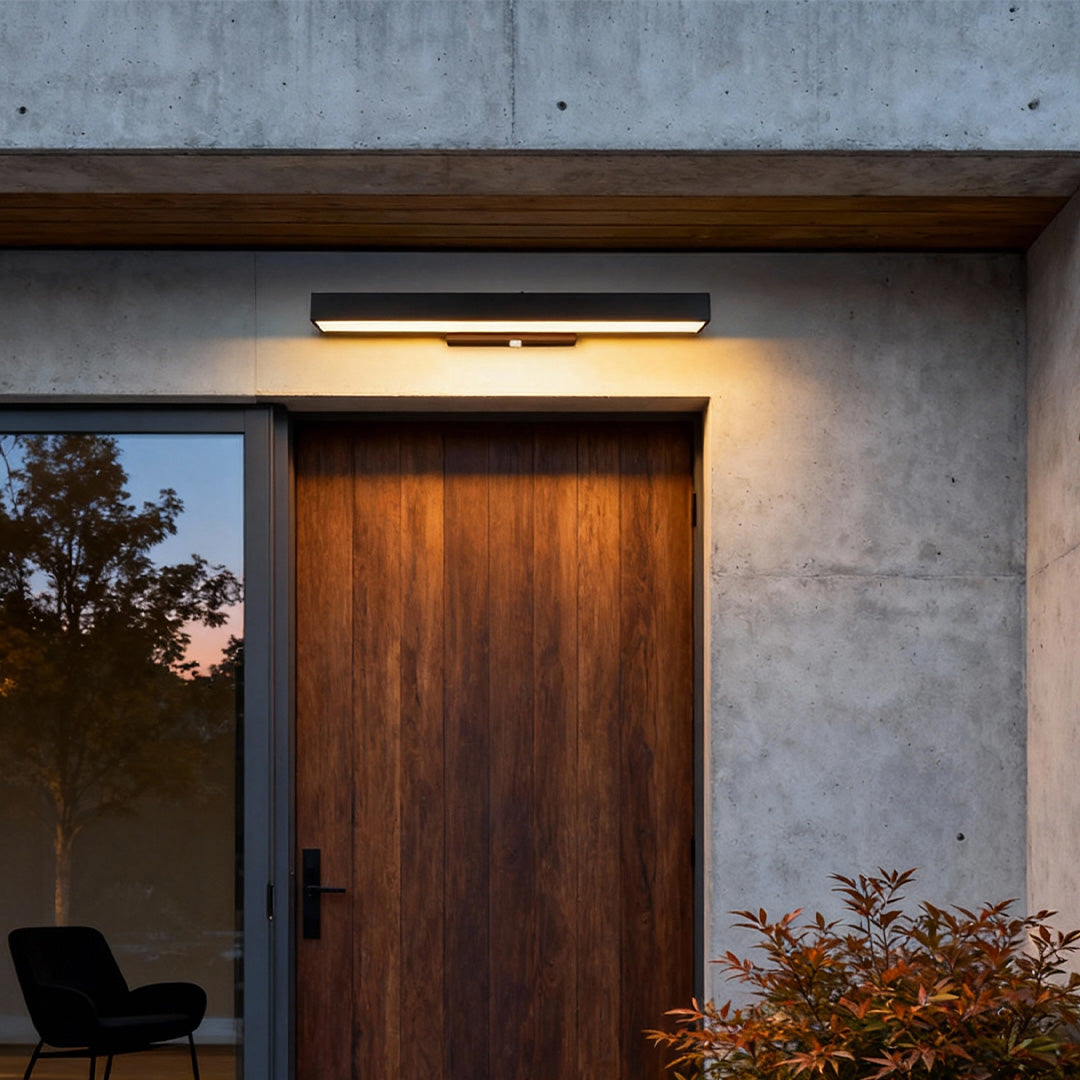
LED Linear Wall Light Outdoor Black Rectangular Lamp
Best For: Front doors, balconies, corridors, garage-adjacent entries, modern exterior walls, and homeowners who want a cleaner security look without using harsh daylight.
| Price | $176.99 |
| Product Type | Motion Sensor Wall Lights |
| Induction Option | No Motion Sensor / Motion Sensor Options |
| Power Supply | Hardwired |
| Voltage | 85–265V |
| Color Temperature | Neutral 4000K |
| Light Direction | Down |
| Material | Stainless Steel, PMMA Shade |
| Ingress Protection | IP65 |
| Power | 20W / 30W / 40W |
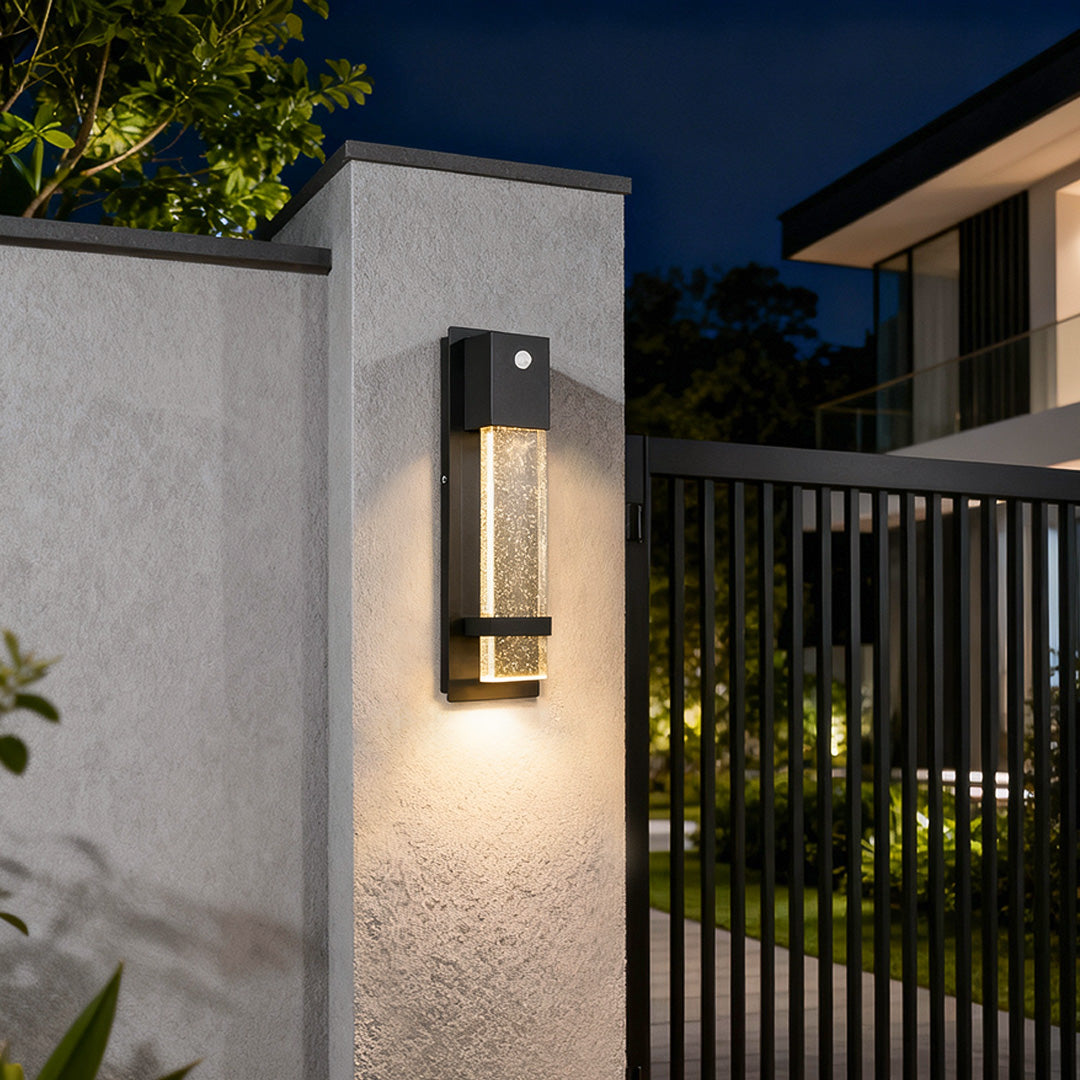
Rectangular Outdoor Wall Lights Minimalist Bubble Glass LED Light
Best For: Garden gates, villa exterior walls, porch edges, courtyard entries, and homeowners who want warm security lighting that still feels comfortable.
| Price | $174.99 |
| Product Type | Motion Sensor Wall Lights |
| Induction Option | No Motion Sensor / Motion Sensor Options |
| Power Supply | Hardwired |
| Voltage | 110–220V |
| Color Temperature | Warm White 3000K |
| Light Direction | Ambient |
| Material | Aluminum, Glass Shade |
| Ingress Protection | IP54 |
| Illumination Area | 86 sq ft – 129 sq ft |
What The Space Feels Like After The Right Choice
A warm white security light near the front door makes the home feel occupied, cared for, and approachable. It gives guests a clear place to stand, helps the lock and threshold feel visible, and keeps the entry from feeling cold. This is the color family I would use where people pause, ring the doorbell, carry groceries, or sit on a porch.
A neutral or daylight-leaning security light changes the mood. It feels more alert. It makes a side corridor, balcony, or garage-adjacent wall easier to read. When motion sensing is added, the light does not need to stay harsh all night. It can remain off or low-profile until movement happens, then create attention at the moment it matters.
Use Warmth Where People Pause
Front entries should not feel like loading docks. A warm white wall light can still support safety while keeping the porch friendly. The key is to place it close enough to the handle, step, or gate so the light is useful.
For longer overnight use, you may also compare Dusk To Dawn Outdoor Wall Lights if you want automatic low-maintenance coverage.

Common Security Lighting Mistakes
Choosing Daylight Everywhere
Daylight can feel alert, but using it at every door, window, and porch can make the home look harsh. Use it only where sharper visibility is truly needed.
Letting Warm White Become Too Dim
Warm white can work for security, but it still needs enough output and good placement. A pretty glow hidden behind a plant does not help anyone see the approach.
Aiming Lights Straight Outward
Lights aimed straight out can create glare. Downward or wall-washing light often gives a cleaner view of the ground, door, and nearby objects.
Forgetting Motion Sensors
If security is the priority, a motion sensor option is often more meaningful than a small color-temperature difference. Motion makes the light responsive instead of passive.
Outdoor Security Lighting Checklist
- Choose the zone first: Entry, garage, side yard, gate, balcony, or backyard corner.
- Pick the color by purpose: Warm white for welcome, neutral for balanced clarity, daylight for targeted alertness.
- Use motion where possible: Motion activation is useful near doors, driveways, corridors, and hidden approach paths.
- Control glare: Aim light down or across the target area instead of outward into eyes.
- Reduce hiding places: Light corners, side gates, and shadow pockets near walls or shrubs.
- Match the fixture to weather exposure: Check IP rating and installation requirements.
- Keep the home comfortable: Security lighting should not make your porch or neighbors’ windows uncomfortable.
Final Advice
If you want a simple answer, daylight can look more alert, but it does not automatically deter intruders better by itself. A warm white light placed well can be more useful than a daylight light placed badly. A neutral 4000K motion sensor wall light may be the best everyday compromise for many modern homes because it gives cleaner visibility without turning the entry cold.
Use warm white around welcoming areas, neutral white for mixed entry and security zones, and daylight only where sharper visibility is truly needed. Then focus on the real security basics: motion response, dark-corner coverage, low glare, weather rating, and correct mounting height. To build a stronger exterior plan, explore Dazuma’s Motion Sensor Wall Lights, Outdoor Wall Lighting, and Outdoor Spotlights collections.