
Who This Is For: This guide is for homeowners who want outdoor accent lights that are easy to place, beautiful at night, and practical for gardens, patios, lawns, decks, and decorative landscape corners.
Introduction
Outdoor accent lights are not always about lighting a whole yard. Most of the time, their job is smaller and more emotional: adding a warm glow near ornamental grasses, making a garden sculpture feel alive at night, highlighting a deck corner, or giving a patio a softer evening personality.
That is why the power source matters so much. A corded or low-voltage accent light can feel more dependable when you want a planned landscape feature to look the same every night. A battery-powered or solar accent light can feel more flexible when you want easy placement, seasonal movement, or decorative charm without running wire.
So which is more flexible? The honest answer is: battery-powered and solar accent lights are usually more flexible for placement, while corded, hardwired, or low-voltage lights are usually more flexible for long-term performance and design control. The best choice depends on what kind of flexibility you actually need.

Quick Answer: Which Is More Flexible?
Battery-powered and solar outdoor accent lights are usually more flexible if you care about easy placement, seasonal decorating, rental-friendly setup, and moving lights around without wiring. They are great for patios, lawns, small gardens, and decorative corners where you want a quick mood upgrade.
Corded, hardwired, and low-voltage outdoor accent lights are more flexible if you care about predictable performance, grouped layouts, repeated landscape effects, and a more permanent design plan. They are better when you want multiple accent lights to operate consistently along a garden edge, water feature, deck border, or architectural landscape feature.
For most homes, the best answer is not one or the other. Use wire-free or solar lights where you want easy movement and personality. Use low-voltage or fixed accent lights where the lighting needs to be stable and repeated. That mix usually creates the most livable Outdoor Lighting plan.
What “Flexible” Really Means Outdoors
When people ask which outdoor accent light is more flexible, they usually mean “which one is easier to place?” That is a good question, but it is not the whole picture. Outdoor flexibility can mean several different things.
It can mean installation flexibility: can you place the light without digging, wiring, or hiring help? It can mean design flexibility: can you build a repeated lighting rhythm across plants or along a path? It can mean seasonal flexibility: can you move the light from a summer patio to a fall garden corner? It can also mean performance flexibility: will the light keep working through different weather, shade patterns, and evening routines?
Once you separate those meanings, the answer becomes clearer. Solar and battery-powered accent lights win on easy movement. Corded and low-voltage lights win on planned consistency.

Easy Placement Is Only One Kind Of Flexibility
If you want to place a light today and move it next weekend, solar or battery-powered designs are hard to beat. But if you want the same landscape effect every night, a more permanent power setup may feel better over time.
For quick, wire-free garden accents, start with Outdoor Solar Lights. For more structured layouts, compare them with Landscape Lighting options.
Where Corded Or Low-Voltage Accent Lights Win
Corded, hardwired, and low-voltage accent lights are best when the lighting effect is part of the landscape design. If you want a row of reed-shaped lights to create a natural rhythm near ornamental grasses, for example, a more stable setup can make the whole scene feel intentional.
The strongest benefit is consistency. You can plan where the lights go, how many fixtures create the effect, and how the scene will look night after night. This matters for areas that are part of the home’s permanent curb appeal: front gardens, villa courtyards, deck edges, pond borders, and professionally designed planting beds.
Low-voltage lighting can also be safer and more suitable for outdoor landscape runs than improvised plug-in solutions. The practical trade-off is that installation requires more thought. You may need a transformer, wire routing, and a cleaner plan for fixture spacing. For some homeowners, that is a downside. For others, that is exactly what makes the result look more polished.
Where Battery-Powered And Solar Accent Lights Win
Battery-powered and solar accent lights win when freedom matters more than a fixed system. Want a decorative dog lantern beside a garden bench this month and near the patio next month? A solar statue light can do that. Want a playful accent that turns on at dusk without connecting to a low-voltage line? Solar is the easier answer.
These lights are also friendly for renters, seasonal decorators, and homeowners who do not want to disturb landscaping. You can test a location for a few nights before deciding whether the light belongs there. That testing ability is underrated. Sometimes the perfect daytime spot is not the perfect nighttime spot, and wire-free lighting gives you room to experiment.
The trade-off is performance dependency. Solar lights need daylight to charge well. Battery-powered lights need charging or battery care. If the light sits under thick shade, beneath a covered porch, or in a dark side yard, the convenience may come with shorter working time.

Corded Vs Battery-Powered Outdoor Accent Lights
Here is the practical comparison I would use when helping a neighbor choose. Do not start with the product photo. Start with the job the light needs to do.
| Decision Point | Corded / Low-Voltage | Battery / Solar |
|---|---|---|
| Placement | Best for planned, fixed locations. | Best for flexible, movable placement. |
| Performance | More predictable when properly installed. | Depends on charging, batteries, and sunlight. |
| Design Control | Great for repeated patterns and grouped landscape effects. | Great for decorative accents and testing new spots. |
| Maintenance | Less day-to-day attention after installation. | May need panel cleaning, charging, or battery care. |
| Best Feeling | Polished, permanent, landscape-designed. | Playful, flexible, easygoing, seasonal. |
Recommended Outdoor Accent Lights
The two Dazuma picks below show the difference clearly. One is a reed-inspired landscape spike light that can work as part of a planned lighting strip with hardwired or solar power options. The other is a decorative solar dog statue light that leans into wire-free charm and easy placement.
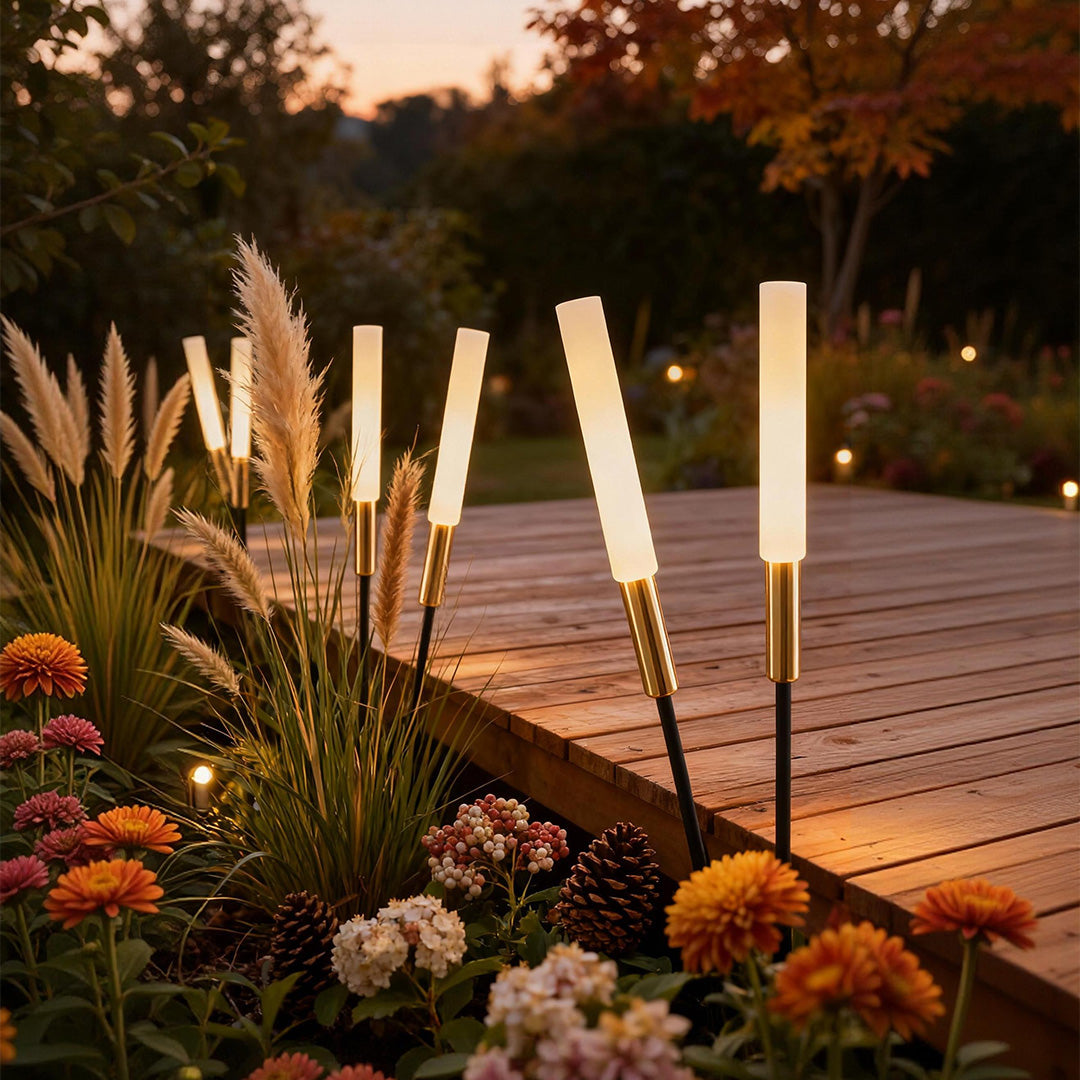
Landscape Light Spikes Outdoor LED Lawn Metal Light
Best For: Ornamental grasses, lawn edges, pond borders, villa courtyards, deck-side planting beds, and repeated landscape accent lighting.
| Price | $211.99 |
| Product Type | Novelty Lights |
| Power Supply | Hardwired / Solar |
| Voltage | DC12V, Transformer Required For Hardwired Setup |
| Power | 1W |
| Material | Stainless Steel, Aluminum, Acrylic Shade |
| Color Temperature | Warm White 3000K |
| Waterproof Rating | IP65 |
| Height Options | 25.6'', 31.5'', 36.6'', 43.3'', 48.4'', 55.1'', 60.2'' |
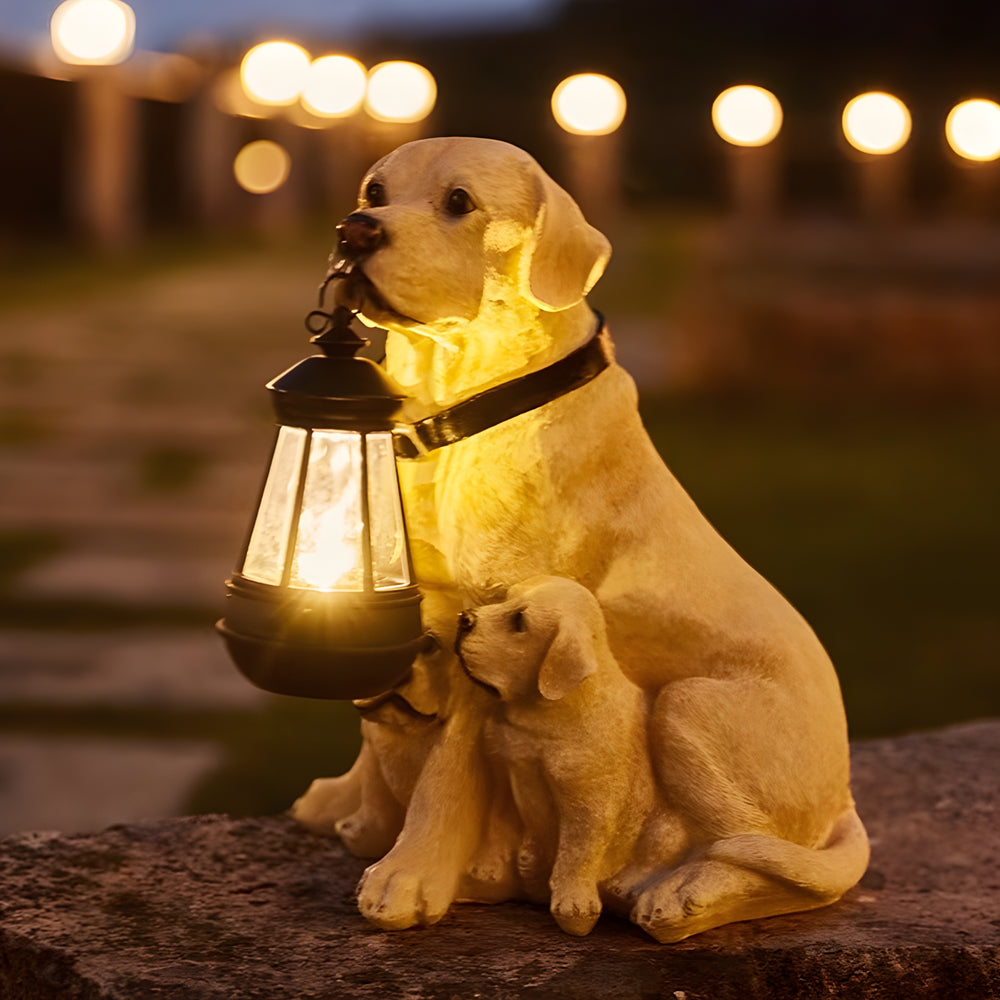
Dog Solar Light Statue Modern Resin Landscape Light
Best For: Garden corners, lawn decor, patio edges, family-friendly outdoor spaces, playful landscape accents, and wire-free decorative lighting.
| Price | $121.99 |
| Product Type | Novelty Lights |
| Power Supply | Solar |
| Power / Lumens | 5W / 350LM |
| Material | Fiberglass Resin Fiber |
| Color Temperature | Warm White 3000K |
| Working / Charging Time | 12 Hours / 5–6 Hours |
| Battery Capacity | 2500mAh |
| Waterproof Rating | IP65 |
A Simple Placement Framework
Here is the useful way to decide: use fixed power for planned rhythm, and use battery or solar power for personality and movement.
1. Planned Rhythm
If the goal is to create a repeated line of light through ornamental grass, along a deck edge, or around a water feature, choose a corded, low-voltage, or dual-power fixture. The repeated spacing will look more intentional and will be easier to control.
2. Decorative Personality
If the goal is charm, seasonal decor, or a small story in the garden, a solar or battery-powered accent is often better. A dog statue light, for example, does not need to be part of a strict landscape grid. It works because it feels personal and playful.
3. Test Before You Commit
Battery and solar lights are useful for testing nighttime scenes. Try them in a few locations for several evenings. If one spot becomes a permanent favorite, that may be a sign to build a more stable lighting layer there later.
Use The Power Source To Match The Mood
A permanent landscape bed often feels better with a planned low-voltage look. A cozy garden corner may feel better with a movable solar accent. Let the mood guide the power choice instead of forcing one type of light everywhere.
If your layout includes paths or walking zones, pair accent pieces with practical Path Lights so decoration does not have to handle safety alone.

The New Insight: Flexibility Has A Timeline
The most helpful way to think about flexibility is time. Short-term flexibility means you can move the light, test a new spot, decorate for a season, or avoid installation work. Battery-powered and solar accent lights are excellent for that.
Long-term flexibility means you can build a reliable lighting pattern that still looks good years from now. Corded, hardwired, and low-voltage lights are better for that because the system can be planned and repeated. This is why a homeowner might start with solar accents, learn where the yard needs light, and then later upgrade key zones to a low-voltage layout.
That is not a failure of either option. It is actually a smart path. Use battery-powered or solar lights to experiment. Use fixed power when the design becomes permanent.

Use Fixed Layouts For Repeated Effects
Some accent lights look best as a group. Reed-shaped landscape lights are a good example because their height variation can imitate natural planting. That kind of effect usually works better when the layout is planned, repeated, and left in place.
For more decorative garden pieces, browse Novelty Lights together with broader Landscape Lighting to balance charm and structure.
What The Space Feels Like After Choosing Well
When the power source matches the job, the outdoor space feels calmer. A planned reed-light layout makes a garden bed feel designed, almost like the plants have a quiet glow of their own. It adds movement without clutter. It can make the area near a deck, pond, or lawn edge feel more layered and considered.
A solar dog statue light creates a different feeling. It is not trying to be architectural. It adds personality. It gives a garden corner a small story, especially for family homes, pet lovers, or patios that need a little charm. At night, the warm lantern glow feels friendly rather than formal.
That emotional difference matters. Good accent lighting is not only about visibility. It is about whether the yard feels like your yard.
Common Mistakes To Avoid
Thinking Battery-Powered Always Means Better
Wire-free lights are easier to place, but that does not automatically make them better. If you want a permanent repeated layout, low-voltage or fixed power may create a cleaner result.
Using Corded Lighting Where People Walk
Never let outdoor cords become trip hazards. If a corded or plug-in style is used, the route should be protected, outdoor-rated, and planned safely. For landscape runs, low-voltage systems are usually cleaner than loose extension cords.
Ignoring Sunlight For Solar Accent Lights
A solar light in deep shade may look great during the day but disappoint at night. Check the charging location before depending on it.
Expecting Accent Lights To Do Safety Lighting
Accent lights are usually for mood, edges, and decoration. If the area includes steps, driveways, or main walking paths, add proper task or path lighting as needed.
Outdoor Accent Light Buying Checklist
- Purpose: Decide whether the light is for mood, decoration, path guidance, or a repeated landscape effect.
- Power Source: Choose battery or solar for easy movement, and corded or low-voltage for planned consistency.
- Weather Rating: Choose outdoor-rated fixtures with suitable waterproof protection.
- Sun Exposure: For solar lights, confirm the fixture can charge well during the day.
- Safety: Keep cords, fixtures, and decorative pieces out of main walking paths.
- Style: Use sculptural lights for personality and repeated lights for landscape rhythm.
- Layering: Combine accent lights with path, step, or wall lighting when safety matters.

Final Advice
If your main goal is quick, flexible placement, battery-powered and solar outdoor accent lights are usually the winner. They let you test ideas, decorate seasonally, and add personality without a big installation plan. If your main goal is a repeated, polished, permanent landscape effect, corded, hardwired, or low-voltage accent lights will usually feel better in the long run.
For a garden that feels both useful and personal, mix the two. Use fixed accent lights where the landscape needs structure. Use solar decorative lights where the yard needs a little character. To build the right combination, explore Dazuma’s Outdoor Solar Lights, Landscape Lighting, and Novelty Lights collections. The best choice is not the one with the most freedom on paper. It is the one that fits how your outdoor space actually lives at night.