
This guide is for homeowners who like the clean shape of cone pendant lights but do not want to install something that feels dated one year later. If you are updating a kitchen island, dining nook, bedroom corner, hallway, or small living room, the real question is not whether cone pendants are “in” or “out.” It is whether the finish, scale, material, and light effect match the way homes are moving in 2026.

Quick Answer: No, Cone Pendant Lights Are Not Out Of Style In 2026
Cone pendant lights will not be out of style in 2026. The cone shade is too useful to vanish. It directs light downward, keeps glare under control, and creates a clean visual line over islands, dining tables, desks, and bedside areas. That kind of practical shape tends to outlast short trend cycles.
What is changing is the way cone pendants are being used. The very harsh version — flat matte black, cold white bulb, sharp industrial attitude, repeated three times over every kitchen island — can feel a little tired now. It is not wrong, but it needs the right room. In 2026, cone pendant lights look fresher when they have warmer finishes, softer edges, richer materials, colored shades, ceramic textures, glass layers, or sculptural proportions.
A good rule is this: the cone shape is timeless; the styling around the cone is what dates it. If you choose a pendant that looks connected to your cabinets, table, hardware, and wall color, it can feel current for years. If you choose a fixture only because it matches a photo you saw everywhere online, it may age faster.
If you are still comparing broad styles, start with Pendant Lighting first, then narrow by shape, material, finish, and room. Cone pendants are one useful branch of the pendant family, not the only option.
Why Cone Pendant Lights Still Last
The reason cone pendant lights stay around is simple: they solve a real lighting problem. A cone shade naturally pushes light down toward a surface. That is why you see the shape above kitchen islands, coffee bars, reading corners, work tables, and restaurant counters. It is not just decoration. It is a small piece of optical control.
Here is the information gain most shoppers miss: a cone shade is not one single lighting effect. A narrow cone creates a stronger, more focused pool of light. A wider flared cone spreads light more gently and feels more relaxed. A metal cone blocks side glare and gives stronger task light. A translucent glass or resin cone softens the glow and makes the fixture feel more decorative. Two pendants can both be “cone pendants,” yet feel completely different at night.

The Shape Works Because It Controls Glare
A cone shade hides the bulb from many viewing angles while sending light where you need it. That makes it useful over counters and tables, where glare can be more annoying than low brightness. In everyday life, this means chopping vegetables, pouring coffee, or reading a menu feels easier on the eyes.
That functional value is why cone pendants are safer than many highly specific trend fixtures. A novelty shade may look exciting for one season. A cone shade keeps doing its job. The best 2026 versions simply look less rigid and more personal.
What Can Make A Cone Pendant Feel Dated
Cone pendant lights do not automatically look outdated, but a few choices can push them there. The first is scale. A tiny cone over a large kitchen island can look like an afterthought. A huge cone in a narrow hallway can feel heavy and awkward. Scale matters more than the trend label.
The second issue is finish. Matte black is still useful, especially in modern, farmhouse, and industrial homes, but too much black hardware, black faucets, black window frames, and black pendants can make a kitchen feel like it was copied from one design era. If the room already has strong black accents, consider softer metal, warm white, colored resin, glass, brass, or a mixed-material pendant instead. For more finish-based browsing, Black Pendant Light styles can be helpful, but compare them against warmer and lighter options before deciding.
The third issue is bulb choice. A cold bulb in a hard metal cone can make even a beautiful pendant feel harsh. For most homes, 2700K to 3000K gives a warmer evening mood. Around a kitchen island, 3000K can still feel clean without turning the room blue. If your kitchen feels dark even with ceiling fixtures, the problem may be layering and placement rather than the pendant shape itself; the guide Why Does My Kitchen Feel So Dark Even With Ceiling Lights? is useful for that bigger lighting question.
Freshness Comes From The Whole Room
A cone pendant feels current when it belongs with the room’s textures. Wood, stone, linen, ceramic, ribbed glass, and aged metal can all make a simple cone shape feel richer. The fixture should not look like it was chosen separately from the rest of the home.

Where Cone Pendant Lights Work Best In 2026
Cone pendants are strongest when you want the light to land on a surface. They are less ideal when you need broad, room-wide ambient light from a single fixture. Think of them as focused layers, not the whole lighting plan.
Kitchen Islands And Coffee Bars
This is still the classic spot. A cone pendant over a kitchen island gives the counter a clear zone of light and creates a strong rhythm across a long horizontal surface. In 2026, two larger pendants often feel calmer than three small ones, especially in kitchens with fewer upper cabinets and cleaner sightlines. For kitchens specifically, the broader Kitchen Lighting collection can help you compare pendants with ceiling lights and other layers.
Dining Nooks
A cone pendant over a small dining table can make the space feel cozy without needing a large chandelier. Choose a wider shade if you want the whole tabletop to glow. Choose a narrower shade only if the table is small or you are pairing it with wall sconces or ceiling lights. The emotional payoff is real: dinner feels more grounded when the light gathers around the table instead of floating flatly from the ceiling.
Bedrooms And Bedside Corners
Small cone pendants can replace nightstand lamps, especially in compact bedrooms. The key is softness. A hard, low cone beside the bed may feel too direct. A warmer shade, smaller scale, or diffused material gives the room a more restful glow. If the fixture has a visible bulb, use a warm bulb and check glare from bed height before committing.
Hallways, Entries, And Reading Spots
A cone pendant can look charming in a small entry or reading corner, but only when there is enough ceiling height and clearance. Avoid hanging cone pendants in narrow walkways where shoulders, bags, or open doors may bump the fixture. In a reading corner, a cone shade can feel intimate and practical because it brings light down toward the chair.
Cone Pendant Lights In 2026: Style Table
| Style Direction | 2026 Verdict | Best Room Fit |
|---|---|---|
| Classic matte black metal cone | Still useful, but can feel overdone if the room has too many black accents. | Modern farmhouse kitchens, industrial bars, work zones |
| Warm white, cream, or soft neutral cone | Very current because it feels calm, flexible, and easier to live with. | Kitchens, breakfast nooks, bedrooms, coastal rooms |
| Colored or sculptural cone-like pendant | Fresh when used as one intentional accent, especially in simple rooms. | Bedroom corners, dining nooks, living room accents |
| Glass or layered pendant alternative | A softer way to get pendant drama without a heavy opaque shade. | Dining rooms, corridors, small living rooms, bedrooms |
| Oversized dramatic cone | Works only with enough ceiling height and a simple surrounding palette. | Large islands, high-ceiling dining rooms, statement entries |
Pendant Light Picks If You Want The Cone Look To Feel Updated
If you like cone pendant lights because they feel focused and sculptural, you do not have to stay with the most literal black metal cone. Softer shapes, color, resin, and layered glass can give you the same “single pendant focal point” feeling while looking more personal in 2026.
The first option below is not a plain industrial cone. It is better for someone who wants a more playful, sculptural pendant with a soft pink finish and downward light. In a simple bedroom, dining nook, or living room corner, that color can make the space feel less generic and more collected.
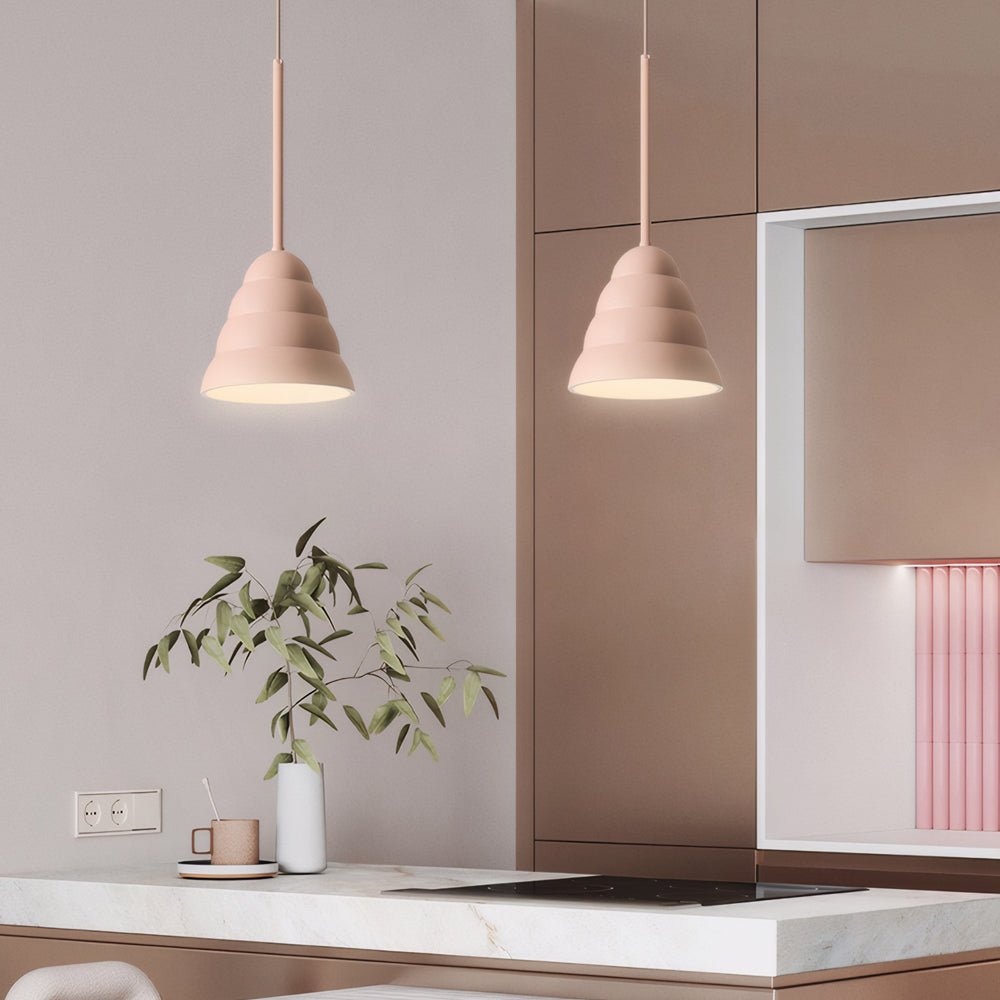
Sculptural Color Accent
1-Light Resin Pink Figura Arc Pendant Lamp
Price: $239.99
Best for bedrooms, dining rooms, living rooms, and small accent zones where you want pendant lighting to feel softer and more expressive than a standard black cone shade.
- Resin shade and pink finish give the pendant a softer, design-forward personality.
- Downward light direction makes it useful over a small table, bedside area, or focused seating zone.
- The product page currently shows out-of-stock / pre-order messaging, so check availability before planning installation.
For homeowners who are moving away from hard cone shades but still want a compact pendant with presence, layered glass is a strong alternative. It keeps the fixture visually lighter, lets the glow feel more atmospheric, and works especially well in rooms where an opaque cone might feel too heavy.

Glass Is The Softer Alternative
If your room already has dark cabinets, heavy beams, or strong hardware, a glass pendant can keep the ceiling area from feeling crowded. Browsing Glass Pendant Lights is a smart move when you want the elegance of a pendant without the visual weight of a metal cone.
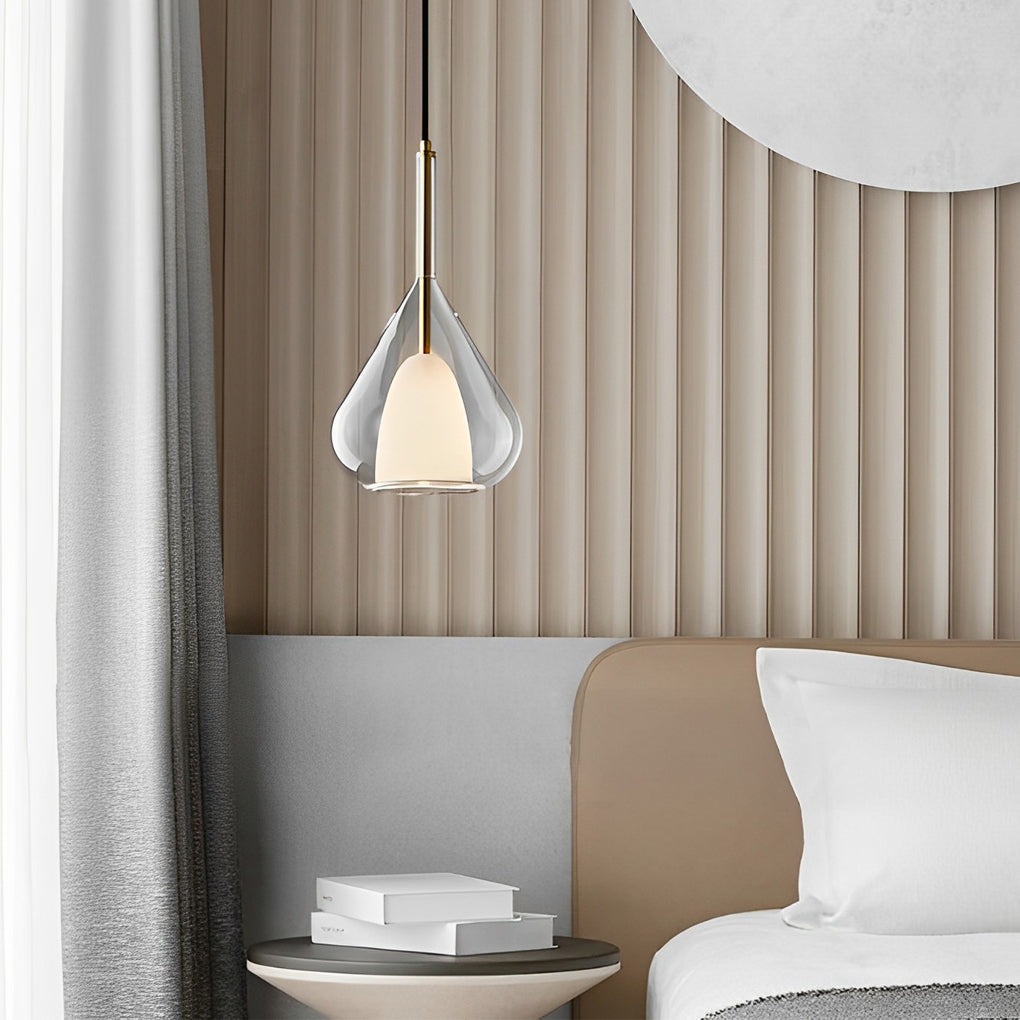
Layered Glass Glow
Raindrop Creative Double Layers Glass Nordic Pendant Lights Small Chandelier
Price: $175.99
Best for bedrooms, corridors, dining rooms, living rooms, and other indoor spaces where you want a refined pendant that feels lighter than a solid cone shade.
- Double glass design creates a layered, bright, atmospheric effect.
- The 7.9'' diameter works well for smaller rooms, corridors, and cozy table zones.
- Warm white 3000K helps the fixture feel inviting instead of cold or overly sharp.
Buying Checklist Before Choosing Cone Pendant Lights
Before you buy cone pendant lights for 2026, pause for a few practical checks. These are the little details that decide whether the fixture feels timeless or like a rushed trend purchase.
Check The Bottom Opening
The wider the bottom opening, the softer and broader the light tends to feel. A narrow cone can be beautiful, but it may create a tighter beam. That is useful for a coffee bar or reading nook, less ideal for a large dining table unless you use multiple fixtures.
Match The Finish To The Room, Not Just The Faucet
Many homeowners match pendants only to cabinet pulls or faucets. That can work, but it is not the whole story. Also look at counter color, wood tone, chair legs, nearby lamps, and wall color. A pendant that connects to at least two or three room elements usually feels more intentional.
Use Height To Keep Sightlines Comfortable
Over most kitchen islands, pendant lights commonly start around 30 to 36 inches above the countertop, then adjust for ceiling height and fixture size. Over a dining table, the bottom of the pendant often lands around 30 to 36 inches above the tabletop. These are starting points, not laws. The guide The Golden Rules Of Pendant Lighting: Sizing & Placement is worth reading before final installation.
Think In Layers, Not Single Fixtures
A cone pendant can do a lot, but it should not carry the whole room alone. Use it with ceiling lights, wall lights, under-cabinet lighting, or lamps so the room has depth. That layered effect is what makes a space feel relaxed after sunset.

Choose A Bulb Temperature You Can Live With
For a home that feels warm and comfortable, 2700K to 3000K is usually the safer range. If the pendant is over a prep area and you like a cleaner look, 3000K can be a good middle ground. Avoid using very cool bulbs in small cone pendants unless the room truly needs a crisp task-lighting feel.
Final Advice: Keep The Cone, Update The Context
Cone pendant lights are not going out of style in 2026. The shape is too practical, too clean, and too easy to use in real homes. What is fading is the idea that one generic black cone pendant can solve every kitchen, dining room, and bedroom. The homes that feel best now are more personal. They use lighting to add warmth, texture, color, and a little emotion.
Choose a cone pendant if you want focused light, a clear downward beam, and a fixture that feels simple without being boring. Choose a softer sculptural pendant if your room needs personality. Choose layered glass if you want a lighter visual effect. And if you are still unsure, compare cone styles against Modern Pendant Lights so you can see whether your room wants a strict shape or a gentler interpretation.
The best pendant light is the one that still feels good when the trend headline changes. If the scale is right, the light is comfortable, and the material belongs with the room, a cone pendant can look current in 2026 and still feel right several years from now.