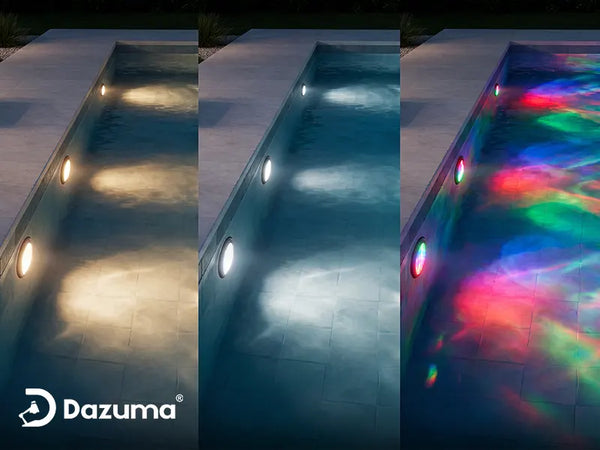

Who This Is For: This guide is for homeowners who have a dim, dead, flickering, or outdated pool light and are wondering whether they can change it underwater without draining the pool. It is written for the real-life moment when you want your pool to feel safe and beautiful again, but you also do not want to make an electrical mistake around water.

Quick Answer: Can You Change A Pool Light Underwater?
In most homeowner situations, you should not try to change a pool light while you are physically underwater or while the fixture is energized. The safer answer is this: many traditional wet-niche pool lights let the pool water stay in place, but the actual service work is done with power shut off and the fixture brought up onto the pool deck.
That distinction matters. People hear that a pool light can be changed “without draining the pool” and assume the repair happens underwater. Usually, it means the housing is removed from its niche, lifted above the waterline, and serviced dry while the pool remains full. If the fixture is sealed LED, the entire fixture may need replacement.
If your pool light is flickering, tripping a breaker, has water inside the lens, smells burnt, or has a damaged cord, stop using it and call a qualified pool electrician. The first job is always safety.
Why Homeowners Ask This Question In The First Place
I hear this question most often right before a weekend gathering. The pool looked fine in daylight, but at night one side turns into a dark blue hole. Guests hesitate near the steps, the deep end disappears, and the backyard suddenly feels unfinished. Then the homeowner finds mixed answers online: “yes,” “no,” “pull it onto the deck,” or “drain the pool.” No wonder it feels confusing.
The truth depends on what you mean by “change.” Are you changing a bulb in an older incandescent-style housing? Replacing a sealed LED unit? Upgrading to RGB? Fixing a failed gasket? Pulling a new cord through conduit? Those are different jobs with different risk levels.
For planning purposes, start with the lighting goal. If you simply want the pool to look less flat at night, you may need a better mix of Underwater Lights, deck lighting, and surrounding landscape lighting. If the problem is electrical, the solution is not a brighter fixture; it is inspection, repair, and code-safe installation.

The Real Pain Point Is Usually Visibility
Most homeowners are not asking because they love electrical projects. They ask because the pool feels unsafe or unattractive at night. Steps, benches, tanning ledges, and dark corners need readable light so the pool feels inviting instead of uncertain.
What “Changing A Pool Light” Can Mean
Before you decide what to do, identify the kind of change you are dealing with. A pool light is not a table lamp where the bulb comes out easily. Underwater fixtures have housings, gaskets, niches, cords, transformers, controls, and waterproof ratings that all need to work together.
Changing A Bulb
Some older fixtures were designed around a replaceable bulb inside a sealed housing. In that case, the housing may be removed and opened outside the water after power is shut off. The gasket is usually replaced at the same time because a reused or compressed gasket can lead to moisture inside the fixture later.
Changing A Sealed LED Fixture
Many newer LED pool lights are sealed. That means you do not open the fixture to change a bulb. If the light fails, you replace the fixture or module according to the manufacturer’s instructions. This is one reason homeowners often upgrade to LED or RGB when the old light starts failing.
Changing The Lighting Effect
Sometimes the existing light works, but the pool still looks gloomy. A single white light may not show the water shape, coping, or landscaping. In that case, the project is more about design than repair. A good pool lighting plan combines underwater illumination with nearby Outdoor Lighting so the pool does not feel like a bright rectangle floating in a dark yard.
Safety First: What Not To Do Around Pool Lights
Here is the part I would rather say plainly: do not get in the pool and work on the light as if it were an ordinary fixture. Do not loosen the light while the power is on. Do not test wires in the water. Do not assume that a switch being off means the circuit is safe. Do not replace a gasket, splice wiring, or pull a fixture cord unless you understand pool electrical systems and local code requirements.
In the United States, pool electrical work is treated seriously because water reduces the margin for error. Underwater lighting commonly involves low-voltage transformers, GFCI protection, bonding, correct junction box placement, and fixtures listed for pool or fountain use. If those terms are not familiar, hire someone qualified.
One practical rule is simple: if the issue is only “the pool looks too dark,” you can plan better lighting. If the issue is “the existing underwater light might be failing electrically,” stop using it until it is inspected. For a deeper planning guide beyond one fixture, you can also read How to Plan Swimming Pool Lighting for an Elegant and Safe Outdoor Space.

When The Pool Usually Does Not Need To Be Drained
For many wet-niche pool lights, the pool does not need to be drained just to access the fixture. The housing often has enough cord coiled behind it so it can be lifted out of the niche and placed on the deck for service. That is why you may see technicians working beside a full pool.
But again, the important point is that the work happens out of the water, not by casually opening the fixture underwater. Once the light is on the deck, a technician can inspect the lens, gasket, housing, cord, and signs of water intrusion. If the fixture is old, corroded, or mismatched to the niche, replacement may be safer than trying to revive it.
This is also where many homeowners discover the issue is not just “a bad bulb.” The light may be too weak, the beam may miss the steps, or one fixture may be doing the job of several. Treat replacement as both a safety task and a design opportunity.
Look Beyond The Dead Light
If one underwater light fails, take a moment to look at the whole nighttime scene. Do you need better step visibility, more even water glow, softer seating-area light, or accent light around plants and walls?

Pool Light Replacement Situations: What Usually Makes Sense
Here is a practical way to think through the problem before ordering parts or booking service.
| What You Notice | What It May Mean | Safer Next Step |
|---|---|---|
| Light is completely out | Bad bulb, failed LED module, transformer issue, breaker issue, or wiring problem | Have the circuit and fixture checked before assuming it is only a bulb |
| Water or fog inside the lens | Failed gasket, cracked lens, compromised housing, or improper sealing | Stop using the light and replace damaged components or the fixture |
| Breaker or GFCI trips | Possible fault, moisture, wiring issue, or incompatible equipment | Do not reset repeatedly; call a pool electrician |
| Pool looks unevenly lit | Light placement, beam spread, water clarity, or surrounding darkness may be the issue | Improve the whole lighting layout, not just fixture brightness |
| Old white light feels flat | Outdated lamp style or limited color temperature choices | Consider LED or RGB options that match how you use the pool |
Practical Lighting Solutions For Real Pool Problems
A pool light replacement should solve a real problem, not just put another bright dot in the water. Here are the situations I would review before suggesting a fixture.
Problem 1: The Pool Edge Disappears At Night
If people cannot easily read the pool edge, steps, or shallow ledges, underwater light alone may not be enough. Low-glare path lights, shielded accents, or nearby Well Lights can help define the hardscape without shining into people’s eyes. This matters where guests walk with towels, drinks, or wet feet.
Problem 2: The Water Looks Dull Instead Of Inviting
Water needs contrast. If everything around the pool is black, one underwater light may feel harsh and isolated. If everything is too bright, the water loses depth. A more balanced approach is to give the pool a soft internal glow and give the surrounding landscape a few quiet points of light.
A Good Fit For Pool Edges, Fountains, And Water Features
If your goal is not just replacing one dead light but improving the way water features read at night, a compact IP68 fixture can be useful around fountains, pool edges, artificial waterfalls, and landscape ponds. This type of light works best when the installer can place it where it washes the water feature evenly instead of creating one harsh hot spot.
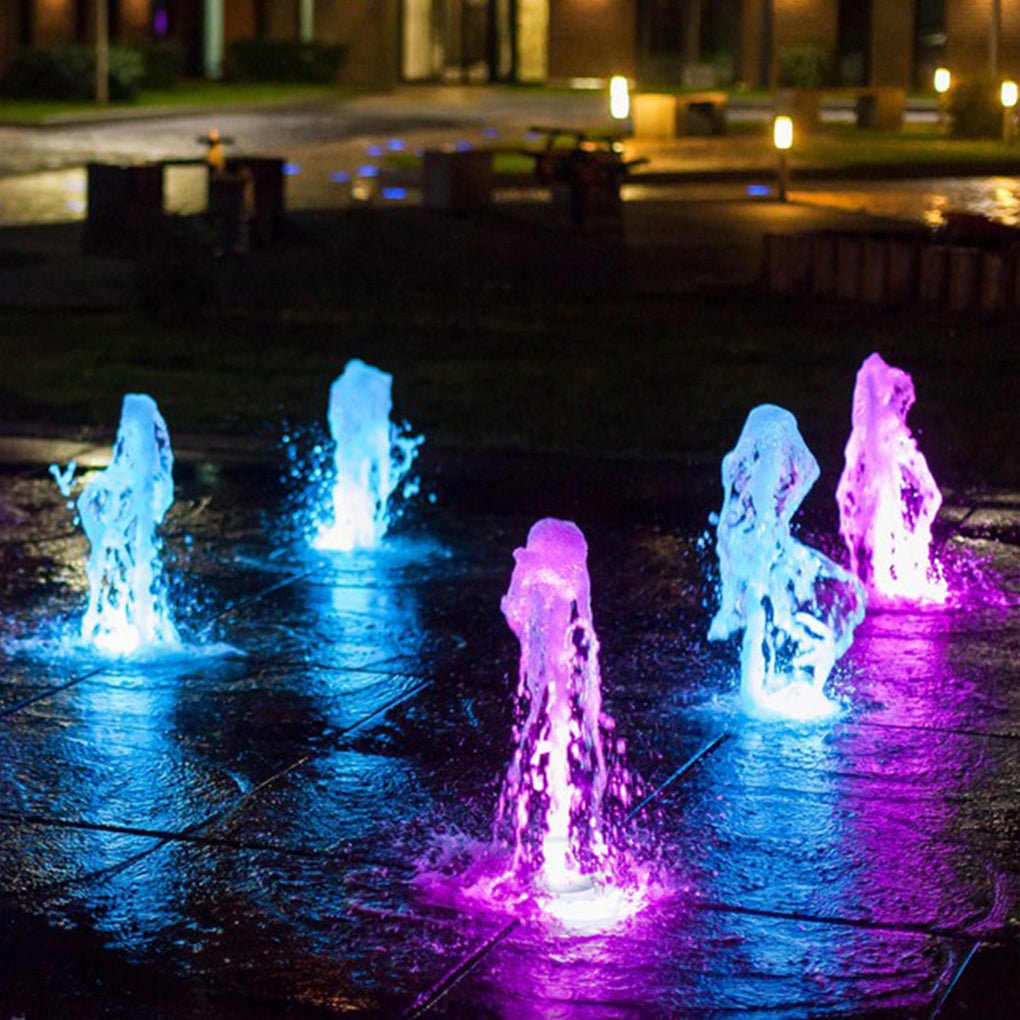
Water Fountain Lights LED Waterproof Stainless Steel Lamp
Price: $104.99
This fixture suits homeowners who want underwater illumination for fountains, pool edges, artificial waterfalls, or landscape water features where color options and a corrosion-resistant body matter.
- Offers RGB, warm white 3000K, and white 6000K options for different nighttime moods.
- Uses glass, stainless steel, and aluminum alloy materials for water-feature applications.
- Available in multiple wattages, with the transformer not included according to the product page.
Problem 3: You Want Color, But Not A Theme-Park Look
RGB pool lighting can look elegant when used with restraint. For everyday evenings, soft blue, aqua, or warm white often gets used more than dramatic red or fast-changing modes. Think about how your family actually uses the pool: quiet weekday swims, kids’ summer evenings, weekend parties, or a resort-style view from the patio.
If you are comparing full-pool color options, check whether the control method fits your lifestyle. Some homeowners want a simple wall switch. Others prefer remote control or synchronized color scenes. The fancier the system, the more important it is to make sure the transformer, control, wiring, and fixture are compatible.

Use Color As Atmosphere, Not Noise
For most homes, the best color-changing pool light is the one you can tone down. Gentle color makes the water feel calm; overly bright color changes can make a small backyard feel busy.
Problem 4: The Deep End Still Looks Dark
If the deep end disappears, brightness may not be the only issue. Pool shape, fixture angle, water clarity, plaster color, and the number of lights all matter. Nearby Outdoor Spotlights can help the landscape feel visible, but they should not blast across the water surface and create glare.
For safe circulation around the pool deck, see How to Light a Swimming Pool Deck Safely. Deck visibility and underwater visibility work together; one should not be asked to compensate for the other.
A Better Match For RGB Pool Ambience
For homeowners replacing an outdated white pool light and wanting a more finished nighttime look, an RGB stainless steel underwater light can make sense when the electrical setup is compatible and the installation is handled correctly. This is the kind of option I would consider for a modern backyard where the pool is part of the evening view from the kitchen, patio, or outdoor dining area.
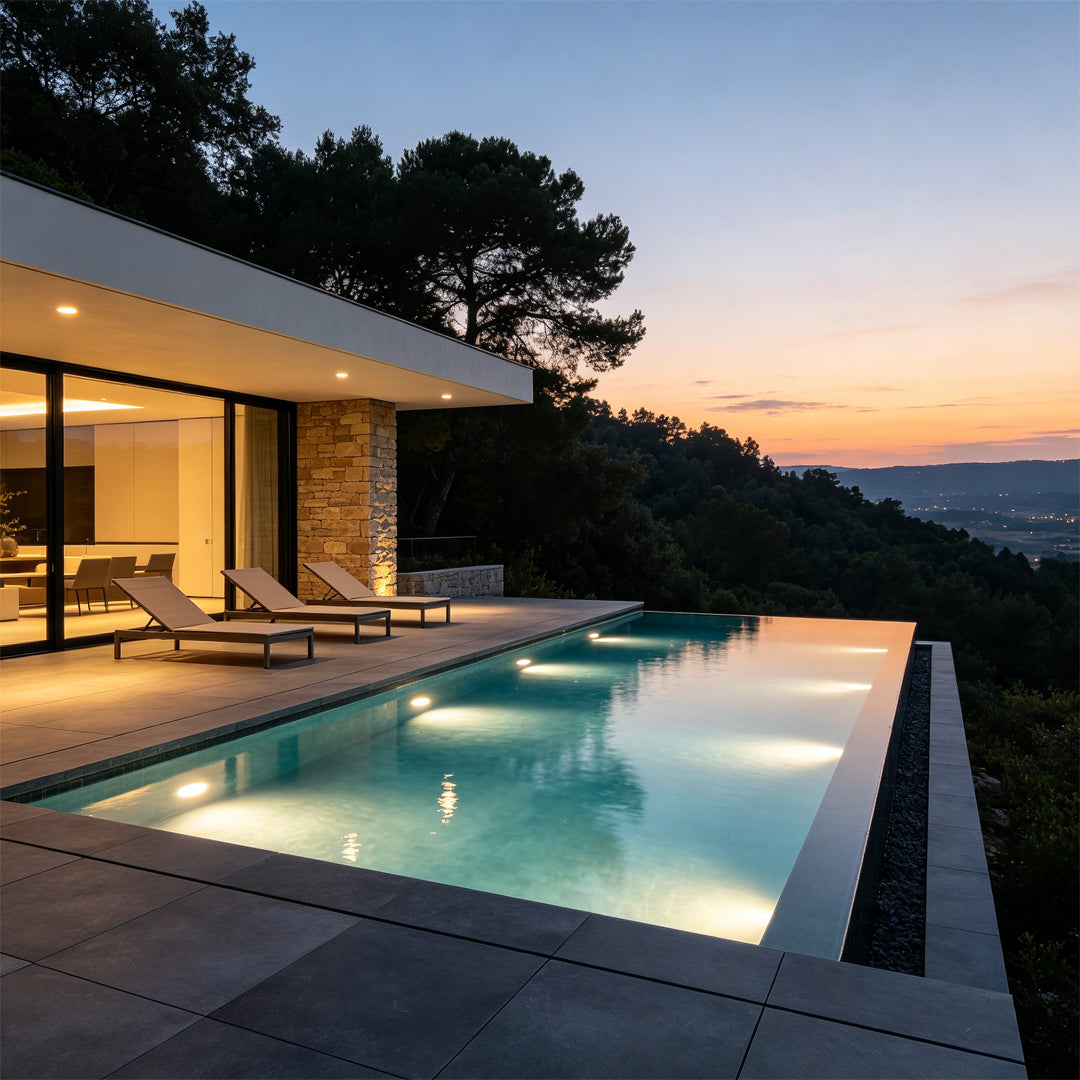
LED Underwater Pool Lights Stainless Steel RGB Light
Price: $350.99
This option suits pools, hotel-style water features, or fountains where RGB control and a slim wall-mounted underwater fixture are part of the design goal.
- Stainless steel housing and IP68 rating are listed for prolonged underwater use.
- RGB light lets the pool shift from calm evening color to a more festive look when needed.
- Requires AC12V operation with a transformer, which is not included on the product page.
Before You Order A Replacement Pool Light
The most frustrating pool light purchase is the one that looks right online but does not match the pool. Before ordering, write down the old fixture model if visible, niche size, voltage, wattage, transformer details, control method, cord length, and whether the fixture is for a pool, fountain, pond, or landscape water feature.
Do not rely only on diameter. Two lights can have similar face sizes but different mounting methods, cord requirements, and transformer needs. If your pool has older wiring, repeated GFCI trips, or visible corrosion, schedule inspection before choosing a style upgrade.
Match The Fixture To The Existing Pool System
Good pool lighting is not just about the faceplate. Voltage, transformer compatibility, mounting method, cord routing, and waterproof rating all need to make sense together.

Common Mistakes That Make Pool Light Problems Worse
Assuming Brighter Always Means Safer
Too much brightness can create glare on the water surface. A pool should be readable, not blinding. Aim for even visibility around steps, walls, benches, and the deep end.
Ignoring The Surrounding Yard
If the deck, planting beds, and seating area are black, the pool light has to work too hard visually. A few low-glare outdoor accents can make the whole scene feel calmer and safer.
Opening A Fixture Because It “Looks Simple”
A pool light lens may look simple from the outside, but its seal is doing important work. A small gasket mistake can lead to water inside the housing. If you are unsure, do not open it.
Buying A Fixture Before Checking The Transformer
Many underwater lights require a specific low-voltage setup. A fixture that looks perfect may still be the wrong choice if the transformer, controls, or existing wiring do not match.
Summary: The Safer Way To Think About Underwater Pool Light Replacement
So, can you change a pool light underwater? For a homeowner, the safest practical answer is: do not work on the light while you are in the water or while the circuit is energized. In many cases, the pool does not need to be drained, but the fixture is still serviced outside the water with power shut off. If the light is sealed LED, damaged, wet inside, tripping protection, or tied to an older electrical system, bring in a qualified pool electrician.
Once safety is handled, think like a designer. Ask what problem the new light should solve: better step visibility, a softer evening mood, RGB color for parties, a brighter fountain, or a more balanced pool-and-patio scene. The right replacement fits your water feature, electrical system, and the way your family actually uses the backyard at night.