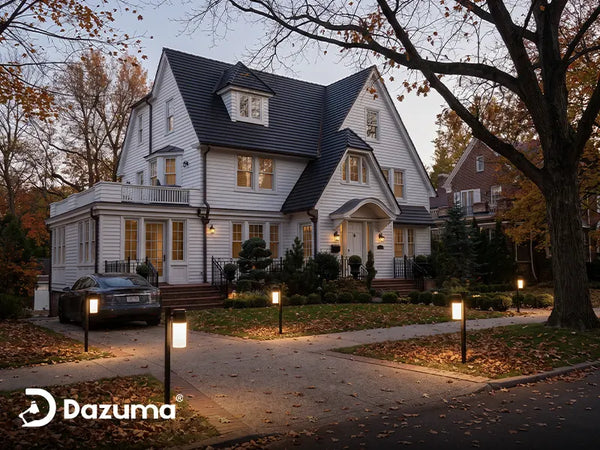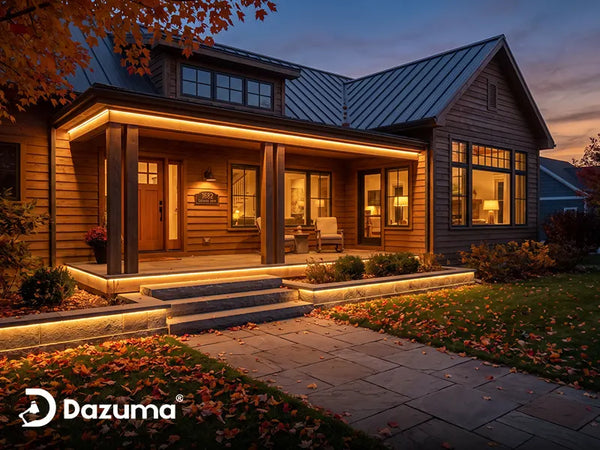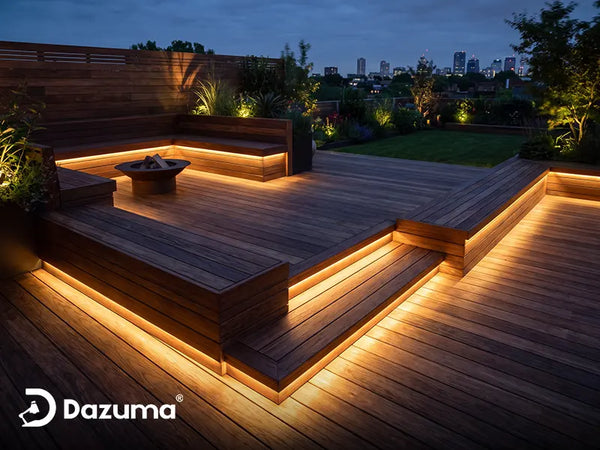

Who This Is For: This guide is for homeowners who want their garden, fence line, entry posts, or outdoor walls to stay softly visible after dark without trenching wires or adding to the electric bill.
Introduction
Garden solar lights sound simple: put them outside, let the sun charge them, and enjoy the glow at night. But if you have ever bought a set that looked promising online and then faded after two hours, you already know the truth. The best garden solar lights are not just the ones with a pretty fixture body. They are the ones that fit the place where you install them.
That is the part many shoppers miss. A solar light on a shaded fence post will not perform like the same light on an open driveway pillar. A wall light with an adjustable solar panel can behave very differently from a fixed panel tucked under an eave. And a single row of lights may help you see an edge, but it may not make the whole garden feel finished.
So let’s talk about garden solar lights the way a helpful neighbor would: where they actually work, what makes them last through the evening, and how to choose fixtures that make your outdoor space feel safer, calmer, and more put together after sunset.

Quick Answer: Which Garden Solar Lights Work Best?
The garden solar lights that work best at night are the ones installed where they can receive strong daytime sun, aimed toward a clear nighttime task, and matched to the right outdoor surface. For fence posts and entry columns, solar pillar lights are great because they mark boundaries and give the garden a finished edge. For side walls, gates, balconies, and narrow paths, solar wall lights work well because they add vertical light and help people see where they are walking.
If you want one simple rule, start with purpose before style. Ask: do you need to mark an edge, guide a path, light a wall, or add atmosphere near a seating area? A small solar light can feel surprisingly useful when it has one clear job. It starts to disappoint when you expect one fixture to light an entire yard.
For a complete plan, think of solar lighting as one part of your overall Outdoor Lighting layout. It is excellent for low-effort zones, decorative boundaries, and places where wiring is inconvenient. For high-output security or large driveways, you may still want hardwired or low-voltage support.
Why Some Solar Garden Lights Fail At Night
Most solar garden lights fail for ordinary reasons. The panel does not get enough sunlight. The light is placed too low behind plants. The fixture is expected to brighten a large area instead of a small zone. Or the homeowner buys based on looks without checking battery life, waterproof rating, or panel direction.
Here is the useful part: many of those problems are fixable before you buy. If a garden wall faces deep shade most of the day, choose a fixture with a better panel position or place solar lighting somewhere else. If the yard has a long walkway, do not rely on one bright fixture at the beginning. Use several softer lights to guide the route. If you want a more polished front entrance, combine post lights with wall lights so the scene has both boundary and depth.

Sunlight Comes First
A solar fixture can only give back the energy it collects. Before you choose the style, look at the installation spot around noon and again in the afternoon. If the area is shaded by trees, rooflines, tall fences, or climbing plants for most of the day, the light may still work, but you should expect shorter nighttime performance.
That is why Outdoor Solar Lights work best when the panel has a clear relationship with the sun, not just a pretty place on the wall.
What To Check Before You Buy Garden Solar Lights
When comparing garden solar lights, do not stop at the photo. The photo tells you the mood, but the specs tell you whether the light fits your yard. You do not need to become an electrician. Just check the practical basics.
| What To Check | Why It Matters At Night | Good Use Case |
|---|---|---|
| Solar Panel Position | Better sunlight exposure helps the battery charge more fully. | Fence posts, open walls, sunny garden edges. |
| Battery And Working Time | A stronger battery helps the light stay useful deeper into the evening. | Entry paths, gates, side yards used after dinner. |
| Waterproof Rating | Outdoor fixtures need protection from rain, dust, and sprinklers. | Open garden walls, exposed posts, driveway pillars. |
| Beam Direction | A well-directed beam is often more useful than a brighter scattered glow. | Steps, walkways, wall edges, door approaches. |

Placement Tips That Actually Improve Night Performance
1. Put The Panel Where It Can See The Sky
This sounds obvious, but it is the most common miss. A solar light under a roof edge may look tidy during the day, but it may not charge well enough. If the fixture has an adjustable panel, angle it toward the strongest sun exposure instead of leaving it flat by default.
2. Light The Edge, Not The Whole Yard
Solar lights are excellent at defining edges: the side of a path, the top of a wall, the corners of a gate, or the face of a column. They are not always the right choice for flooding a large lawn. When you use them to outline a space, the yard feels easier to read without looking overlit.
3. Keep The Light Above Plant Growth
A small shrub can block more light than you expect. If you are installing solar fixtures near garden beds, think about what the plants will look like in six months. Leave the light enough breathing room so the beam and panel do not get buried by leaves.
Think In Small Lighting Jobs
A garden feels better at night when each light has a specific job. A pillar light marks a post. A wall light softens a dark surface. A path light guides walking. That is more effective than trying to make one fixture do everything.
If you are lighting a walkway or garden border, you can also compare Path Lights with solar wall and post options to decide which layer belongs where.

Recommended Garden Solar Lights That Work At Night
The two picks below solve different problems. One is made for posts, pillars, and garden boundaries. The other is made for walls, gates, and downward lighting where you want a clearer walking zone. Together, they show why solar lighting works best when you choose by location, not just by fixture style.
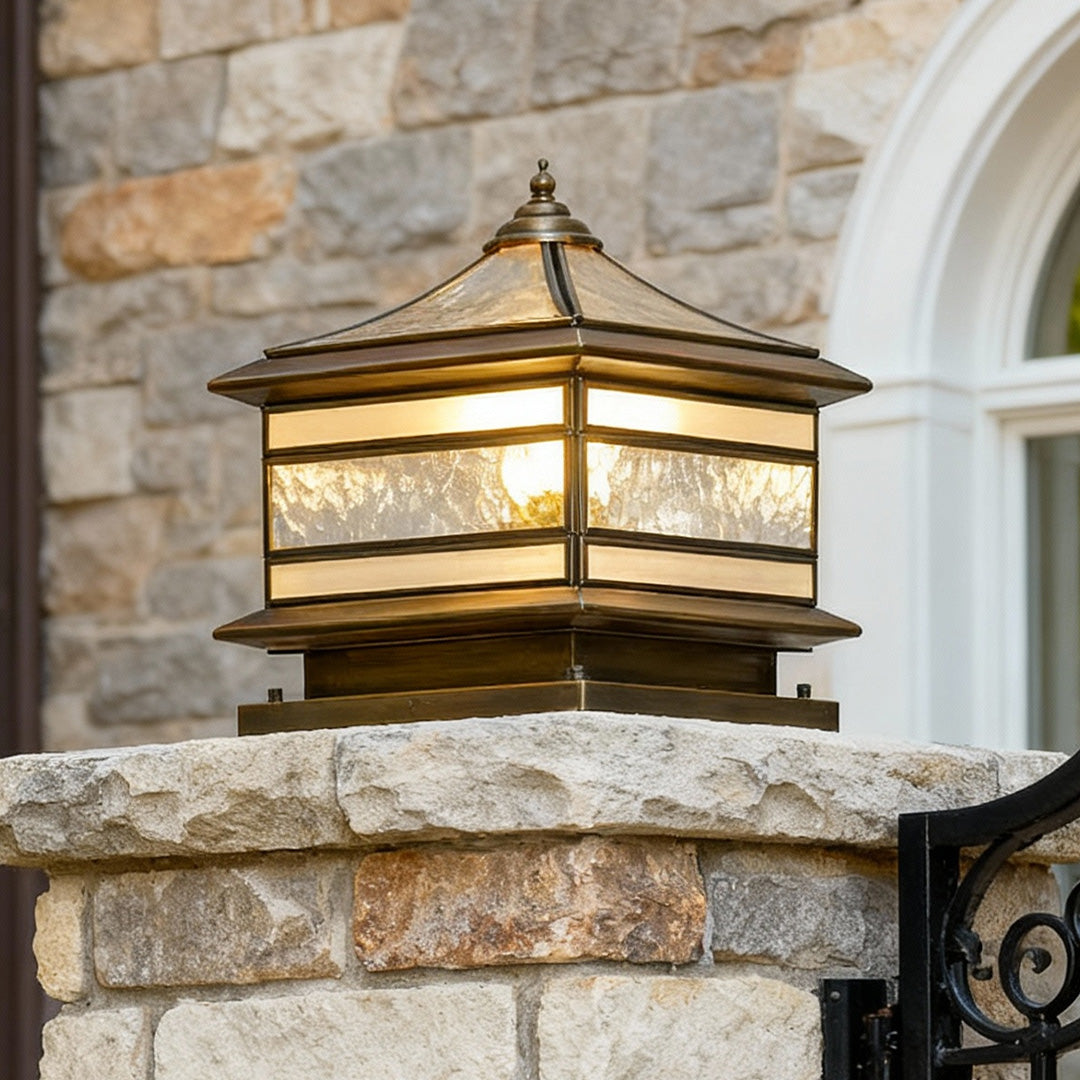
Stone Pillar Solar Lights Retro Copper Waterproof Fence Post Light
Best For: Garden gates, fence posts, driveway pillars, terrace edges, villa entries, and outdoor boundary lighting.
| Price | $419.99 |
| Power Supply | Solar / Hardwired |
| Material | Copper Body, Glass Shade |
| Waterproof Rating | IP54 |
| Voltage | 110–220V |
| Color Temperature | Warm White 3000K / Multi-Color Options |
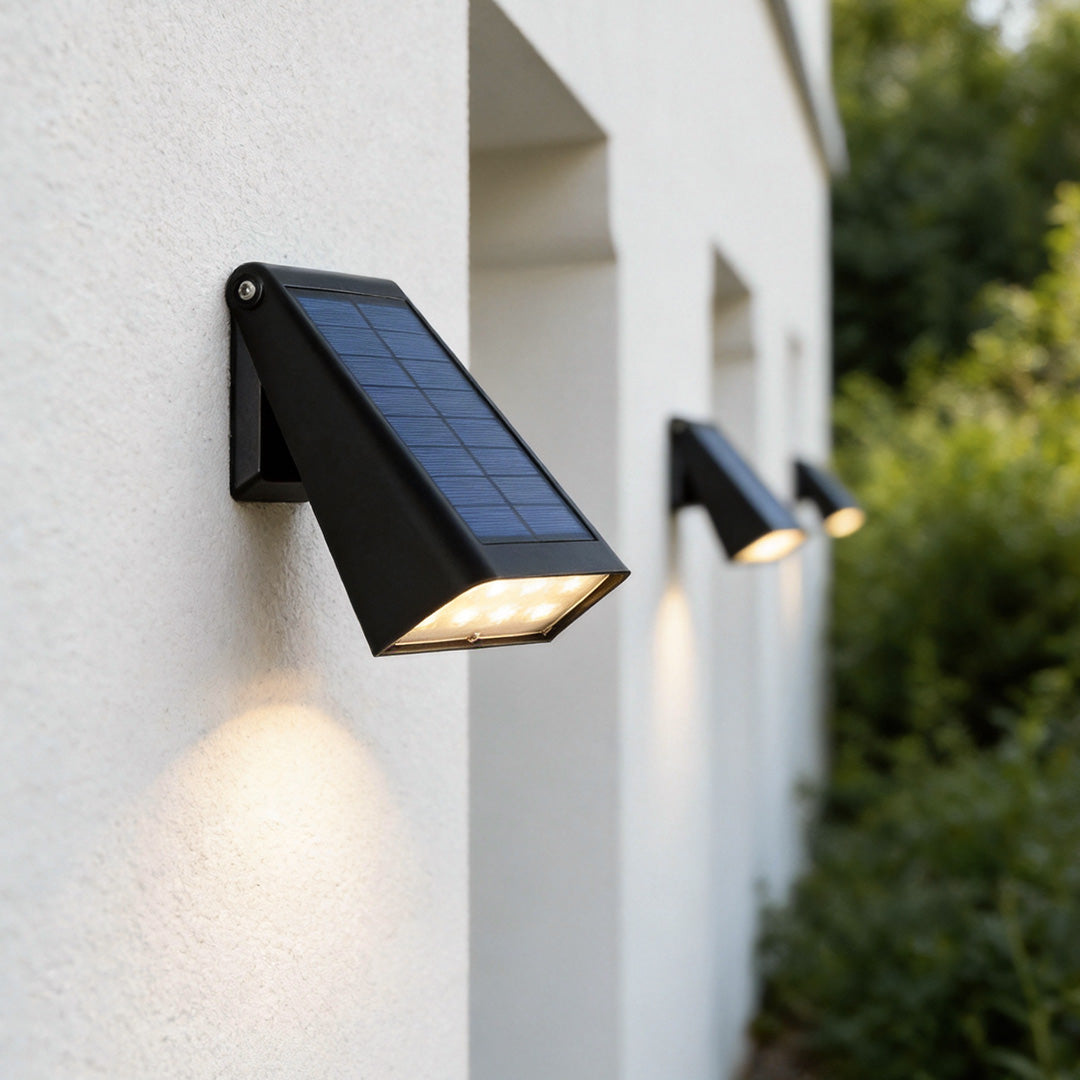
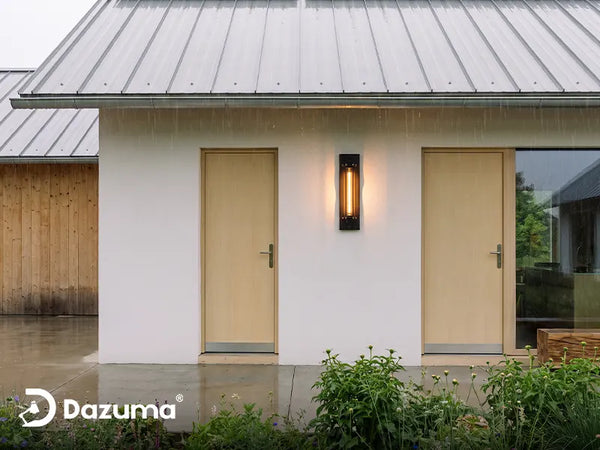
Down Light Wall Sconce Modern LED Waterproof Black Solar Light
Best For: Garden walls, gates, balconies, exterior corridors, side yards, and wall-mounted solar guidance lighting.
| Price | $126.99 |
| Power Supply | Solar |
| Power / Output | 1.5W / 110LM |
| Battery | 1500mAh |
| Charging / Working Time | 5 Hours / 7–9 Hours |
| Waterproof Rating | IP65 |
| Material | ABS Body, PC Shade |
What The Space Feels Like After Installation
A good solar post light does not make the garden look like a parking lot. It gives the property a clear outline. When the tops of posts or pillars glow softly, the driveway and garden edge feel more intentional. You get that small “the house is ready for evening” feeling when you pull in after dark.
A solar wall light changes the mood in a different way. It takes a wall that used to disappear into darkness and turns it into a soft guiding surface. Near a side gate or garden passage, that can make the walk feel more secure without blasting the area with harsh light. It is less about drama and more about comfort.
The Simple Layering Rule Most Homeowners Miss
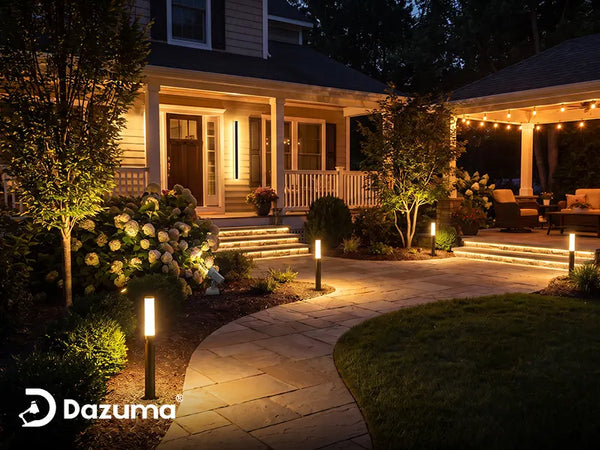
Here is the new information gain worth remembering: solar lighting performs better visually when it is layered by height. Use high points for boundary, mid-height wall lights for direction, and lower fixtures for walking paths. Even if each light is modest, the combination feels richer because your eye has more than one reference point.
| Lighting Layer | Best Fixture Type | What It Adds |
|---|---|---|
| High Boundary | Solar pillar or post lights | Marks gates, corners, and fence lines. |
| Mid-Level Wall | Solar wall sconces | Adds direction and soft vertical depth. |
| Ground Guidance | Path lights or low landscape lights | Helps people follow walkways safely. |

Layering Makes Solar Feel More Reliable
When one solar light does one job, the whole yard feels calmer. The post light marks the edge. The wall light gives direction. The path remains easy to follow. This layered approach keeps the garden from feeling patchy, even when the light output is gentle.
For posts and entry columns, Pillar Lights can create the “finished edge” that many gardens miss after dark.
Night Performance Checklist
Before you decide a solar light is not strong enough, walk through this checklist. It is simple, but it catches most real-world problems.
- Sun: Does the solar panel receive several hours of direct sunlight?
- Angle: Is the panel aimed toward the best sun exposure, not just the neatest visual position?
- Purpose: Is the light marking a boundary, guiding a path, or lighting a wall?
- Height: Is the fixture high enough to avoid being blocked by plants?
- Spacing: Are lights spaced close enough to avoid dark gaps?
- Zone: Are you using more than one lighting layer in the most important areas?
Common Mistakes To Avoid
Choosing Brightness Over Placement
A brighter solar light in the wrong place can still disappoint. A softer light in the right place may feel better because it puts illumination where your eyes actually need it.
Putting Every Light At The Same Height
If all garden lights sit at one level, the yard can look flat. Mix post-level, wall-level, and path-level lighting when the space allows.
Ignoring The Shade Pattern
A sunny-looking yard can still have shaded fence posts or wall corners. Watch how the sun moves before deciding where the solar panel should go.
Using Solar For Every Job
Solar is convenient, but it is not the answer to every lighting problem. If you need very strong or predictable light for a large security area, combine solar with hardwired fixtures, motion lights, or a broader landscape plan.

Final Advice: Buy For The Place, Not Just The Fixture
If you want garden solar lights that actually work at night, buy for the exact place you plan to install them. Sunny post or pillar? A solar pillar light can define the edge beautifully. Dark garden wall or side passage? A downward solar wall sconce can make the space feel safer and more complete. Long walkway? Add path lighting instead of expecting one fixture to do everything.
For a more finished outdoor plan, start with the areas you use most after sunset: the gate, the route to the door, the patio edge, and the garden wall. Then choose lights by job. Browse Dazuma’s Outdoor Solar Lights, Outdoor Wall Lighting, and Outdoor Lighting collections to build a garden lighting plan that feels useful, warm, and easy to live with.