
Who This Is For
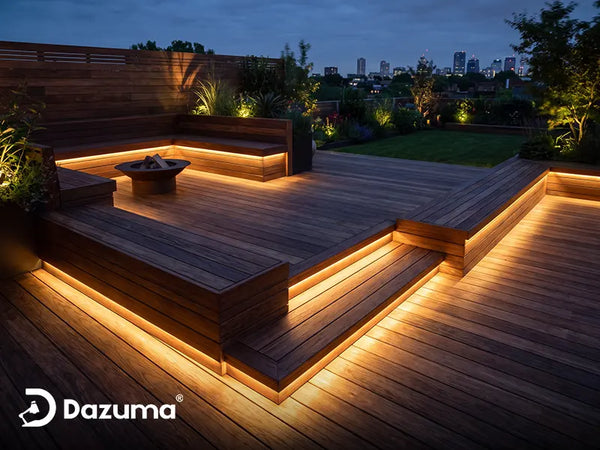
This guide is for homeowners who want their garden to look more polished after sunset without installing a complicated lighting system. It is ideal if you want to highlight trees, shrubs, flower beds, stone walls, water features, garden sculptures, or the front of your home. If your yard looks flat at night, outdoor spotlights can add depth, shadow, and focal points in a way that path lights or wall lights cannot always achieve.
Garden lighting is not only about seeing where to walk. It is about shaping the way a yard feels at night. Outdoor spotlights are one of the most effective tools for this because they direct light toward a specific feature. A well-placed spotlight can make a small tree feel sculptural, turn a plain wall into a textured backdrop, or give a dark garden bed a beautiful layered look.
For 2026, the strongest outdoor spotlight choices are adjustable, energy-efficient, weather-ready, and easy to aim. Solar spotlights are especially popular for garden accents because they avoid the need for underground wiring and can be moved as plants grow or seasons change. If you are already building a wider outdoor lighting plan, combine spotlights with Path Lights, wall lights, or low-level garden fixtures so your yard feels balanced from every angle.

Quick Answer: What Are The Best Outdoor Spotlights For Garden Accents?
The best outdoor spotlights for garden accents are adjustable LED spotlights with weather-resistant construction, enough brightness to highlight the feature, and a beam angle that suits the object you want to illuminate. For small shrubs, flower beds, or garden decor, a lower-output solar spotlight may be enough. For trees, facades, and larger landscape elements, choose a stronger spotlight with a larger battery or more powerful LED output.
Warm white light around 3000K is the safest choice for most residential gardens because it feels natural, comfortable, and flattering on plants, stone, and wood. RGB spotlights are useful for holidays, parties, and dramatic effects, but they should be used with restraint. For everyday curb appeal, warm white usually looks more upscale than constantly changing colors.
The 2026 Rule
Choose adjustability first. A garden spotlight that lets you change the lamp angle and solar panel angle will be more useful than a fixed light, especially as plants grow or your landscape changes. Adjustable fixtures also make it easier to avoid glare and aim light exactly where you want it.
Why Garden Spotlights Work So Well
Spotlights create contrast. Instead of lighting the whole garden evenly, they bring attention to selected features. That contrast is what makes a yard look designed at night. A softly lit path may guide movement, but a spotlight gives the eye somewhere to land. This is especially helpful in front yards, where lighting can improve curb appeal without requiring a full landscape remodel.
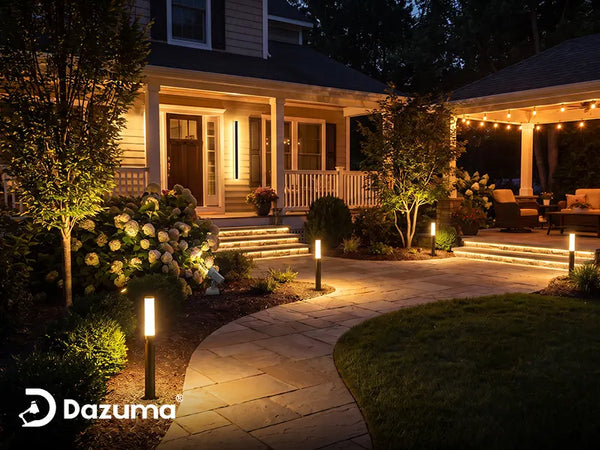
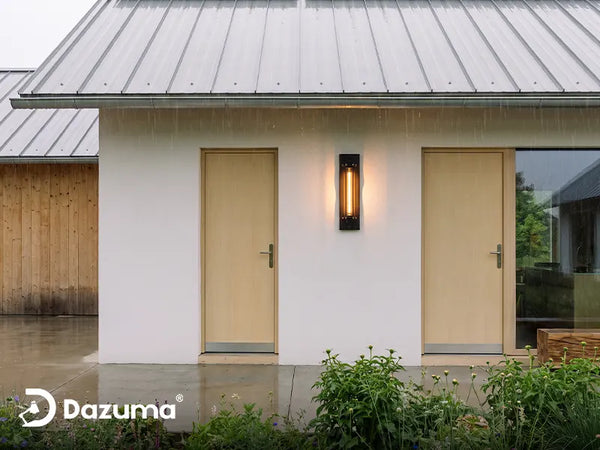
Spotlights also help connect the house and garden visually. A dark tree beside a bright porch can feel disconnected. A subtle uplight on the tree makes the landscape feel intentional. If your home already uses Outdoor Wall Lighting, garden spotlights can extend that glow into the yard.
| Garden Feature | Best Spotlight Effect | Design Goal |
|---|---|---|
| Small Tree | Soft upward beam from the base | Create height and shadow |
| Shrubs | Low angled light across the foliage | Add texture and depth |
| Stone Wall | Grazing light close to the surface | Show texture and material |
| Garden Sculpture | Narrow beam from the front or side | Create a focal point |
| House Facade | Controlled beam toward architectural features | Improve curb appeal |

Highlight One Feature At A Time
A good garden accent does not need to light every plant. Pick one tree, one shrub group, or one wall texture and let that feature lead the scene. This keeps the garden from looking busy and makes the lighting easier to control.
Best Placement Ideas For Outdoor Garden Spotlights
Placement determines whether a spotlight looks elegant or distracting. A fixture placed too close may create a harsh hot spot. A fixture placed too far away may lose impact. Start with the feature you want to highlight, then adjust the distance and angle until the light feels intentional.
For Trees
Place the spotlight near the base and aim upward into the trunk or canopy. For small trees, one light may be enough. For larger trees, two lights from different angles can create better balance. Avoid aiming directly into windows or seating areas.
For Shrubs And Flower Beds
Use a lower angle and keep the light soft. The goal is to reveal shape and texture, not flatten the entire planting bed. Solar spotlights are convenient here because they can be moved as plants mature.
For Walls And Fences
Place the spotlight close enough to show texture but not so close that it creates a bright stripe. Stone, brick, wood, and stucco can all look better with gentle angled light. If you are highlighting a wall near the house, coordinate the color temperature with nearby Outdoor Sconces.
For Garden Sculptures
A single narrow beam can make a statue, water feature, or planter feel like a focal point. Use side lighting when you want shadow and dimension. Use front lighting when you want a cleaner, simpler look.

Warm White, White, Or RGB: Which Looks Best?
Color temperature changes the entire mood of a garden. Warm white light feels inviting and natural. White light can make modern architecture and concrete surfaces look cleaner. RGB can be useful for parties and seasonal displays, but it can also make a garden feel less refined if used every night.
| Light Color | Best For | Design Feel |
|---|---|---|
| Warm White 3000K | Trees, shrubs, patios, everyday curb appeal | Comfortable and natural |
| White 6000K | Modern hardscape, security-oriented areas | Crisp and bright |
| RGB | Holidays, parties, dramatic garden scenes | Colorful and expressive |
If your goal is a luxury residential look, use warm white as the everyday setting and reserve RGB for special occasions. This keeps the garden tasteful while still giving you flexibility when you want more personality.
Avoid Glare From Seating Areas
Before final installation, sit where people usually gather and check whether the light shines into the eyes. If it does, lower the angle, move the fixture, or aim it more tightly at the plant or wall.

2026 Picks: Outdoor Spotlights For Garden Accents
These two solar spotlight options are useful for homeowners who want garden accent lighting without complicated wiring. Both are adjustable, outdoor-ready, and designed for landscape features such as plants, lawns, and courtyard areas.
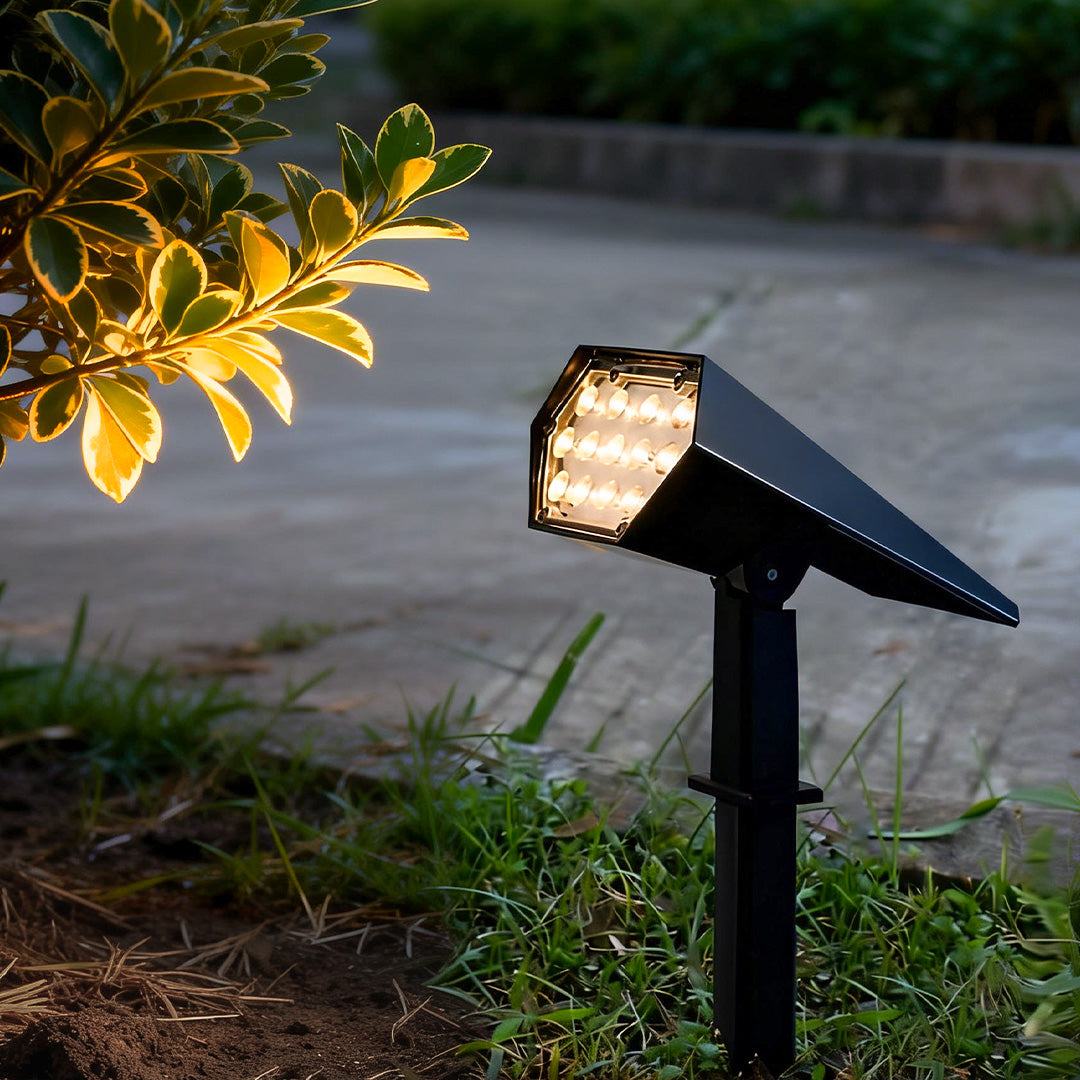
Flood Spike Light Adjustable Angle Solar Spotlight
Best For: trees, shrubs, garden beds, lawn accents, and warm white landscape highlighting.
| Power Supply | Solar |
| Light Source | LED |
| Power | 3W |
| Lumens | 210LM |
| Color Options | Warm White 3000K Or RGB |
| Waterproof Rating | IP65 |
| Battery | 3.7V / 2200mAh |
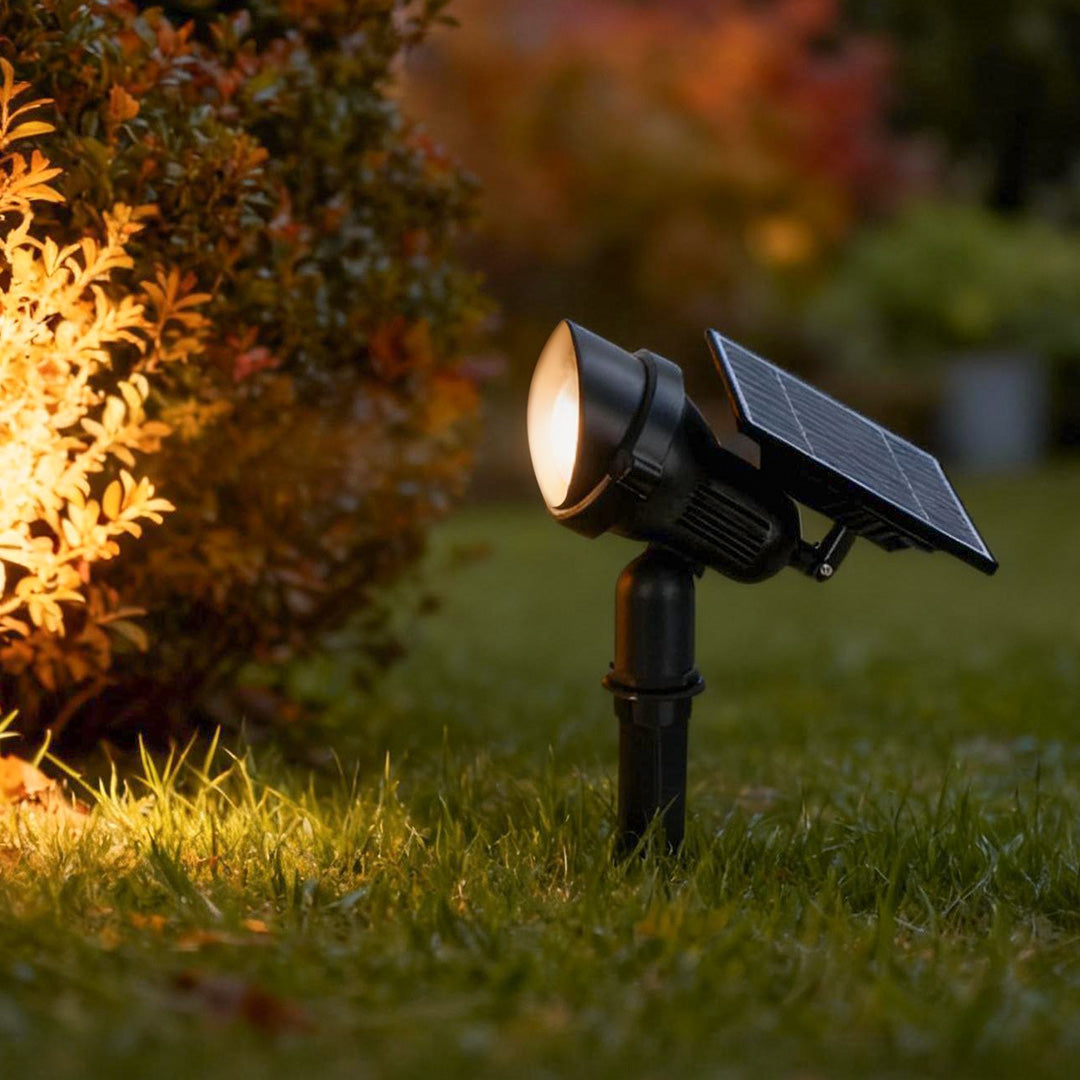
Lawn Spot Lights Outdoor Adjustable Solar Tree Light
Best For: trees, building facades, courtyard accents, garden paths, and colorful seasonal lighting.
| Power Supply | Solar |
| Material | Aluminum With Glass Shade |
| Power | 10W |
| Battery | 3.7V / 4000mAh |
| Working Time | About 10 Hours |
| Color Options | RGB, 3000K Warm White, 6000K White |
| Waterproof Rating | IP54 |
Outdoor Spotlight Buying Guide
When choosing outdoor spotlights, think about the feature first, then choose the light. A small shrub does not need the same output as a tall tree. A facade may need a wider and more powerful beam than a planter. The right spotlight should match both the size of the feature and the distance from the fixture to the object.
1. Choose Adjustable Fixtures
Adjustable lamp heads make the installation more forgiving. You can fine-tune the beam after sunset, when the effect is easier to see. If the solar panel is also adjustable, you can improve charging while keeping the light aimed correctly.
2. Match The Brightness To The Feature
For a small garden accent, a moderate output can be enough. For taller plants, wide shrubs, or building surfaces, choose a stronger spotlight. More brightness is not always better, but underpowered lighting can disappear in a large landscape.
3. Check Weather Protection
Spotlights are often placed in grass, soil, or mulch, where they are exposed to moisture and dirt. Outdoor-rated construction and an appropriate waterproof rating are important for long-term performance.
4. Plan The Viewing Angle
Accent lighting should look good from the places people actually see it: the driveway, front walk, patio, window, or seating area. Walk around the yard at night and adjust the aim before deciding the final position.
5. Keep The Fixture Hidden When Possible
Outdoor spotlights usually look best when the light effect is visible but the fixture itself stays subtle. Place the spike light slightly behind low plants, beside mulch, or near the base of the feature so the beam does the work. This keeps attention on the tree, wall, or garden accent instead of on the hardware.
| Use Case | Recommended Approach | Common Mistake |
|---|---|---|
| Small Tree | One or two angled spotlights near the base | Aiming directly into the canopy only |
| Shrub Group | Low side lighting across the foliage | Lighting every shrub equally |
| Facade Accent | Controlled upward light on architectural zones | Creating glare into windows |
| Party Lighting | Use RGB in selected zones only | Making the entire yard too colorful |

Use Shadows On Purpose
Good spotlighting is not about removing every shadow. It is about using shadows to make plants and materials feel dimensional. A little contrast can make a garden look more expensive and more natural.
Common Outdoor Spotlight Mistakes
Pointing The Light Too High
If the beam misses the feature or shines above it, the effect can feel random. Start low, aim carefully, and adjust after dark.
Using Too Many Spotlights
Not every plant needs a dedicated light. Too many spotlights can make the garden look busy and reduce the impact of the strongest features.
Ignoring Solar Charging Conditions
Solar spotlights need direct sun to perform well. If the panel sits under heavy shade, the light may not last through the evening.
Mixing Too Many Light Colors
Warm white, cool white, and RGB all in the same small garden can look chaotic. Choose one everyday color temperature and use RGB only when it supports the occasion.

Final Thoughts: Use Spotlights To Create Focal Points
The best outdoor spotlights for garden accents are the ones that make your favorite landscape features visible without overpowering the yard. Start with one or two focal points, choose warm white for everyday elegance, and use adjustable fixtures so you can fine-tune the angle over time. For seasonal style, RGB options can add color, but they work best when used selectively.
To build a complete lighting plan, pair garden spotlights with Dazuma collections such as Spotlights, Outdoor Solar Lights, and Outdoor Lighting. With the right placement, your garden can feel more welcoming, more dimensional, and more enjoyable every night.