
Choosing the best metal for outdoor light fixtures is more important than many homeowners realize. Outdoor lighting has to deal with rain, humidity, snow, strong sun, and temperature changes all year long. If the wrong material is used, the fixture can rust, fade, crack, or stop working much sooner than expected. That’s why understanding the different metals used in outdoor lighting can help you make a smarter decision and save money in the long run.
In this guide, we’ll look at the most common metals used in outdoor light fixtures, how they perform in different climates, and which ones last the longest. Whether you’re replacing a porch light, installing landscape lighting, or choosing fixtures for a new home, knowing the pros and cons of each material makes the process much easier.
Why Material Matters for Outdoor Light Fixtures
Outdoor light fixtures face much harsher conditions than indoor lighting. Inside the house, lights are protected from moisture and extreme temperatures, but outdoor fixtures are exposed every day. Rainwater can cause rust, humidity can lead to corrosion, and strong sunlight can damage coatings and finishes. In colder areas, metal expands and contracts with temperature changes, which can weaken lower-quality materials over time.
Because of this, the type of metal used in a fixture plays a big role in how long it will last. A good outdoor light should resist rust, hold up in bad weather, and keep its appearance for years. Choosing a durable metal also improves safety, since damaged fixtures can expose wiring or break loose from the wall or ceiling. While cheaper materials may look fine at first, they often need to be replaced much sooner, which ends up costing more over time.
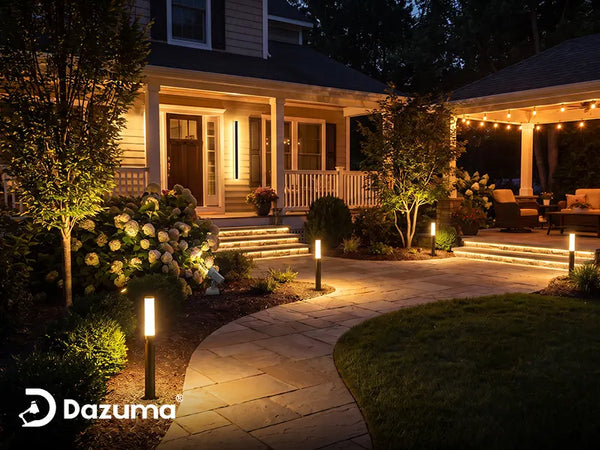
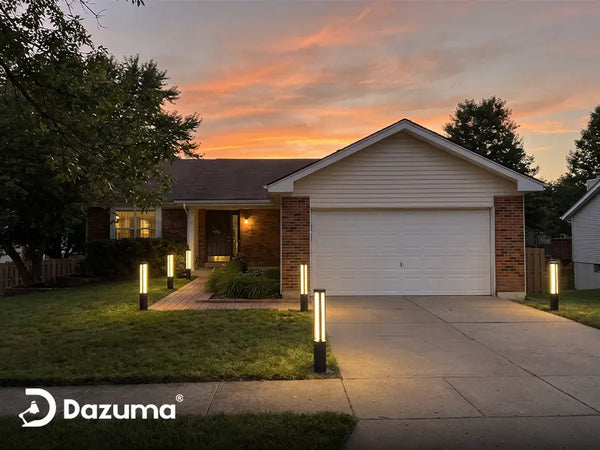
 Minimalist pillar lights providing elegant illumination for a modern courtyard pathway.
Common Metals Used in Outdoor Light Fixtures
Most outdoor lighting fixtures are made from a few common metals. Each one has different strengths, weaknesses, and price ranges. The best choice depends on where you live, how exposed the light will be, and how long you want it to last.
Aluminum – Lightweight and Rust Resistant
Aluminum is one of the most popular metals for outdoor light fixtures, and for good reason. It naturally resists rust, which makes it a reliable choice for most climates. It’s also lightweight, so it’s easier to install and usually less expensive than heavier metals.
Another advantage of aluminum is that it works well with protective finishes like powder coating or anodizing. These finishes help the fixture resist fading, scratching, and corrosion. While aluminum is not as strong as steel, it’s strong enough for most residential lighting, including wall lights, post lights, and landscape fixtures. For homeowners looking for a balance between durability and cost, aluminum is often the safest choice.
Stainless Steel – Strong and Modern
Stainless steel is known for its strength and clean, modern look. It’s commonly used in contemporary outdoor lighting and commercial buildings because it can handle heavy use and harsh weather. High-quality stainless steel resists corrosion very well, especially when it has a brushed or polished finish.
However, not all stainless steel is the same. Lower-grade stainless can still corrode over time, especially in coastal areas where salt air is present. Marine-grade stainless steel performs much better near the ocean but usually costs more. Because of the price, stainless steel fixtures are often chosen for modern homes, high-end projects, or places where durability is especially important.
 Sleek LED bollard lights designed for pathways, plazas, and commercial outdoor spaces.
Brass – Premium and Long Lasting
Brass is considered one of the best metals for outdoor light fixtures if durability is the top priority. It naturally resists corrosion and does not rust, even in wet or humid environments. Over time, brass develops a patina, which gives it a darker, aged look that many homeowners actually prefer.
Because of its strength and resistance to weather, brass is often used in high-end outdoor lighting, especially for landscape lights and coastal homes. It is heavier and more expensive than aluminum, but it can last for decades with very little maintenance. If you want outdoor lights that hold up for many years without needing replacement, brass is one of the most reliable options.
Copper – Beautiful but Expensive
Copper is another premium material used in outdoor lighting. Like brass, it resists corrosion naturally and performs well in harsh weather. Copper fixtures are often chosen for their appearance, since the metal changes color over time and develops a unique greenish or dark brown patina.
This natural aging process makes copper popular for decorative lighting, luxury homes, and historic-style designs. The main downside is the price. Copper fixtures are usually more expensive than aluminum or steel, so they’re often used in smaller numbers or as accent lighting rather than throughout the entire house.
Steel – Strong but Needs Protection
Steel is very strong and durable, but it has one major weakness: it can rust if it is not protected. Because of this, outdoor steel fixtures usually have a coating such as paint, powder coating, or galvanizing to keep moisture away from the metal.
When the coating is high quality, steel fixtures can last a long time and provide good value for the price. However, if the finish gets scratched or damaged, rust can start to form. Steel lights are often used in budget-friendly fixtures or in covered outdoor areas where they are less exposed to rain and humidity.
Best Metal for Outdoor Light Fixtures by Climate
The best metal for outdoor lighting often depends on where you live. Different climates create different challenges, so choosing the right material can make a big difference in how long your fixtures last.
In humid climates, corrosion resistance is the most important factor. Aluminum and brass both perform well in high humidity because they don’t rust easily. Stainless steel can also work, but it should be a high-quality grade to prevent corrosion over time.
Coastal areas are the toughest environments for outdoor lighting because salt air can damage many metals quickly. Brass and copper are usually the best choices near the ocean, since they resist salt corrosion naturally. Marine-grade stainless steel is another good option, but lower-grade steel or iron fixtures may rust much faster in these conditions.
In cold climates, durability and strength matter more. Metals expand and contract as temperatures change, so strong materials like stainless steel, brass, and aluminum tend to hold up better during winter. Fixtures with thick metal and good coatings usually last longer in freezing weather.
Hot and sunny regions create a different problem. Strong sunlight can fade paint and weaken cheap finishes. Powder-coated aluminum and stainless steel usually perform well in these areas because the finish protects the metal from UV damage.
 Classic lantern post lights adding decorative and functional lighting to fence columns.
How We Choose Materials and Build Durable Outdoor Lighting
At Dazuma, we understand that the performance of an outdoor light fixture starts with the materials and the way it is made. That’s why we put a strong focus on selecting durable metals and using reliable manufacturing processes to ensure every fixture can handle real outdoor conditions. Instead of using the lowest-cost materials, we carefully choose metals like aluminum, stainless steel, and brass that are known for their strength, corrosion resistance, and long-term stability.
In the production process, every fixture goes through strict quality control. We use precision casting and machining to make sure the metal parts fit tightly and remain structurally strong over time. Protective finishes such as powder coating, brushed treatments, and weather-resistant coatings are applied to help the fixtures resist rust, fading, and damage from sun or rain. These steps may take more time, but they help ensure the lights maintain both their performance and appearance after years of outdoor use.
We also design our outdoor lighting with real environments in mind. Fixtures are tested for moisture resistance, temperature changes, and everyday wear, so they can perform well on porches, patios, gardens, and exterior walls. By combining high-quality materials with careful manufacturing, we aim to provide outdoor lighting that not only looks good when installed, but continues to work reliably season after season.
Final Thoughts
There isn’t one single best metal for outdoor light fixtures for every situation. The right choice depends on your climate, your budget, and the style you want for your home. Aluminum is the most common option because it’s affordable and rust resistant. Stainless steel is strong and modern, but it costs more. Brass and copper offer the best durability and weather resistance, which makes them popular for high-end outdoor lighting. Steel can also work well, as long as it has a good protective finish.
If you want outdoor lighting that lasts for years with minimal maintenance, it’s worth paying attention to the material before you buy. Choosing the right metal from the start can prevent rust, reduce repairs, and keep your outdoor space looking great for a long time.