
Who This Is For: This guide is for homeowners, renters, patio designers, restaurant owners, and outdoor living shoppers comparing LED Vs Incandescent String Lights. It is especially helpful if you want a warm backyard atmosphere but also care about electricity cost, bulb heat, durability, and long-term maintenance.
Key Takeaways
- Quick Answer: Which Costs Less To Run?
- Energy Cost Formula For String Lights
- LED Vs Incandescent Cost Breakdown
- Seasonal Cost Scenarios
- Heat, Safety, And Outdoor Comfort
- When Incandescent String Lights Still Make Sense
- Where Solar String Lights Make Sense
- Lifespan And Maintenance Costs
- Product Recommendations
- Final Advice
Introduction
Outdoor string lights are one of the easiest ways to make a backyard, patio, balcony, pergola, or garden feel finished. They add warmth, define a gathering area, and create a relaxed evening mood without a major renovation. But once the lights are used several nights a week, the difference between LED and incandescent bulbs can show up in energy use, heat, and maintenance.
The short version is simple: LED string lights use far less electricity than incandescent string lights. Solar LED string lights can reduce grid electricity cost even further, although their performance depends on sunlight, battery capacity, and placement. If you want ambience with lower operating cost, LED is usually the better choice.

Quick Answer: Which Costs Less To Run?
LED string lights cost much less to run than incandescent string lights. The exact savings depend on the length of the string, bulb count, wattage, local electricity rate, and how many hours the lights stay on. Still, LEDs commonly use a fraction of the power needed by incandescent bulbs, which makes them the better long-term choice for frequent patio or garden lighting.
For example, a 10W LED string light used four hours per night costs only a small amount each month. A similar incandescent setup using 100W can cost about ten times more under the same schedule. The difference may look small for one evening, but it adds up over a full outdoor season.
Energy Cost Formula For String Lights
Use this simple formula to estimate your electricity cost:
Monthly Cost = Watts ÷ 1,000 × Hours Per Night × Days Per Month × Electricity Rate
For this guide, the example rate is $0.18 per kWh, rounded from recent U.S. residential electricity price data. Your actual cost may be lower or higher depending on your state, utility plan, and time-of-use pricing.
For a local estimate, replace the example rate with the price shown on your own electric bill. If your utility charges higher rates during evening peak hours, the savings from efficient LED string lights may be even more noticeable.

Small Wattage Differences Add Up
A patio light that runs only once a month will not change the bill much. A string light used every evening during spring, summer, and fall is different. The more often the lights are used, the more important efficiency becomes for comfort, cost, and long-term outdoor enjoyment.
This is why homeowners who regularly entertain outdoors should look at wattage before buying. Ambience is important, but operating cost matters too for smart everyday outdoor living at home.
LED Vs Incandescent Cost Breakdown
The table below uses a simple example: one outdoor string light setup, four hours per night, 30 nights per month, at $0.18 per kWh.
| String Light Type | Example Wattage | Monthly Energy Use | Estimated Monthly Cost |
|---|---|---|---|
| LED String Lights | 10W | 1.2 kWh | About $0.22 |
| Incandescent String Lights | 100W | 12 kWh | About $2.16 |
| Solar LED String Lights | Solar Powered | No grid kWh for solar use | Near $0 grid electricity cost |

Annual Cost Example
Now extend the same example across a full year. If your string lights run four hours every night, a 10W LED setup uses about 14.6 kWh per year. At $0.18 per kWh, that is about $2.63 per year. A 100W incandescent setup under the same schedule uses about 146 kWh per year, or about $26.28 per year.
That example is only for one string light setup. If you use multiple strings over a large patio, restaurant courtyard, backyard pergola, or event space, the savings grow faster. LEDs also produce less heat, which can make them more comfortable around seating areas and fabric canopies.
Seasonal Cost Scenarios
Energy cost depends heavily on how often you use the lights. A casual user may turn on string lights only on weekends, while a patio owner may run them almost every night during warm weather. The more hours you use them, the more LED efficiency matters.
| Use Pattern | LED 10W Estimate | Incandescent 100W Estimate |
|---|---|---|
| Weekend use, 4 hours, 8 nights per month | About $0.06 per month | About $0.58 per month |
| Regular use, 4 hours, 30 nights per month | About $0.22 per month | About $2.16 per month |
| Extended use, 6 hours, 30 nights per month | About $0.32 per month | About $3.24 per month |
These numbers are estimates, but the pattern is consistent: LED costs remain low even with frequent use, while incandescent costs grow faster as hours increase.
Heat, Safety, And Outdoor Comfort
Incandescent bulbs create light by heating a filament, so much of their energy becomes heat. That warm glow is nostalgic, but it can make bulbs hot to the touch. Around outdoor fabric, wood structures, dry leaves, and children, cooler operation is a practical advantage.
LED bulbs are more efficient and typically stay much cooler than incandescent bulbs. That does not mean they can be installed carelessly, but it does make them better suited for frequent use around patios, pergolas, balconies, fences, and outdoor dining spaces.
LEDs Are Better For Frequent Entertaining
If the lights are only decorative for a holiday weekend, the difference may not matter much. If they stay on every evening, LED efficiency becomes more valuable. LEDs are also easier to pair with timers, solar charging, and low-maintenance outdoor routines.
For permanent or seasonal ambience, explore String Lights and related Outdoor Lighting options before choosing a layout.

When Incandescent String Lights Still Make Sense
Incandescent string lights are not automatically wrong. They can still make sense for a short event, a vintage design concept, or a space where the lights are used only a few times per year. Some homeowners also prefer the familiar glow of old-style bulbs. In those cases, the higher energy use may not be a major concern because the runtime is limited.
For everyday outdoor living, however, LED is the stronger choice. It gives you the same decorative function with lower heat, lower operating cost, and better compatibility with solar or timer-based routines. If you want the incandescent look, choose warm white LED globe bulbs rather than going back to inefficient bulbs.
Where Solar String Lights Make Sense
Solar string lights are best for places where you want ambience but do not want to run wiring or use an outdoor outlet. They work well for garden corners, pergolas, fences, camping setups, small patios, and casual party spaces. Their biggest benefit is convenience: the sun charges the battery, and the lights turn outdoor areas into usable evening spaces without adding grid electricity cost.
The tradeoff is consistency. Solar performance depends on sunlight, panel placement, battery size, weather, and the season. A shaded patio or cloudy week may reduce working time. For the best result, place the solar panel where it receives strong sun during the day.
LED Vs Incandescent Outdoor String Lights
| Factor | LED String Lights | Incandescent String Lights |
|---|---|---|
| Energy Use | Much lower | Much higher |
| Operating Cost | Lower for regular use | Higher over time |
| Heat | Runs cooler | Runs hotter |
| Best Use | Patios, pergolas, daily ambience, solar setups | Vintage look, short-term decorative use |

Solar Lights Reduce Wiring Hassle
Solar does not replace every outdoor lighting need, but it is useful for decorative zones. If the goal is a relaxed glow for a fence, garden corner, tree, or casual seating area, solar LED string lights are often simpler than running a new electrical line.
For more off-grid designs, browse Outdoor Solar Lights and patio-friendly outdoor decor lighting.
Lifespan And Maintenance Costs
Electricity is only part of the cost. Bulb replacement matters too, especially when lights are installed high above a patio, wrapped through pergola beams, or stretched across a long backyard. Incandescent bulbs typically need more frequent replacement, while LEDs are designed for much longer service life.
For homeowners, that means fewer evenings spent replacing bulbs before a gathering. For restaurants, event spaces, and rental properties, it can also mean less labor and fewer interruptions. When you compare LED and incandescent string lights, think about the full ownership cost: energy, replacement bulbs, time, and reliability.
Buying Tips Before You Choose
Check The Power Source
String lights may be plug-in, solar, battery operated, USB rechargeable, or hardwired. Choose based on where the lights will go and how often you will use them.
Choose Warm White For Ambience
For patios and outdoor dining, warm white around 3000K usually feels more comfortable than cool white. It flatters wood, plants, and outdoor seating areas.
Plan The Hanging Path
Before buying, measure the distance between hooks, poles, fences, or pergola beams. Give the string a gentle drape instead of pulling it tight, and make sure the power source is practical for the final position.
Product Recommendations
The two products below are LED-based outdoor string light options designed for warm ambience and flexible outdoor use.
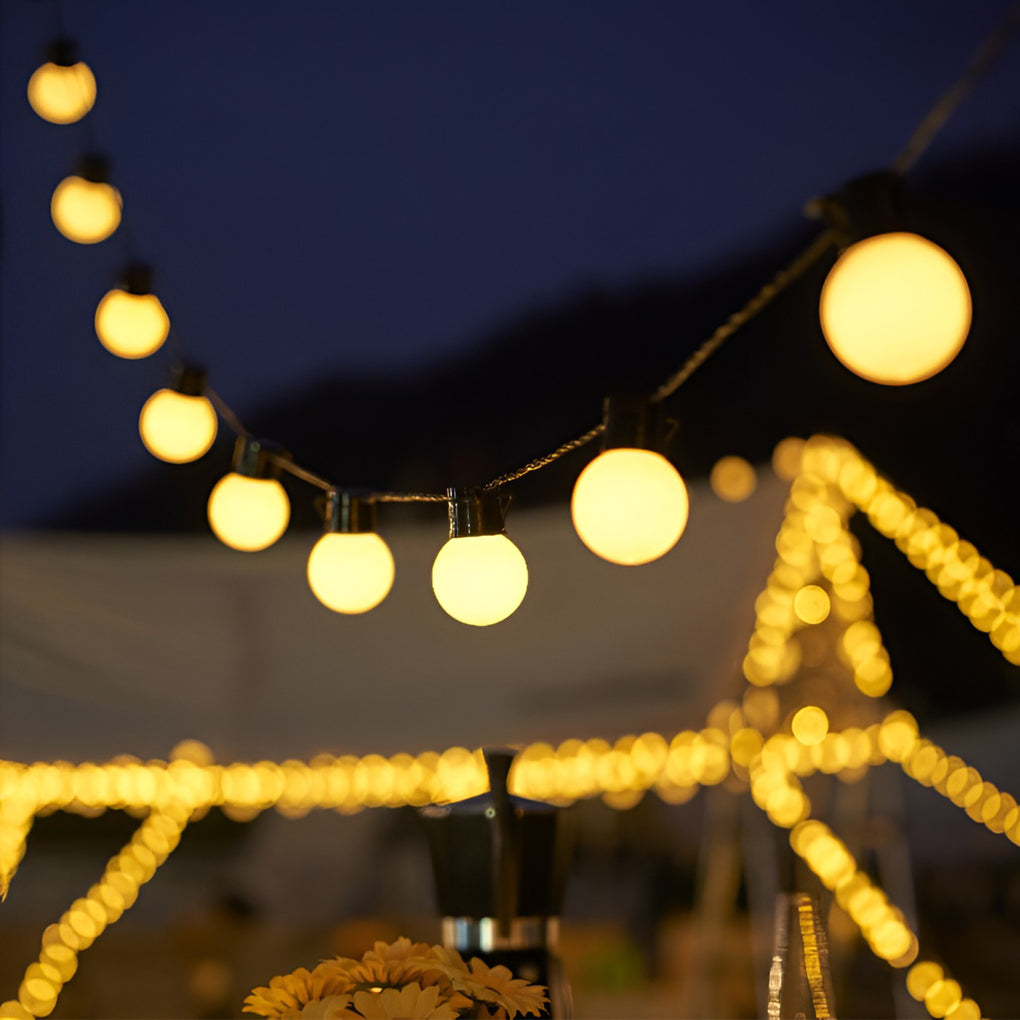
Waterproof LED Solar Powered Outdoor String Camping Decor Lights
Best For: Gardens, parks, camping setups, parties, and casual outdoor decorating.
| Price | $63.99 |
| Power Supply | Solar |
| Power / Output | 0.5W / 35LM |
| Color Temperature | 3000K Warm White |
| Working Time | 3–5 Hours |
| Waterproof Rating | IP44 |
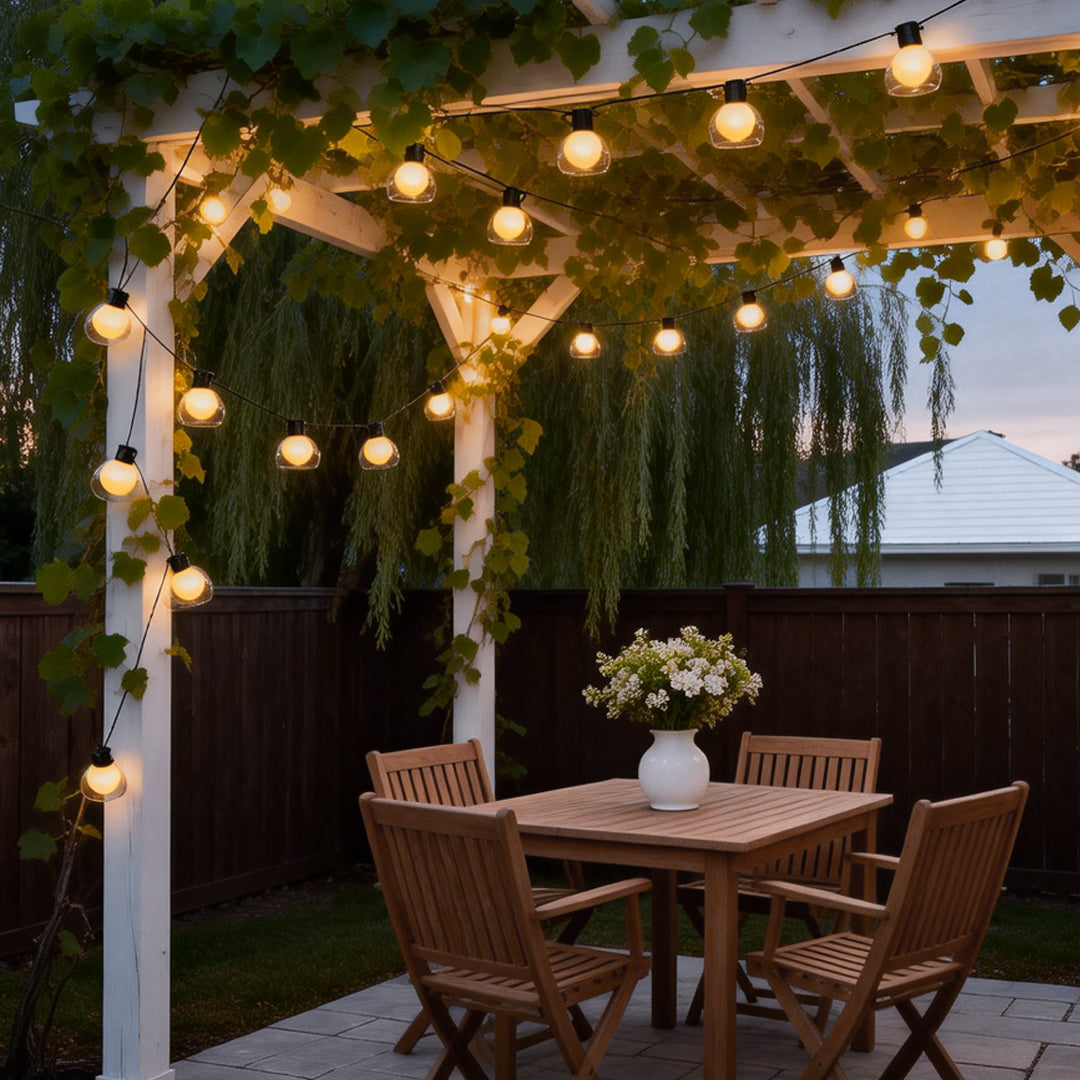
LED Globe String Lights Multi-Power Mode Outdoor Lights
Best For: Pergolas, balconies, campsites, porches, patios, and backyard dining areas.
| Price | $164.99 |
| Power Options | Solar, Battery, USB, Hardwired |
| Color Temperature | 3000K Warm White |
| Finish | Black |
| Indoor/Outdoor | Outdoor |
| Voltage | Solar 3–4.5V / USB 5V / Plug-In 110–220V |

Final Advice: LED Is The Better Long-Term Choice
If you love the look of incandescent string lights, choose a warm white LED style that gives the same cozy effect with lower energy use and less heat. For a patio, pergola, backyard dining area, or garden party setup, LED string lights are usually the smartest choice. For off-grid convenience, solar LED string lights are even easier to place, as long as the solar panel receives enough sunlight.
To create a complete outdoor ambience plan, browse Dazuma String Lights, Outdoor Lanterns, and related patio-friendly lighting collections for warm, efficient exterior lighting.