
Who This Is For: This guide is for homeowners who look at a patio wall, entry facade, garden fence, or blank exterior surface at night and feel like something is missing. Maybe your porch light works, but the wall still looks flat. Maybe the house disappears after sunset except for one harsh bulb by the door. Or maybe you have a beautiful stone, brick, stucco, concrete, or wood surface that never gets noticed once it gets dark.
Quick Answer: What Wall Wash Lighting Means
Wall wash lighting means placing a light so it spreads evenly across a vertical surface, usually a wall, fence, facade, garden feature, or architectural panel. Instead of lighting one small spot, the goal is to create a broad, smooth layer of light that makes the whole surface feel brighter, cleaner, and more intentional.
In real life, wall wash lighting solves a problem many homeowners do not know how to describe. The patio has furniture, the landscaping is done, the house has outdoor fixtures, but the space still feels unfinished at night. The reason is often not that the area lacks light. It is that the light is pointed at the wrong thing. A single porch sconce may light the door. A path light may light the walkway. But the large dark wall behind everything still absorbs the scene. Wall washing gives that wall a soft background glow, so the whole area feels more comfortable.
A simple way to picture it: if a flashlight creates a circle, wall wash lighting creates a sheet. It is often used outdoors on facades, courtyard walls, retaining walls, privacy fences, poolside walls, and garden backdrops. Indoors, the same idea can be used on gallery walls, textured stone fireplaces, and long hallways, but this guide focuses mainly on outdoor and architectural use.

Why Outdoor Walls Feel Dark Even With Lights Nearby
One of the most common complaints I hear from homeowners is, “We already have outdoor lights, but the space still feels dark.” That can happen on patios, side yards, front entries, backyard dining areas, and garage walls. The fixture is technically bright enough, but the eye still reads the space as dim because the vertical surfaces are not lit.
Human eyes judge a space by what they see at eye level. A path light on the ground may help you walk safely, but it does not make the wall, fence, or building face feel alive. A ceiling light under a porch roof may brighten the floor, but it can leave the wall behind you dull. A wall sconce may create useful light near the fixture, yet still leave the larger facade patchy. That is why Wall Wash Lighting can change the mood so quickly: it brightens the vertical plane your eye naturally notices first.

The Wall Is Usually The Missing Layer
If your patio feels gloomy even after adding a brighter bulb, do not start by buying the strongest fixture you can find. Stand back and look at the largest dark surface. If that surface is a blank wall, fence, or facade, adding a smooth wash of light may do more than increasing brightness at the door.
This is especially true around stucco, brick, stone, board-formed concrete, fluted panels, and wood slat walls. During the day, those surfaces carry the design. At night, they disappear unless you give them light. Wall washing brings them back into the scene without making the space feel like a parking lot.
Wall Washing Vs. Wall Grazing Vs. Spotlighting
People often use “wall wash lighting” to describe several different effects, but there is a useful difference. Wall washing is smooth and even. Wall grazing is more dramatic and textured. Spotlighting is narrower and more focused. Knowing the difference helps you avoid buying a fixture that creates the opposite of what you wanted.
| Lighting Effect | What It Looks Like | Best For | Main Risk |
|---|---|---|---|
| Wall Washing | Broad, soft, even light across the wall | Facades, smooth walls, outdoor living backgrounds | Can look flat if the fixture is too far away or too weak |
| Wall Grazing | Light placed close to the surface to reveal texture | Stone, brick, wood slats, rough stucco, concrete | Can exaggerate flaws, stains, waves, or patch repairs |
| Spotlighting | A tighter beam aimed at one object or feature | Trees, sculptures, columns, address numbers | Can create hot spots and harsh contrast on wide walls |
If you want the house to feel welcoming from the street, wall washing is usually the calmer choice. If you want to show off a stacked stone wall, brick column, or ribbed panel, grazing may be better. If the goal is to highlight one tree or statue, look at outdoor spotlights instead. For homeowners comparing fixture categories, Outdoor Wall Lighting includes more decorative sconces, while wall washers are more architectural and effect-driven.
If you want to go deeper into fixture terminology, the older Dazuma guide What Is a Wall Washer Light Fixture? A Homeowners’ Guide is a useful companion, especially if you are comparing wall washers with general outdoor wall lights.
Where Wall Wash Lighting Works Best Around A Home
Wall wash lighting is not only for hotels and commercial buildings. It can be extremely practical at home when used in the right places. The key is to use it where a vertical surface already matters to the space.
Front Facades And Entry Walls
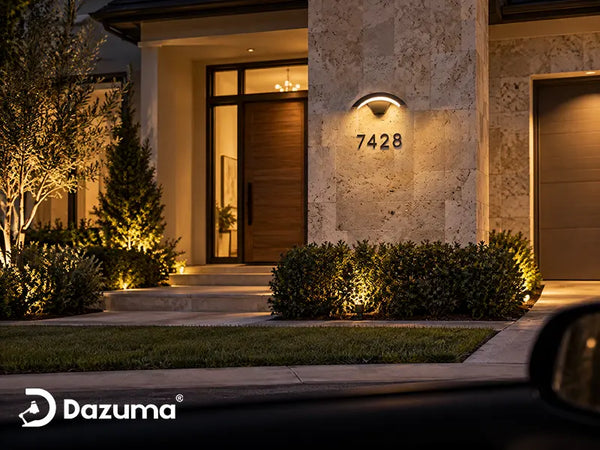
A front facade can look surprisingly flat at night when the only light is next to the door. A soft upward wall wash can reveal stone, stucco, siding, or columns so the house has curb appeal without feeling overly bright. This is especially helpful when the entry is set back or the garage dominates the front elevation.


Patios, Outdoor Dining Areas, And Poolside Walls
For outdoor living areas, wall washing works like a background layer. It lets people see each other comfortably, gives furniture a finished setting, and keeps the space from feeling like a black box beyond the table. This is where homeowners often feel the biggest difference because the light is not just functional; it changes the way people want to stay outside longer.
Wall washing also works on courtyard feature walls, privacy fences, retaining walls, long side-yard walls, and garden backdrops. It pairs well with Up & Down Wall Lights when you want decorative rhythm near doors or columns, but a true wall washer is usually better for wide surfaces that need a continuous wash instead of repeated small cones of light.
A Practical Option For Tall Exterior Walls
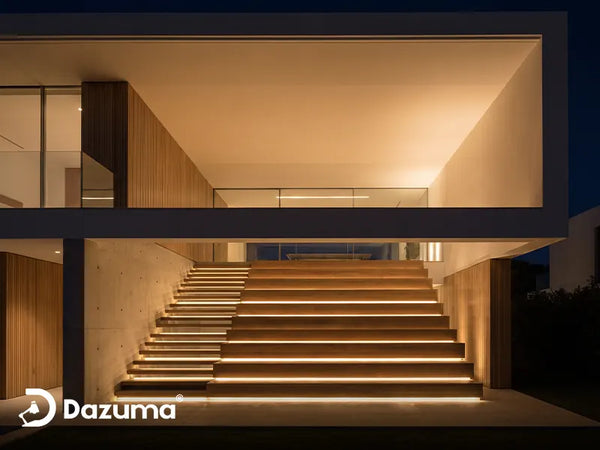
If your main problem is a tall, dark exterior wall that makes the house look unfinished at night, an upward wall washer can be a practical starting point. It is especially useful on building exteriors, courtyard feature walls, fences, stair side walls, and surfaces where you want the texture or structure to show from below.
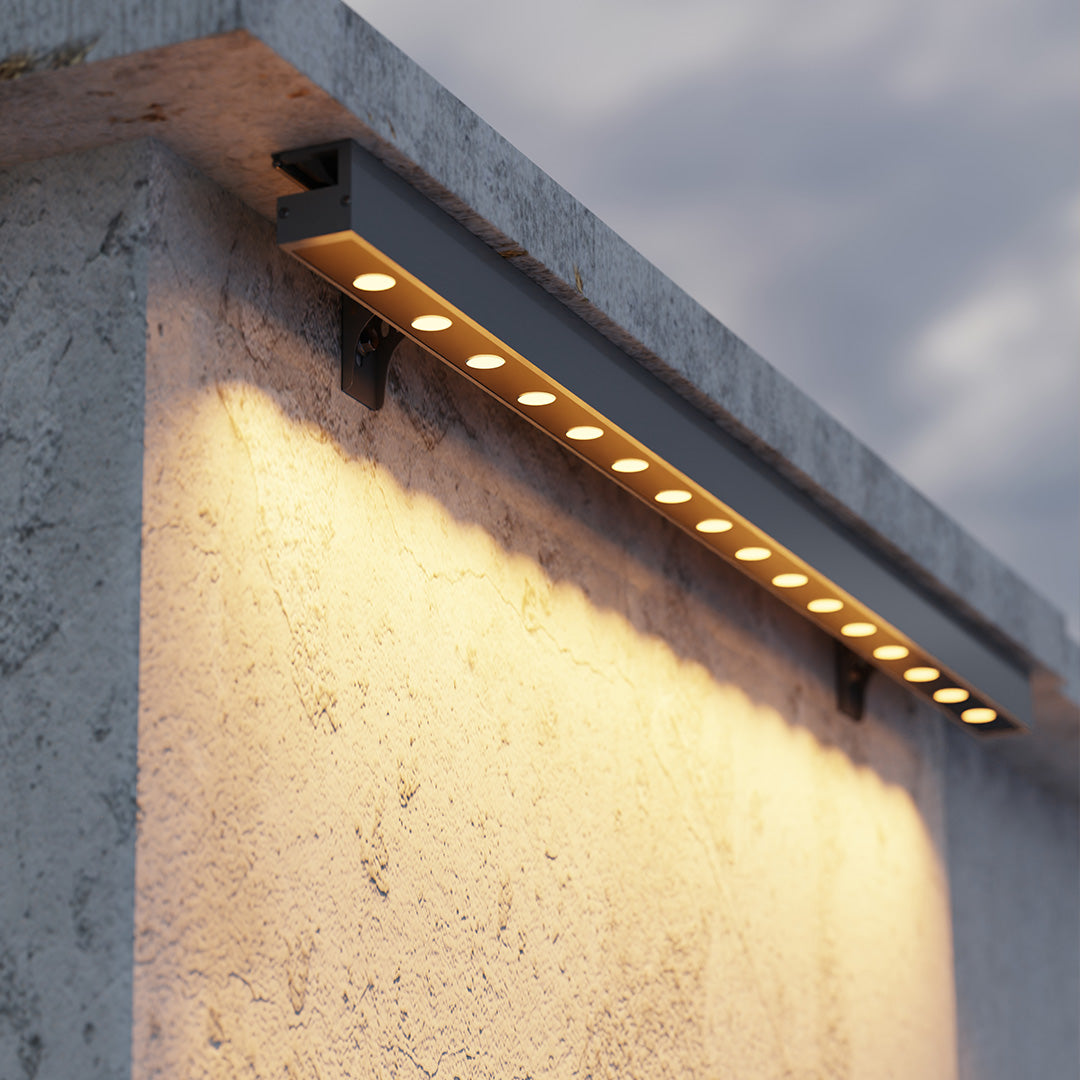
Upward architectural wash
Linear LED Wall Washer Upward Outdoor Aluminum Light
Price: $133.99
Best for exterior walls, courtyard feature walls, fences, villa facades, and stair side walls where you want a stronger upward wash that reveals structure and nighttime depth.
- Aluminum body with tempered glass shade for outdoor architectural use.
- Available with or without baffle, helpful when balancing light output and glare control.
- Hardwired fixture designed for upward wall washing on exterior vertical surfaces.
How To Plan Wall Wash Lighting Without Overdoing It
The biggest mistake is treating wall wash lighting as “more brightness.” It is really about controlled brightness. A well-washed wall should make the space feel calmer, safer, and more finished. It should not blind guests, annoy neighbors, or turn your home into a storefront.
Start With The Wall, Not The Fixture
Look at the surface in daylight first. Is it smooth stucco, rough stone, brick, metal siding, concrete, or wood? Smooth walls usually look best with a softer, more even wash. Rough texture can handle light placed closer to the wall because the shadows add character. But be careful: grazing light can also expose cracks, uneven paint, old patchwork, or water stains. If the surface has flaws you do not want to feature, keep the wash softer and less dramatic.
Decide Whether You Want Background Glow Or Architectural Drama
A backyard dining wall usually needs background glow. A modern facade with strong lines may benefit from stronger architectural drama. A garden wall behind plants may need just enough light to separate foliage from the wall. For design planning, the most natural path is to choose your desired feeling first, then choose the fixture strength and spacing.
Warm White Usually Feels More Residential
For most homes, 3000K warm white feels comfortable on patios, entry walls, fences, and garden backdrops. Cooler white can look crisp on modern concrete, commercial-style facades, or very clean architectural surfaces, but it can feel harsh near dining or lounging areas. For a more detailed breakdown, see How to Choose Exterior Wall Wash Color Temperature.

Think About The Viewing Angle
Do not only stand where the light will be installed. Stand where people will actually see the wall: the patio sofa, the dining table, the driveway, the sidewalk, or the kitchen window looking out. A fixture that looks fine from one angle may be too bright from another. If the wall faces a neighbor’s window, shielded or baffled fixtures may be worth considering.
For longer walls where you want a continuous line rather than individual pools of light, Outdoor Led Strip Lights and architectural linear bars can be useful, as long as the product is rated for outdoor use and installed with the correct transformer and wiring method.
A Softer Linear Option For Continuous Wall Glow
Not every project needs a strong upward beam. Sometimes the issue is a long low wall, a concrete planter edge, a landscape wall, or a modern fence that needs a smooth line of ambient light. In that case, a slimmer linear fixture can create a more continuous glow without turning the wall into a bright vertical billboard.
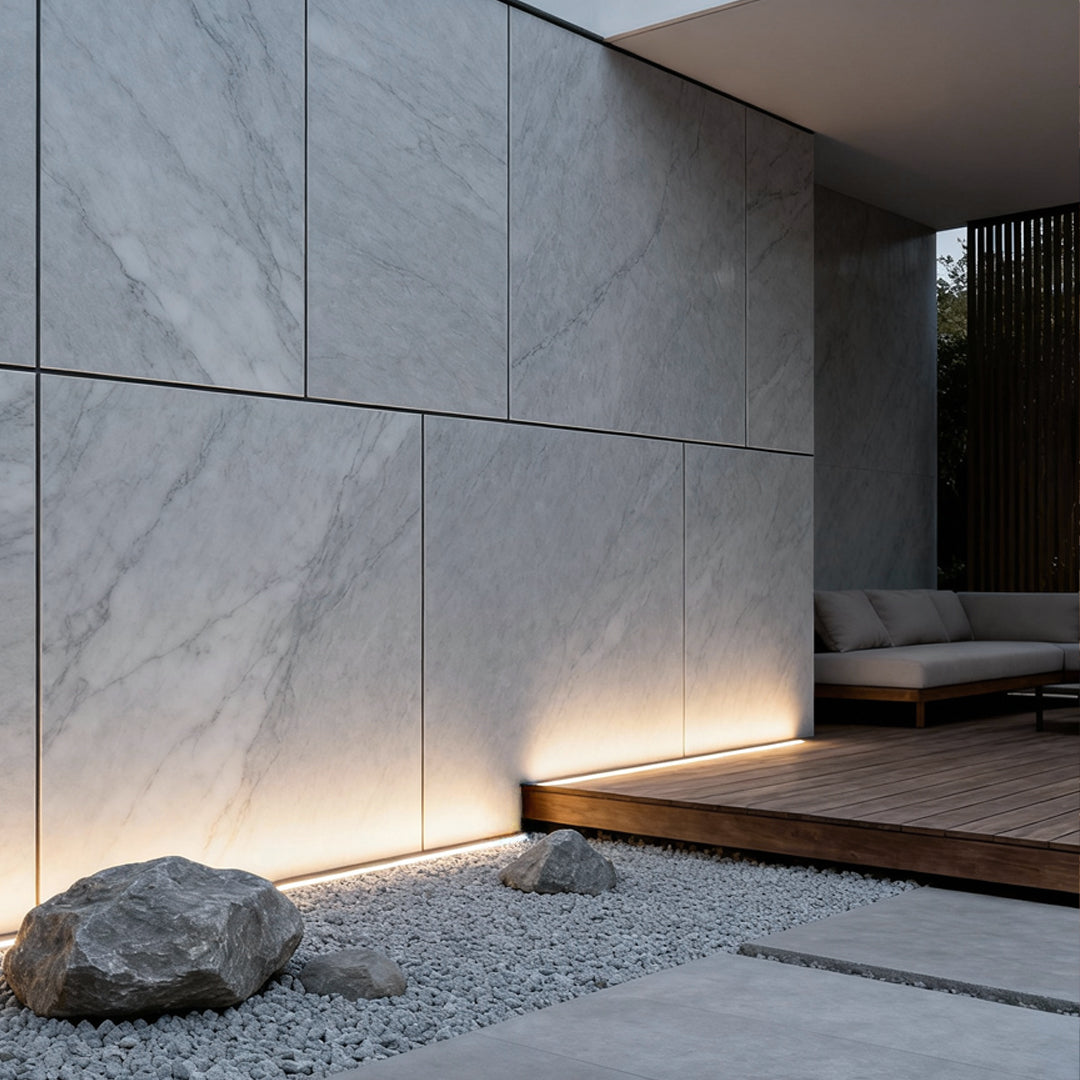
Continuous linear glow
Architectural LED Strip Lighting Waterproof LED Linear Light
Price: $80.99
Best for landscape walls, building exteriors, concrete walls, and long architectural surfaces where you want a soft, uniform linear light band.
- Aluminum body with PC shade for diffused, more uniform outdoor light.
- DC24V low-voltage design requires a separate transformer, which is not included.
- Available in warm white 3000K or white 6000K for different architectural moods.
Common Mistakes That Make Wall Wash Lighting Look Wrong

Using Too Few Fixtures On A Long Wall
One fixture may look strong in a product photo, but a long wall often needs multiple light sources for a smooth result. Too few fixtures create bright scallops separated by dark gaps. That can look accidental instead of designed.
Placing The Light Where People Can See The Source Directly
A wall washer should make the wall visible, not make the fixture the brightest thing in the yard. If people can see bare LEDs from a seating area, walkway, or neighbor’s window, the experience will feel uncomfortable even if the wall itself looks good. Baffles, shielding, careful angle adjustment, and proper placement all matter.
Choosing A Color Temperature That Fights The Home
Warm stone, tan stucco, wood siding, and brick usually look better with warm white light. Cool concrete, gray metal, and minimalist facades can work with white light. Mixing too many color temperatures outside the same home can make the design feel pieced together. Try to keep your wall wash, sconces, path lights, and landscape accents in a related range unless you intentionally want contrast.
Ignoring Water, Wiring, And Maintenance
Outdoor wall wash lighting is not the place to guess. Check the IP rating, power supply, transformer requirements, mounting location, drainage, and service access. Many architectural wall washers use low-voltage DC power and require a compatible transformer. That can be safer and more stable for outdoor projects, but it also means you need proper planning before installation. For exposed outdoor areas, choose fixtures designed for exterior use rather than adapting indoor products.
If your project includes a full exterior lighting update, not just one wall, it can help to browse related fixture families such as Outdoor Lighting so the wall wash layer works with path lights, sconces, post lights, and other outdoor fixtures instead of feeling like a separate add-on.
Summary: The Simple Way To Think About Wall Wash Lighting
Wall wash lighting means using light to brighten a vertical surface in a smooth, intentional way. It is not only about making an outdoor area brighter. It is about giving the eye a comfortable background, revealing the home’s architecture, and making patios, entries, fences, and garden walls feel finished after dark.
For a homeowner, the most useful question is not “Do I need wall wash lighting?” It is “Which wall is making this space feel dark, flat, or unfinished?” If the answer is a facade, courtyard wall, fence, retaining wall, or garden backdrop, a wall wash effect may be the missing layer. Use softer linear light for long ambient glow, stronger upward washers for facade drama, warmer color temperatures for relaxed outdoor living, and shielded placement whenever glare is a concern.
Done well, wall wash lighting does not call attention to itself. It simply makes the home feel more welcoming, more dimensional, and more comfortable at night.