
Who This Is For: This guide is for homeowners, builders, and landscape design shoppers who are considering lighting in steps and want to understand the practical benefits before choosing recessed step lights, under-tread strip lights, path lights, or other outdoor stair lighting options.
Introduction
Lighting in steps may look like a small detail, but it can completely change how an outdoor area feels after dark. A front stair, garden stair, deck step, poolside step, or raised patio edge can feel uncertain at night when the only light comes from a porch fixture or a distant wall light. Once light is placed directly near the tread, riser, or side wall, the space becomes easier to understand and more comfortable to use.
The biggest advantage of step lighting is not simply brightness. It is visual guidance. Good step lights show where each level begins and ends without flooding the whole yard with harsh light. That makes the pathway feel calmer, safer, and more polished. In design terms, step lights also create rhythm. Repeated points or lines of light can make an ordinary staircase feel intentional, architectural, and welcoming.
This guide explains the main benefits of lighting in steps, where it works best, how to choose between recessed fixtures and linear under-tread lights, and what mistakes to avoid when planning outdoor stair lighting.

Quick Answer: Why Lighting In Steps Is Worth It
Lighting in steps is useful because it makes stairs easier to see, reduces dark gaps between outdoor zones, adds curb appeal, and gives patios, decks, gardens, and entryways a more finished nighttime look. Instead of relying only on overhead or wall-mounted fixtures, step lighting brings the light closer to where people actually place their feet.
For most homes, the best step lighting is low, shielded, and warm. The goal is not to make the steps look like a stage. The goal is to define the edge of each tread, guide movement, and support the surrounding lighting plan. If you are building a broader outdoor lighting layout, step lights often work naturally with Path Lights, wall lights, and landscape accents.
A helpful rule is this: if a guest has to slow down because they cannot clearly read a step, slope, curb, deck edge, or patio transition at night, that area probably needs a dedicated low-level light source.
Step Lighting Makes Elevation Changes Easier To Read
The most practical benefit of lighting in steps is visibility at changes in elevation. Outdoor stairs are often harder to read than indoor stairs because surfaces may be darker, wider, irregular, or partially covered by shadows from plants, railings, columns, or walls. A single porch lantern may brighten the doorway but still leave the lower steps in shadow.
Step lights solve this by placing light close to the walking surface. That helps people see the front edge of the tread, the height of the riser, and the direction of travel. This matters most in areas where people are moving between different materials: stone to grass, deck to patio, driveway to porch, pool deck to garden path, or terrace to courtyard.

It Helps People See The Step Edge
Good step lighting is less about blasting light across the yard and more about creating contrast. When the tread edge is visible, people can move more confidently. This is especially important for front entries, older homes with uneven masonry, dark stone steps, and outdoor stairs used by guests who do not know the layout.
For long routes, step lighting also works as part of a wayfinding system. You can use step lights on the stairs themselves, then continue the route with broader outdoor lighting around the porch, walkway, and landscape features. The result feels organized rather than random.
A Recessed Option For Clean Step Guidance
For masonry steps, concrete risers, exterior stair walls, and modern entryways, a recessed step light can create a clean, built-in look. This type of fixture sits into the wall or side of the step instead of sticking out, so the lighting feels integrated with the architecture.

Outdoor Brick Light LED Embedded Stair Wall Ladder Lights
Price: $43.99
Best for outdoor steps, courtyard walls, porch stairs, and garden passages where you want low-glare guidance with a clean recessed look.
- Stainless steel, tempered glass, and plastic construction for outdoor step and passage use.
- Rectangle style gives a wider soft light, while grille style offers more focused anti-glare guidance.
- Recessed installation helps the fixture sit cleanly in a wall or stair side without protruding into the walking area.
This kind of light is especially helpful when the staircase is part of the architecture itself. Instead of adding a visible decorative fixture above the steps, the wall or riser quietly becomes the light source.
How Step Lights Improve Outdoor Design
They Add Depth Without Visual Clutter
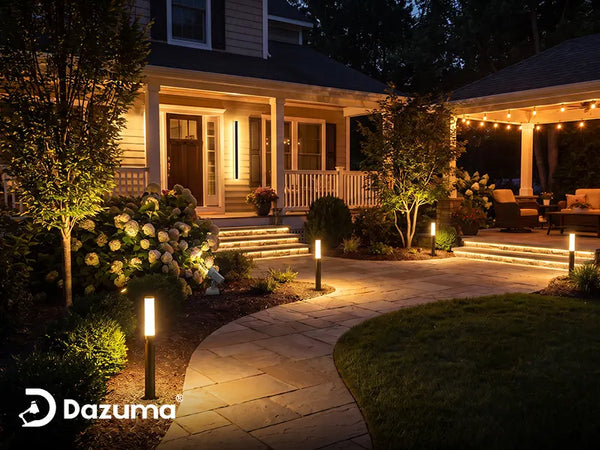
Outdoor spaces can feel flat at night if the only light comes from one porch fixture or a bright security light. Step lighting adds depth because the light appears in layers: low on the stairs, along the path, and near the house. This layered effect makes the exterior feel more designed.
The best part is that step lights do not need to be visually loud. A narrow strip of warm light under a tread, or a small recessed fixture on a riser, can be enough to make stone, concrete, tile, or wood look more dimensional. If your home has modern architecture, the clean lines of step lighting can support the same minimal language as Modern Outdoor Wall Lighting.
It Makes Hardscape Feel Intentional
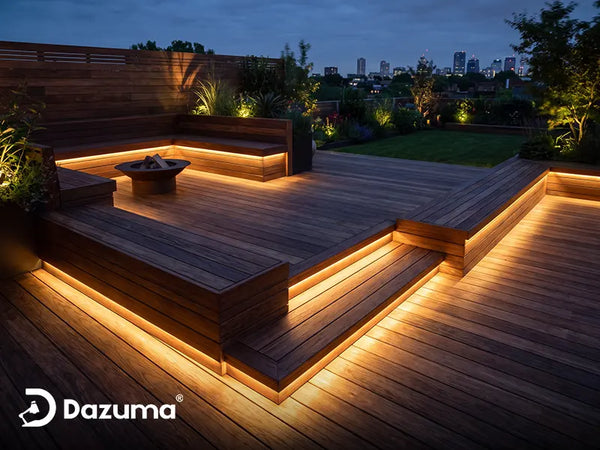
Steps, retaining walls, deck edges, and raised patios can look unfinished after sunset. A repeated pattern of low-level light gives those structures rhythm. The home feels less like a dark yard with a few lamps and more like a complete outdoor room.

They Support Curb Appeal From The Street
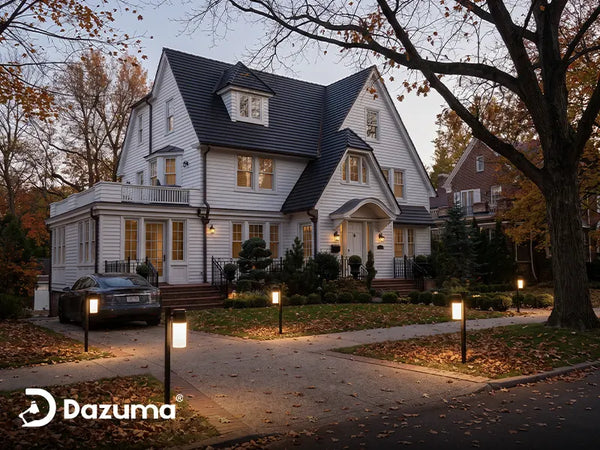
Front step lighting can make a home look more welcoming before anyone reaches the door. It shows the route, frames the entry, and helps the house feel cared for. For homes with a raised porch, terraced front yard, or long approach path, lighting the steps can have a stronger curb appeal effect than adding another decorative fixture near the door.
If the route from the driveway to the front entry includes a walkway, stairs, and a porch wall, combine step lights with low path lights and subtle wall lighting. For more planning ideas, Dazuma’s guide to How to Put a Light on Outdoor Stairs gives a useful installation-focused look at outdoor stair lighting.
Lighting In Steps Makes Outdoor Areas More Usable
Many outdoor spaces are beautiful during the day but underused at night because movement feels awkward. People may avoid a garden terrace, side yard, pool deck, or lower patio simply because the transition areas feel too dark. Step lighting changes that. It makes the in-between spaces more comfortable, not just the destination.
This is important for family homes and entertaining spaces. Guests often move with drinks, plates, bags, children, or pets. A low, steady glow on steps helps them navigate without needing to turn on a harsh floodlight. It also helps the host create an evening mood that feels relaxed instead of overly bright.
| Area | Why Step Lighting Helps | Best Light Effect |
|---|---|---|
| Front Entry Steps | Guides guests from the driveway or sidewalk to the door. | Low, warm, evenly spaced points of light. |
| Deck Stairs | Defines each tread without overpowering the seating area. | Recessed riser lights or under-tread strips. |
| Garden Terraces | Makes level changes visible in softer landscape settings. | Small recessed lights paired with path lighting. |
| Poolside Steps | Improves visibility around wet surfaces and lounge areas. | Shielded waterproof fixtures with controlled glare. |
A Linear Option For Under-Tread Glow
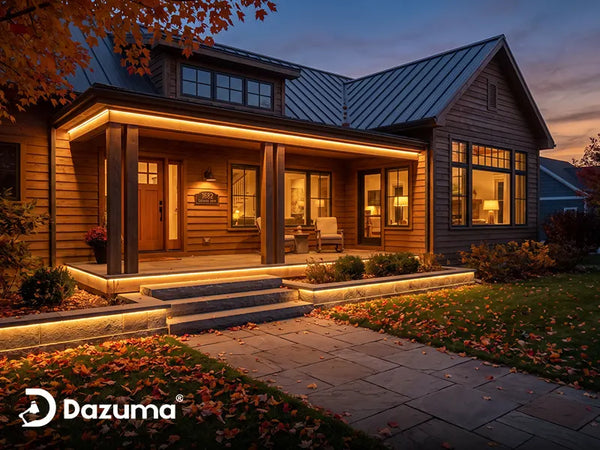
Not every step lighting plan needs individual fixtures. For floating steps, wide stone stairs, railings, outdoor bars, guardrails, and contemporary patios, a linear light can create a continuous glow. This works especially well when the design goal is atmosphere and architectural definition.

Exterior LED Step Lights Long Strip Decorative Lamp
Price: $66.99
Best for under-step illumination, wide stair treads, courtyard railings, villas, and outdoor areas where you want a longer, continuous warm line of light.
- Available in 12'', 20'', and 39'' length options for different step and railing layouts.
- Aluminum structure and acrylic material support a clean linear lighting effect.
- Requires a transformer that is not included, so plan the power system before installation.
Linear step lighting has a different personality from small recessed fixtures. It feels more continuous, more modern, and more atmospheric. Use it when you want the stair edge itself to glow rather than seeing individual points of light.
How To Choose The Right Lighting In Steps
The right fixture depends on the step material, installation stage, available power, exposure to weather, and the visual effect you want. New construction gives you more freedom because wiring, cutouts, and transformers can be planned early. For an existing home, it is usually better to choose a system that fits the available wall, riser, or deck structure with minimal disruption.

Start With The Walking Route
Plan from the user’s point of view. Where do people arrive? Where do they turn? Where does the grade change? Step lights should support the route first. Decorative accents can come after the walking path is clear.
| Lighting Type | Best For | What To Watch |
|---|---|---|
| Recessed Step Lights | Masonry steps, porch walls, concrete risers, and modern entries. | Requires a proper cutout, wiring plan, and weather-rated installation. |
| Under-Tread Linear Lights | Wide stairs, floating steps, railings, and contemporary patios. | Transformer location, cable routing, and glare control matter. |
| Path Lights Near Stairs | Garden stairs, soft landscaping, and informal walkways. | Spacing must be consistent so the stairs do not have dark gaps. |
| Wall-Mounted Lights | Staircases beside exterior walls, patios, and side entries. | Avoid eye-level glare and overly bright fixtures. |
If you already use linear light accents around a deck, railing, or outdoor kitchen, Outdoor LED Strip Lights can help create a more continuous design language. For stairs beside an exterior wall, Outdoor Wall Lighting may be useful as a supporting layer, but it should not replace direct step guidance if the stairs are dark.
Spacing, Brightness, And Color Temperature Tips
Step lighting should feel even. If one step is bright and the next two disappear, people still have to guess. For recessed step lights, place fixtures in a consistent rhythm and aim for gentle overlap on wider stairs. For narrow residential steps, every other step may be enough in some layouts, while wider or darker stairs may need more frequent placement.
Warm white is usually the safest design starting point for residential outdoor stairs because it feels welcoming and works well with stone, wood, brick, stucco, plants, and warm exterior finishes. Cooler light can look crisp on very modern homes, but it may feel harsh if the surrounding porch and landscape lighting is warm. If you are unsure, keep step lighting close to the rest of your outdoor color temperature plan.

For front steps and garden stairs, the light should be bright enough to reveal the tread edge but soft enough that it does not shine into the eyes of someone walking up. A fixture with shielding, a grille, or a downward/sideways beam can feel more comfortable than an exposed bright source.
Common Step Lighting Mistakes
Using Too Much Light
More light is not always better. If step lights are too bright, they can create glare, flatten the architecture, and make nearby seating areas uncomfortable. Step lighting should guide, not dominate.
Forgetting About Shadows
A wall light above the stairs may cast shadows from railings or plants across the treads. This is one reason direct lighting in steps can be so helpful. It places the light below the source of many shadows.
Choosing Indoor Fixtures For Outdoor Steps
Outdoor step lighting must be chosen for the environment. Moisture, dust, temperature changes, and cleaning routines all matter. Look for outdoor suitability, appropriate ingress protection, and installation details that match the location. For more weather-focused planning, see Dazuma’s guide on How to Waterproof Outdoor Lighting Connections.
Plan The Power Before The Finish Material
For stone, concrete, tile, or built-in deck stairs, wiring and cutouts should be considered before final finishes are installed. Retrofitting is possible, but it is usually easier and cleaner to plan lighting during the stair design stage.

Ignoring The Surrounding Lighting Layers
Step lights should not be the only light in the yard. They work best with path lights, wall lights, porch lights, garden accents, and seating-area lighting. The goal is a complete visual route from one outdoor zone to the next.
Final Advice
The main advantage of lighting in steps is that it solves a real nighttime problem in a beautiful way. It helps people see elevation changes, makes outdoor routes feel more confident, and adds architectural detail without clutter. A well-lit stair is not only safer to use; it also makes the home feel more finished, welcoming, and thoughtfully designed.
Start by identifying the steps people use most often after dark. Then decide whether the area needs small recessed fixtures, continuous linear lighting, path lights beside the stairs, or a mix of several layers. Keep the light low, consistent, shielded, and suitable for outdoor use. If the plan includes hardwired fixtures, low-voltage transformers, masonry cutouts, or wet-location exposure, work with a qualified electrician or lighting installer.
Done well, step lighting becomes one of those details people may not consciously notice at first. They simply feel that the path is clear, the entry is inviting, and the outdoor space is easier to enjoy at night.