
Who This Is For: This guide is for homeowners who like the classic look of black outdoor lanterns but are not sure where they actually belong around the house. Maybe you have a front porch that feels flat at night, a patio that needs softer ambience, or a walkway that looks unfinished after sunset. The goal here is not to put lanterns everywhere. It is to use them where their shape, color, and glow make the home feel more welcoming, balanced, and intentionally designed.
Introduction: Why Black Lanterns Feel So Easy To Love
Black outdoor lanterns have a way of making a home look more finished before you even notice the light itself. During the day, the black frame adds contrast against siding, brick, stone, stucco, or greenery. At night, the lantern shape creates a smaller, warmer point of light that feels more human than a bare floodlight. That is why black lanterns show up on farmhouse porches, modern patios, traditional front doors, and transitional homes that mix old and new details.
The trick is placement. A lantern works best when it marks a place where people pause, enter, sit, gather, or move carefully. Used that way, it becomes a visual anchor instead of random decoration.

Quick Answer: Where Black Outdoor Lanterns Look Best
Black outdoor lanterns look best around entry doors, porch columns, garage doors, patios, garden paths, steps, deck edges, poolside seating, and small courtyards. They are especially effective on homes that already have black accents such as window frames, door hardware, railings, planters, or modern metal furniture. The black finish gives the eye something to connect across the exterior, so the lighting feels planned rather than added at the last minute.
For fixed architectural lighting, look at wall-mounted lanterns near doors, garages, and covered porch areas. For flexible ambience, portable lanterns can sit on patio tables, low walls, outdoor consoles, steps, or garden corners. If you are still choosing between different outdoor fixture types, a broader collection such as Outdoor Lanterns is useful because it shows how hanging, wall, floor, and portable forms solve different placement problems.
A good rule is this: use permanent lanterns to define the architecture, and use portable lanterns to shape the mood. The first group helps people see doors, paths, and walls clearly. The second group makes patios, gardens, and outdoor rooms feel comfortable after dark.
Why Black Outdoor Lanterns Work Around So Many Homes
Black is forgiving outside because it behaves like a shadow. It does not fight with the natural colors of brick, stone, plants, wood, or concrete. It also gives crisp definition to light fixtures, which matters because exterior walls are often visually busy. A black frame can make a lantern feel intentional even when the home has a mix of siding, trim, gutters, planters, and outdoor furniture.
There is also a practical design reason black lanterns are popular: they bridge traditional and modern style. A black lantern with clear glass leans classic. A black lantern with a simple rectangular frame leans modern. A black solar lantern with a handle feels relaxed and moveable. That flexibility helps transitional exteriors, where traditional rooflines, updated black windows, and modern patio furniture often need one repeated finish to feel connected.
For more specific lantern selection questions, the older Dazuma guide How to Choose Outdoor Lanterns for Every Space is a helpful companion to this placement guide.

Use Black As The Exterior Accent Color
If your home already has black trim, black railings, black planters, or black door hardware, black lanterns feel natural. They repeat a color that already exists, which is one of the easiest ways to make an exterior look more cohesive.
Front Porches And Entryways: The Most Natural Place For Black Lanterns
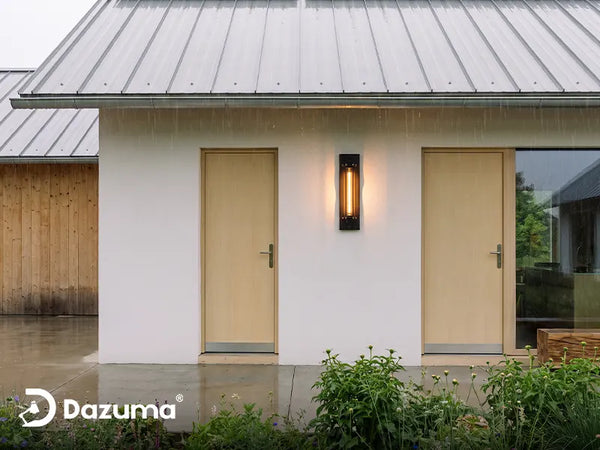
The front door is usually the best place to start. It is the first exterior area visitors read at night, and it sets the tone for the rest of the home. A pair of black lanterns on both sides of a door can make the entry feel symmetrical and formal. A single lantern on the latch side of the door can feel more casual, especially on a small porch or cottage-style exterior.
Scale matters more than most people expect. If the lantern is too small, it disappears against the siding and makes the door feel underdressed. If it is too large, it can crowd the trim and make the entry feel heavy. As a starting point, a side lantern often looks balanced when its height is about one-quarter to one-third of the door height, adjusted for trim, transom windows, and nearby house numbers. For double doors or tall entries, larger lanterns usually look better than small fixtures.
Black lanterns are especially strong on white, cream, tan, brick, gray, and natural wood exteriors. On very dark siding, they can still work, but you may need glass, warm light, or a slightly larger silhouette so the fixture does not disappear during the day. If the entry has a covered porch, consider whether a hanging lantern, wall lantern, or flush ceiling fixture makes more sense. The collection of Outdoor Wall Lanterns is generally the right direction when the goal is to frame a door, side entrance, or garage wall.
Garages, Driveways, And Side Doors
Garage doors are another strong place for black outdoor lanterns because they often take up a large visual area. Lanterns beside the garage add rhythm and help the garage feel connected to the rest of the house. For a two-car garage, one lantern on each side can look clean. For a wide garage or multiple doors, placing fixtures between the doors may create a more balanced rhythm.
Side doors and mudroom entries are easy to forget, but they benefit from lantern-style lighting too. A black lantern near a side gate, service door, or driveway entry makes the space feel safer and more intentional. It also helps guests and delivery drivers identify the correct entrance without harsh floodlighting.
A black lantern looks best when it is not the only black object on that wall. A black mailbox, house number, door handle, planter, railing, or garage hardware can help it feel integrated. For homes with black garage details, Black Outdoor Wall Lights can be a natural category to explore because the finish already supports the exterior palette.
Let The Lantern Mark A Destination
A lantern should usually tell the eye, “this is a place to go.” That may be a door, a gate, a seating area, a stair landing, or the edge of a patio. Random placement in open lawn areas often feels less polished.

Patios, Decks, And Outdoor Dining Areas
Patios are where black outdoor lanterns shift from purely functional lighting to atmosphere. A lantern on a patio table, side table, retaining wall, or deck step can soften the space without making it feel overlit. This is especially helpful if your patio already has brighter wall lights or string lights. The lantern adds a lower layer of light, which makes people and furniture look more relaxed.
For outdoor dining, keep lanterns near the table edge, sideboard, console, planter ledge, or nearby step. The goal is warm atmosphere, not a centerpiece that everyone has to look around.
Black lanterns also help when the patio connects to indoor spaces with black metal lighting, black cabinet pulls, or black-framed glass doors. For porch and patio planning beyond lantern placement, the guide How to Plan Porch and Patio Lighting for Style, Safety, and Comfort gives a broader framework for layering different outdoor light sources.
A Flexible Black Lantern For Tables, Steps, And Garden Corners
For areas where you do not want new wiring, a portable solar lantern can be the easiest way to test the look. This works especially well on patios, small balconies, garden steps, and outdoor coffee tables where the lantern is more about atmosphere than broad task lighting.

Portable Solar Accent
Candlestick Lantern Portable LED Black Solar Outdoor Lamp
Price: $69.99
Best for patio tables, garden ledges, balconies, camping corners, and small outdoor seating areas where you want a moveable black lantern with warm ambience.
- Solar charging makes it useful where you do not have an outlet nearby.
- The handle allows the lantern to move between a table, step, windowsill, or garden corner.
- Warm white ambient light works well for relaxed evening seating rather than harsh task lighting.
Walkways, Steps, And Garden Edges
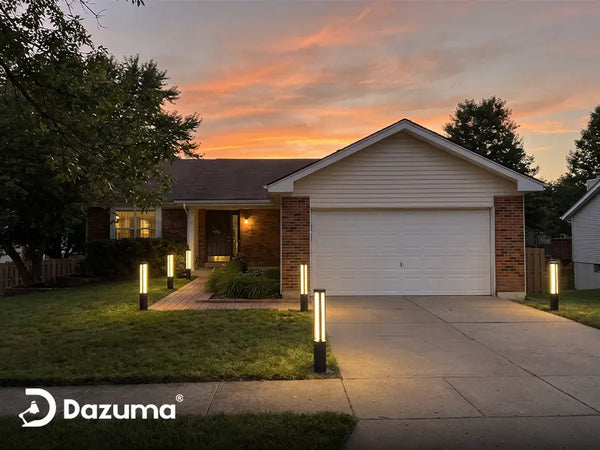
Lanterns can look beautiful along walkways, but they need restraint. Too many lanterns in a straight line can make a garden feel like an aisle. Instead, use them at decision points: the start of a path, a bend in the walkway, the base of steps, the corner of a planting bed, or the place where a path meets the patio. This creates rhythm without clutter.
For steps, keep the light low and gentle. A lantern placed beside the first or last step can help mark the transition between levels, but it should not become a tripping hazard. Avoid placing loose lanterns directly on narrow stair treads. If you need continuous stair visibility, dedicated step lights are usually a better safety solution; lanterns are better as decorative markers near landings or wide edges.
In garden beds, black lanterns look best when they are partly framed by plants, gravel, stone edging, or low walls rather than floating in the middle of open mulch. If your main concern is the front approach, Outdoor Porch Lighting can help connect the path, porch, and front door into one visual story.

Place Lanterns Where Movement Changes
Path bends, gate openings, step landings, and patio corners are stronger lantern locations than long empty stretches. The lantern becomes a wayfinding cue, not just decoration.
Pool Areas, Courtyards, And Larger Outdoor Rooms
In larger outdoor rooms, black lanterns can act like outdoor furniture. They create visual weight at the edge of a pool deck, beside lounge chairs, near a low wall, or around a courtyard seating area. This is where taller lanterns and more architectural frames often make sense. A small tabletop lantern may disappear in a large pool area, while a taller rectangular lantern can stand up to the scale of stone, water, umbrellas, and lounge furniture.
Place lanterns where they define the edge of an activity zone: near lounge chairs, beside a planter, along a courtyard path, or around a terrace seating area.
For solar options, check sun exposure before committing. A solar lantern placed under a covered overhang, deep shade tree, or north-facing wall may not charge well enough for consistent evening use. In those situations, a hardwired fixture or another outdoor-rated power solution may be more reliable. If you specifically want solar ambience, browse outdoor solar lanterns with the charging location in mind, not just the nighttime look.
A Stronger Black Lantern For Larger Patios And Poolside Areas
When the space is larger, a lantern needs more visual presence. A rectangular frame, taller height option, and warm integrated light can help the fixture read as part of the outdoor room instead of a small accessory.

Architectural Patio Lantern
Black Lantern Outdoor Light Rectangular Frame Waterproof Lamp
Price: $426.99
Best for poolside seating, larger patios, courtyards, entrance walkways, and modern outdoor rooms that need a black lantern with more scale and structure.
- Three height options make it easier to match pathways, tabletops, pillars, or larger terrace areas.
- The rectangular black frame gives a modern silhouette without losing the soft lantern effect.
- Warm white light helps outdoor seating feel comfortable instead of cold or overly bright.
Sizing, Finish, And Placement Rules For Black Outdoor Lanterns
Outdoor lanterns are small design objects, but they affect the whole exterior. Before buying, look at three things: the size of the surface behind the lantern, the way people move through the area, and the existing black details around the home.
Use these starting points to avoid the most common scale mistakes.
| Area Around The Home | Best Lantern Type | Design Tip |
|---|---|---|
| Front door or porch | Wall lantern or hanging lantern | Match the lantern scale to the door height and nearby trim. |
| Garage or side entry | Black wall lantern | Repeat black hardware or house-number finishes for a cohesive look. |
| Patio table or outdoor console | Portable lantern | Use warm light and avoid placing tall lanterns directly in conversation sightlines. |
| Garden path or steps | Low portable lantern or fixed path lighting | Mark turns, gates, and landings rather than lining every inch. |
| Pool deck or courtyard | Taller architectural lantern | Choose enough height and structure so the lantern does not disappear in a large space. |

Common Mistakes To Avoid
Using Too Many Lanterns In One View
Black lanterns are visually strong. If you place them at every door, every corner, every stair, and every table, the exterior can start to look busy. Choose a few important focal points and let the darkness between them create contrast.
Choosing Cool White Light For A Cozy Lantern Shape
Lanterns usually look best with warm white light. Cool light can make the black frame feel harsh and can flatten brick, wood, and landscaping. For most residential settings, a warm color temperature helps the home feel calmer and more inviting.
Ignoring Daytime Appearance
Outdoor lanterns are visible all day. A lantern that only looks good at night may still feel wrong in daylight.
Placing Portable Lanterns Where People Walk
Portable lanterns are useful, but they should not sit in narrow pathways or on active stair treads. Keep them along edges, on wide landings, on tables, or near planters where they add ambience without becoming an obstacle.
Final Advice: Use Black Lanterns To Create Moments, Not Clutter
The best black outdoor lanterns create small moments around the home: a warmer front door, a more intimate patio, a glowing garden corner, or a pool deck that feels finished instead of empty.
Keep the finish consistent, use warm light, and choose the right scale for each location. When the lantern feels connected to the architecture or outdoor room, the whole exterior looks calmer and more carefully designed.