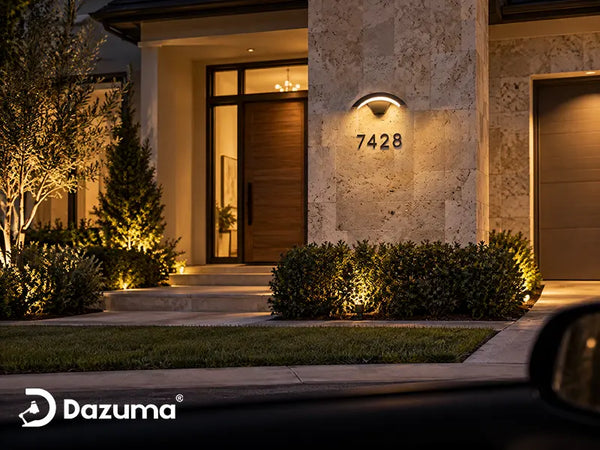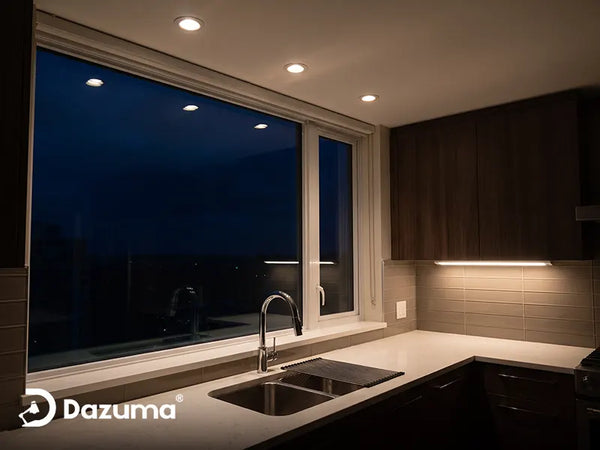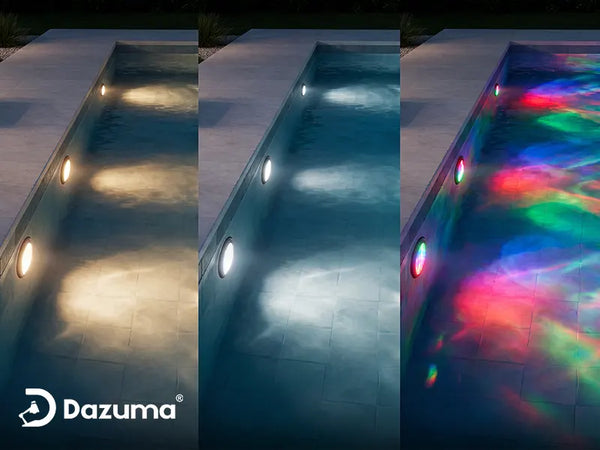

Who This Is For: This guide is for U.S. homeowners and designers who are planning or upgrading exterior wall wash lighting and want to get the color temperature right the first time. Whether you are highlighting a brick facade, a stucco wall, or a modern concrete exterior, the color temperature you choose will define how your home looks after dark.
Key Takeaways
- Why Color Temperature Matters for Wall Wash Lighting
- Understanding the Kelvin Scale
- Color Temperature by Wall Material
- Warm vs. Neutral vs. Cool: When to Use Each
- Placement and Beam Angle Tips
- Common Mistakes to Avoid
- Recommended Wall Wash Lights
- Start Shopping Wall Wash Lighting
Why Color Temperature Matters for Wall Wash Lighting

Wall wash lighting is one of the most effective ways to add drama, depth, and curb appeal to a home's exterior. But the fixture itself is only half the equation. The color temperature — measured in Kelvin (K) — determines whether your wall looks warm and inviting, clean and modern, or cold and institutional.
Get it right and your facade glows beautifully after dark. Get it wrong and the lighting works against your home's architecture. This guide walks through exactly how to match color temperature to wall material, architectural style, and the overall look you are trying to achieve. If you are still selecting fixtures, start with Dazuma's LED Outdoor Wall Light Buying Guide before diving into color temperature specifics.
Understanding the Kelvin Scale
What the Numbers Actually Mean
The Kelvin scale describes the color appearance of white light — not its brightness. Lower numbers produce warmer, more amber-tinted light. Higher numbers produce cooler, bluer light. For residential exterior applications, the practical range sits between 2700K and 5000K, though most homeowners will find their ideal choice somewhere between 2700K and 4000K.
| Color Temperature | Appearance | Best For |
|---|---|---|
| 2700K | Warm amber-white | Traditional homes, brick, wood, warm stone |
| 3000K | Soft warm white | Craftsman, colonial, stucco, most residential facades |
| 3500K | Neutral warm white | Transitional homes, mixed-material facades |
| 4000K | Cool neutral white | Modern, contemporary, white or gray concrete |
| 5000K+ | Daylight / cool blue-white | Security lighting, commercial, rarely residential |
For most U.S. residential wall wash applications, the sweet spot is 2700K to 3000K for traditional homes and 3500K to 4000K for modern or contemporary exteriors.
Color Temperature by Wall Material
Brick and Warm Stone
Brick and warm-toned natural stone absorb and reflect warm light beautifully. A 2700K or 3000K wall wash brings out the rich reds, oranges, and earthy tones in the material. Cool white light above 4000K will wash out those warm tones and make the surface look flat and dull. Stick with warm white for any facade that has red, tan, or brown tones in the material.
Stucco and Painted Surfaces
Stucco is the most forgiving material for color temperature because its appearance depends heavily on the paint color. Warm cream or beige stucco pairs well with 2700K to 3000K. White or light gray stucco can handle 3000K to 3500K without looking washed out. Darker painted exteriors with cool undertones can be effectively lit with 3500K to 4000K for a dramatic, high-contrast look.


Concrete and Modern Surfaces
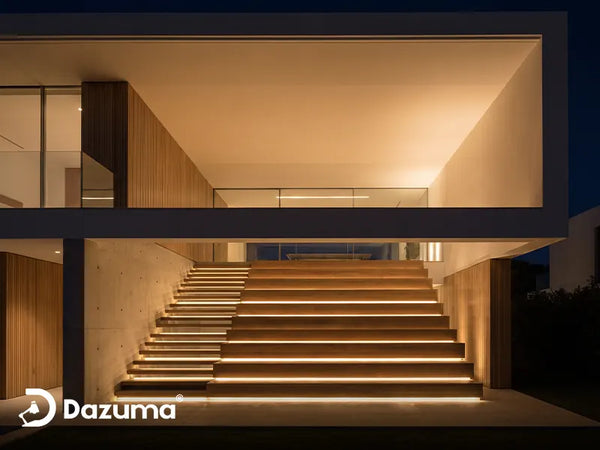
Exposed concrete, fiber cement panels, and smooth modern cladding are designed for clean, minimal aesthetics. These materials benefit from a cooler, crisper light — typically 3500K to 4000K. Warm amber light on a gray concrete wall tends to create an unintended yellowish cast that clashes with the material's natural cool tones. Neutral to cool white keeps the facade looking sharp and intentional.
Wood and Cedar Siding
Natural wood siding, cedar shingles, and board-and-batten exteriors respond exceptionally well to warm white light in the 2700K to 3000K range. The warm light deepens the woodds richness to the texture, and makes the exterior feel welcoming rather than stark. This is especially effective on craftsman, farmhouse, and cabin-style homes where the wood is a primary design element.
Warm vs. Neutral vs. Cool: When to Use Each
When to Choose Warm White (2700K to 3000K)
Warm white is the right choice when:
- Your wall material includes brick, warm stone, wood, or earthy stucco
- Your home's architectural style is traditional, craftsman, colonial, farmhouse, or Mediterranean
- You want the exterior to look inviting and residential rather than commercial
- You are mixing wall wash lighting with other warm-toned exterior fixtures such as lanterns or path lights
Warm white is also the safest default for homeowners who are unsure. It is flattering across the widest range of materials and exterior paint colors, and it reads as natural and residential in almost every context. Browse Dazuma's Outdoor Wall Lighting collection for warm white options across a range of fixture styles.
When to Choose Neutral White (3500K)
Neutral white sits in the middle of the residential range and works well for transitional homes — those that blend traditional and contemporary design elements. It is also a smart choice when you want a consistent look across a mixed-material facade where some elements are warm-toned and others are cooler. A 3500K wall wash reads as clean and polished without feeling cold or institutional.
When to Choose Cool White (4000K)
Cool white is best reserved for modern and contemporary architecture where the design intent is crisp, minimal, and high-contrast. Gray concrete, white render, dark charcoal siding, and metal cladding all respond well to 4000K light. It also pairs naturally with Modern Outdoor Wall Lighting that uses s and matte black or brushed metal finishes.
Placement and Beam Angle Tips

How Far from the Wall Should the Fixture Be?
Wall wash fixtures mounted too close to the surface create a "scallop" effect — bright spots directly in front of each fixture with dark areas in between. The general rule is to mount the fixture at a horizontal distance from the wall equal to roughly one-third to one-half of the wall height you want to illuminate. For a single-story facade, mounting 12 to 18 inches from the wall base typically produces the most even upward wash. For taller two-story walls, increase that distance to 24 to 36 inches for smoother ll height.
Linear vs. Individual Spotlights for Wall Washing
Linear wall wash fixtures produce, long garage walls, and extended accent walls in the landscape. Individual Outdoor Spotlights work better for highlighting specific architectural features, columns, or textured sections where you want deliberate shadow and contrast rather than a uniform wash. For broad facade coverage, Dazuma's Wall Wash Lighting collection covers both linear and compact formats.
Uplight vs. Downlight for Wall Washing
Uplighting a facade from ground level is the most common approach for dramatic curb appeal — ates a strong sense of height and presence. Downlighting from a soffit or eave produces a softer, more subtle effect and is less likely to cause glare toward neighbors or the street. Up & Down Wall Lights can serve both purposes simultaneously and work especially well on entryway columns and mid-height accent walls where layered light adds architectural depth.
Common Mistakes to Avoid
Mixing Color Temperatures on the Same Facade
This is the most common error in residential wall wash projects. Using 2700K fixtures on one section and 4000K on another creates a visually inconsistent look that is very difficult to correct without replacing fixtures. Decide on a single color temperature for the entire facade and apply it consistently. If you need deliberate variation — for example, a warmer accent on a wood feature wall within a predominantly cool modern exterior — keep the difference to no more than 500K and use the warmer tone only as a focused accent, not a general wash.
Choosing Color Temperature Without Considering Paint Color
A warm white light on a home painted in cool gray or blue-gray can create a greenish or yellow cast that looks unintentional. Always factor in your exterior paint palette before selecting a color temperature. If your home has cool-toned paint, lean toward 3500K to 4000K. If it has warm earth tones, stay between 2700K and 3000K. When in doubt, test with a portable LED at night before committing to a full installation.
Going Too Bright
Wall wash lighting is meant to enhance, not overpower. For most single-story residential facades, 800 to 1200 lumens per fixture is sufficient for an elegant, shadow-rich wash. Exceeding that threshold tends to produce a flat, overexposed look that eliminates the shadow depth and texture contrast that makes wall washing so effective in the first place. Multiple fixtures at moderate output consistently outperform fewer fixtures pushed to maximum brightness.
Ignoring Waterproof Rating
Exterior wall wash fixtures are exposed to rain, humidity, and temperature swings year-round. Ground-mounted uplighting applications require a minimum IP65 rating. Fixtures mounted under a covered soffit or eave can use IP44, but IP65 is always the safer choice for any exposed installation. Fixtures without adequate waterproofing fail prematurely and can become a safety hazard over timel Lights.
Recommended Wall Wash Lights

Linear Up LED Outdoor Wall Washer Light with Baffle
Uplighting wide exterior wall sections with even, glare-controlled coverage from ground level
| Light Direction | Upward wall wash |
| Light Source | LED |
| Design | Linear with anti-glare baffle |
| Applicy> |
Start Shopping Wall Wash Lighting
Color temperature is one of the highest-impact decisions in any exterior lighting project. Match it to your wall material and architectural style, keep it consistent across the facade, and pair it with proper fixture placement for a result that genuinely elevates your home's curb appeal after dark. Browse Dazuma's Wall Wash Lighting, Outdoor Wall Lighting, Modern Outdoor Wall Lighting, and Outdoor Lighting collections to find the right fixture for your facade.