
Who This Is For: This guide is for homeowners who want outdoor lights that can handle real weather, but feel confused by labels like UL Listed, ETL Listed, IP55, IP65, wet location, and damp location.
Introduction
Outdoor lighting shoppers often run into the same problem: every product page says something about weather resistance, but the labels do not all mean the same thing. One fixture may say UL Listed. Another may say ETL Listed. Another may show IP55 or IP65. Some mention wet location or damp location. If you are buying lights for a path, garden, patio, driveway, or front yard, those terms matter because outdoor lights live in the real world: rain, sprinklers, dust, humidity, wind, and changing temperatures.
The tricky part is that UL Listed and ETL Listed are not simply “waterproof ratings.” They are safety certification marks connected to testing and recognized safety standards. IP ratings, on the other hand, describe how well an enclosure is protected from solids and water. Wet and damp location labels describe where a fixture is intended to be installed. These ideas overlap in real shopping, but they are not interchangeable.
So let’s make it practical. This guide explains what each label means, how to read them without overthinking, and how to use them when choosing weather-resistant outdoor lights for garden paths, bollards, lawn edges, and outdoor landscape areas.

Quick Answer: What Do UL Listed And ETL Mean?
UL Listed and ETL Listed both indicate that a product has been tested and certified to applicable safety standards by a recognized third-party testing organization. For outdoor lights, this matters because electrical products installed outdoors face moisture, temperature changes, and exposure conditions that indoor fixtures may not be designed to handle.
But here is the most important point: UL Listed or ETL Listed does not automatically tell you the fixture is suitable for every outdoor location. You still need to check the exact use condition, such as wet location, damp location, product manual requirements, voltage, installation method, and weather protection. A safety certification mark helps answer “Was this product evaluated to a recognized standard?” An IP rating helps answer “How protected is the fixture enclosure from dust and water?”
If you are shopping across Dazuma, begin with the right application category first. For garden paths and lawn edges, browse Landscape Lighting. For walkway-specific fixtures, compare Path Lights. Then use the rating information to narrow down which light fits your actual outdoor exposure.
Certification Vs Weather Resistance
A lot of confusion comes from mixing two different questions. The first question is about electrical safety: has the product been tested by a recognized lab to applicable standards? That is where UL Listed and ETL Listed come into the conversation. The second question is about environmental protection: can the fixture handle water spray, rain, dust, or ground-level exposure? That is where IP ratings and wet/damp location suitability matter.
Think of it like buying outdoor shoes. A shoe can be well-made and safe to wear, but that does not mean it is waterproof for hiking through puddles. Likewise, a light fixture can be certified for a certain electrical standard, but you still need to confirm whether it is marked for the outdoor condition where you want to install it.
| Label Or Rating | What It Mainly Tells You | What It Does Not Automatically Tell You |
|---|---|---|
| UL Listed | The product has been certified by UL Solutions for applicable safety requirements. | It does not replace checking wet/damp use, IP rating, or installation instructions. |
| ETL Listed | The product has been tested and certified by Intertek to accepted safety standards. | It does not mean every ETL product is suitable for every outdoor exposure. |
| IP Rating | How the fixture enclosure resists solids and water. | It is not the same thing as a full electrical safety certification. |
| Wet / Damp Location | Where the fixture is intended to be installed. | It does not describe every product feature or design style. |

Read The Label In Layers
Do not treat one label as the whole story. Look first for the product’s intended location, then the safety certification mark if listed, then the IP rating, then the installation instructions. This layered reading is much more reliable than assuming one badge means everything.
For outdoor fixtures such as Bollard Lights, the installation environment matters because the fixture sits close to soil, irrigation, and foot traffic.
What UL Listed Means For Outdoor Lights
UL Listed is a product certification mark from UL Solutions. In normal homeowner language, it means representative samples of the product have gone through a recognized certification process for applicable safety standards. When you see a true UL mark, the important idea is not just the letters “UL.” It is that the mark should apply to the specific product, the specific certification type, and the specific use condition.
For outdoor lights, UL Listed can give buyers more confidence that the fixture has been evaluated for safety requirements. But it still needs to be read carefully. A fixture may be certified for one application and not another. A product intended for damp locations is not automatically the same as one intended for direct rain exposure. A fixture made for a covered porch may not belong along an open garden path where sprinklers hit it every morning.
Here is a useful shopper habit: if a listing claims UL certification, look for the actual wording around the mark, not just a vague “UL approved” phrase. Specific language matters. It should describe the product accurately, and the certification should belong to that exact product, not just a component or a similar-looking family.
What ETL Listed Means For Outdoor Lights
ETL Listed is a certification mark issued by Intertek. It is often seen on lighting, appliances, electronics, and other products. For U.S. and Canadian markets, the key practical point is that ETL is not a “lower-grade version” of UL. It is another recognized path for third-party product safety certification.
That means a shopper should not automatically reject an outdoor light just because it says ETL instead of UL. The better question is whether the product is genuinely listed, whether the mark applies to the complete fixture, and whether the installation location matches what the product was designed for. A real ETL listing still does not replace checking waterproof rating, mounting instructions, or local electrical requirements.
In short: UL and ETL are about product safety certification. IP and wet/damp labels are about environmental suitability. For outdoor lights, you usually want to think about both.

How IP Ratings Fit Into Outdoor Lighting
IP stands for Ingress Protection. It describes how well an enclosure resists intrusion from solids and water. The first digit relates to solid objects and dust. The second digit relates to water protection. For most homeowners, the exact engineering details are less important than understanding what the rating means for real placement.
For example, an IP55 fixture is generally used for outdoor areas where it needs protection from dust and water jets from certain directions. An IP65 fixture offers stronger dust protection and water jet resistance. That does not mean you should submerge an IP65 path light in a pond. It means the enclosure is designed for a stronger level of outdoor protection than a lower rating.
For ground-level landscape lights, IP ratings become especially important because the fixture may be close to sprinklers, wet grass, soil, mulch, and puddling. For hardwired lights, weather resistance is only one part of the job. Proper installation, wiring, junction protection, drainage, and local code compliance matter too. If you are planning a wired landscape project, it may help to review Landscape Lighting Wire Guide before installing fixtures across a long path or garden bed.
Match The Rating To The Real Exposure
A light under a covered porch and a light beside an open sprinkler line are not living the same life. The more exposed the fixture is, the more carefully you should read waterproof rating, material, installation method, and product care instructions.
For open-air gardens, Outdoor Lighting should be selected by both style and exposure level, not by appearance alone.

Wet, Damp, And Dry Location Labels
Wet, damp, and dry location labels are another practical way to think about outdoor lighting. Dry location fixtures belong indoors or in places protected from moisture. Damp location fixtures are usually for covered spaces where moisture may be present but water does not directly hit the fixture. Wet location fixtures are intended for places exposed to direct rain, water spray, or other direct moisture.
This is where many homeowners make mistakes. A covered porch light and an open garden light are both “outside,” but they are not equally exposed. A covered entry may only need a damp-location fixture depending on the exact setup. A path light beside a lawn or a bollard near a driveway may need stronger outdoor suitability because it can face rain, dust, irrigation, and ground moisture.
When in doubt, do not guess. Read the product page, product label, and installation guide. For hardwired fixtures, use a qualified electrician and follow local code. Outdoor lighting is beautiful, but it is still electrical equipment.
Weather-Resistant Outdoor Light Examples
The two examples below are not presented as UL or ETL-certified products unless that certification is shown on the product documentation. Instead, they are useful examples of how shoppers can read outdoor product information: price, IP rating, power supply, material, light source, and installation scene.
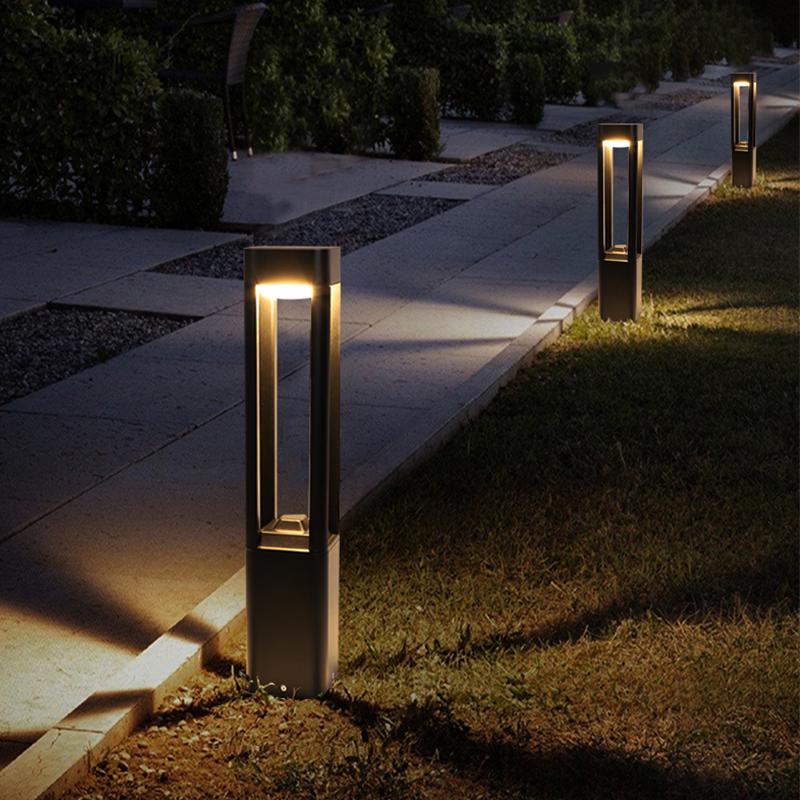
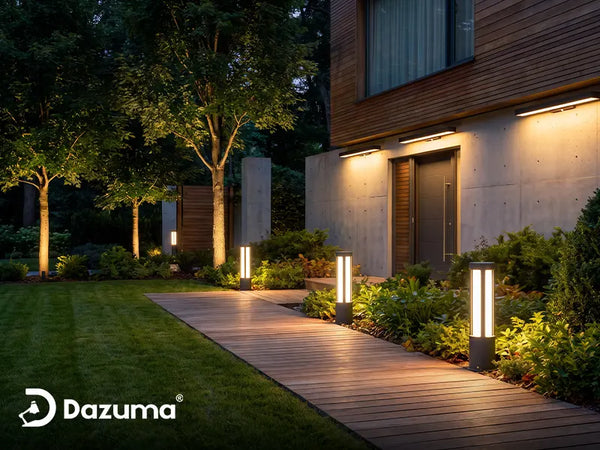
Bollard Landscape Lighting Waterproof Aluminum LED Light
Best For: Garden paths, villa landscapes, courtyard edges, lawn borders, driveway approaches, and modern outdoor pathway lighting.
| Price | $203.99 |
| Product Type | Bollard Lights |
| Power Supply | Hardwired |
| Voltage | 110–240V |
| Power / Lumens | 10W / 700LM |
| Material | Die Cast Aluminum, PC Shade |
| Color Temperature | Warm White 3000K |
| Ingress Protection | IP55 |
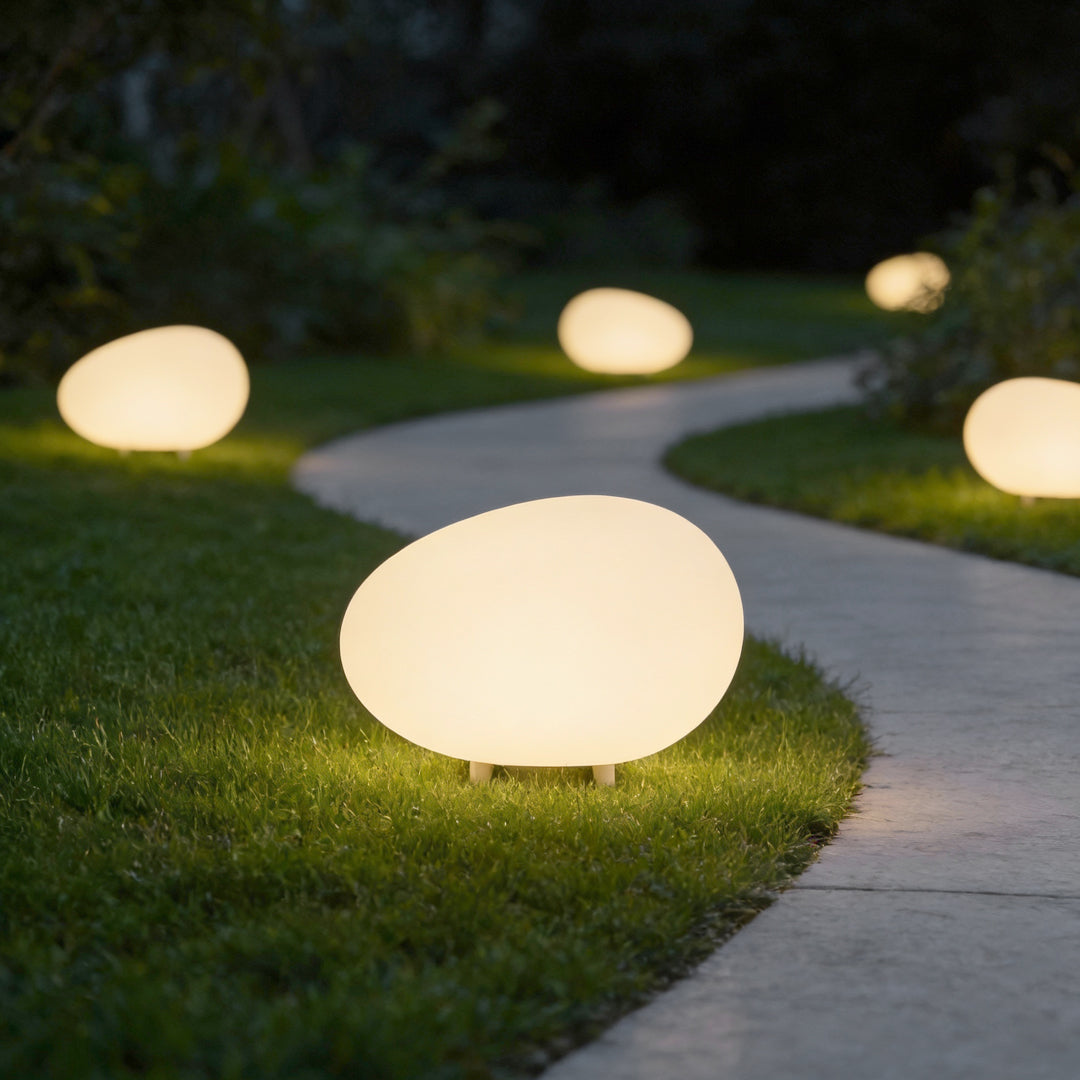
Pebble Lights Modern Outdoor Waterproof Landscape Lamp
Best For: Garden lawns, courtyard paths, water-feature edges, modern landscape accents, and soft decorative pathway lighting.
| Price | $89.99 |
| Product Type | Novelty Lights |
| Power Supply | Hardwired |
| Voltage | 110–220V |
| Power | 3W, 5W, 7W, 9W, 12W |
| Material | Rotational Molding, PE |
| Color Temperature | 3000K / 4500K / 6000K |
| Waterproof | IP65 |
What Weather-Resistant Lighting Feels Like After Installation
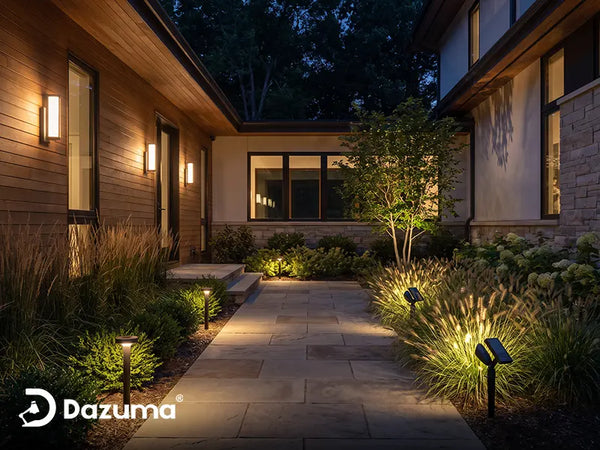
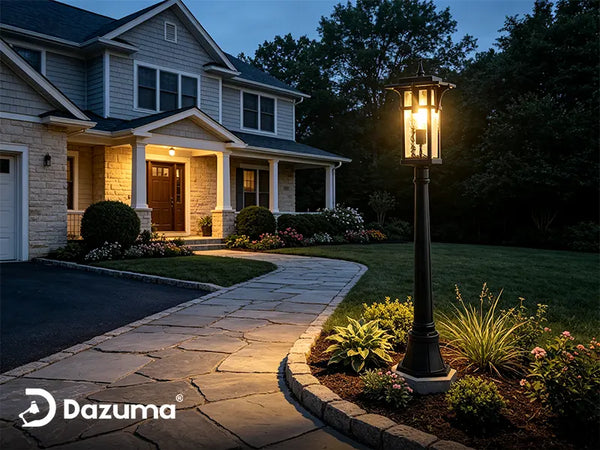
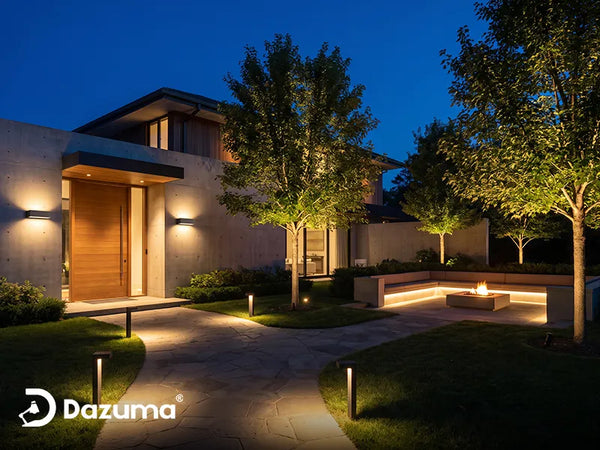
Good outdoor lighting should make the space feel settled after dark. A sturdy bollard light along a path helps you see the walking line without turning the garden into a bright commercial walkway. Pebble-style lights create a softer effect, almost like the garden itself is glowing gently from the ground. Both styles can make a front yard, lawn edge, or courtyard feel more cared for.
The emotional value is simple: you stop worrying about whether the path looks unfinished at night. Guests can follow the route. The garden keeps its shape after sunset. A rainy evening does not make the whole space disappear. The right weather rating does not just protect the fixture. It protects the feeling of order you worked to create outdoors.

Weather Resistance Supports The Mood
A fixture that looks beautiful but cannot handle the location will eventually become a maintenance problem. A better outdoor lighting plan chooses the atmosphere and the exposure rating together. That way the path still feels calm after a storm, not just on the first installation night.
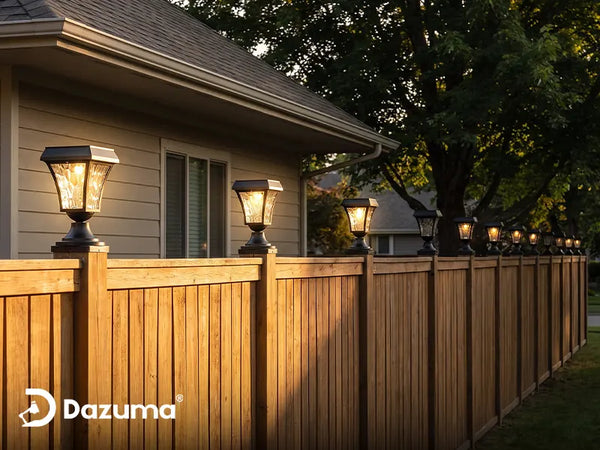
For soft garden accents and path edges, weather-resistant landscape fixtures help the outdoor space feel more reliable through seasonal changes.
Outdoor Light Safety And Weather Checklist
Before buying outdoor lights, run through this checklist. It is simple, but it catches the mistakes that usually cause disappointment later.
- Check the location: Is the fixture under cover, partly exposed, or fully exposed to rain and sprinklers?
- Look for certification language: If a product says UL Listed or ETL Listed, confirm that the wording applies to the actual fixture.
- Read the IP rating: Use IP ratings to compare dust and water protection, especially for garden and ground-mounted lights.
- Confirm wet or damp suitability: Outdoor does not always mean direct-rain suitable.
- Review power supply: Hardwired fixtures need proper installation, weatherproof connections, and code-aware wiring.
- Match material to exposure: Aluminum, stainless steel, PE, PC, and glass all behave differently outdoors.
- Plan maintenance: Leaves, soil, sprinklers, and dust can reduce performance or make the fixture look neglected.
Common Mistakes When Reading Outdoor Light Ratings
Mistake 1: Treating UL Or ETL As A Waterproof Rating
UL and ETL marks are about safety certification. They are important, but they are not the same as IP55, IP65, wet location, or damp location suitability.
Mistake 2: Assuming All Outdoor Areas Are The Same
A covered patio, an open driveway, a lawn edge, and a poolside path all face different exposure. The fixture should match the location, not just the style.
Mistake 3: Ignoring Installation Details
Even a strong outdoor fixture can fail if the wiring, mounting, drainage, or junction protection is poor. For hardwired outdoor lights, professional installation is the safer route.
Mistake 4: Choosing Only By Brightness
Weather resistance keeps the fixture reliable. Light quality keeps the space pleasant. For residential outdoor spaces, controlled, comfortable light often feels better than maximum brightness.
Final Advice
When you shop for outdoor lights, do not look for one magic label. UL Listed and ETL Listed help you understand product safety certification. IP ratings help you understand dust and water protection. Wet and damp location markings help you understand where a fixture belongs. A good buying decision uses all of those clues together.
For garden paths, courtyard edges, and outdoor lawn lighting, choose fixtures that match both the visual effect and the weather exposure. Browse Dazuma’s Landscape Lighting, Path Lights, Bollard Lights, and Outdoor Lighting collections to build an exterior lighting plan that feels safe, warm, and ready for real weather.