
Who This Is For: This guide is for homeowners, landscape designers, and outdoor lighting buyers who want to understand which Landscape Lighting Wire size to use before planning a path light, garden light, driveway edge, or backyard lighting project. It is especially helpful if you are comparing 12/2, 16/2, and 10/2 wire and want a practical answer without getting lost in electrical jargon.
This article focuses on low-voltage outdoor lighting systems. If your project uses line-voltage hardwired fixtures, local electrical code and a qualified electrician should guide the installation.
Key Takeaways
Introduction
Choosing landscape lighting wire sounds like a small detail, but it can change how your outdoor lights perform at night. Use wire that is too thin, and the lights farthest from the transformer may look weaker than the lights near the house. Use wire that is too heavy for a small project, and you may spend more than necessary without gaining much benefit.
The most common choices for residential low-voltage lighting are 16/2, 12/2, and 10/2 wire. The first number is the wire gauge. A smaller gauge number means a thicker wire. The second number means the cable has two conductors, which is typical for low-voltage landscape lighting.

Quick Answer: Which Wire Size Should You Use?
For most residential Landscape Lighting Wire projects, 12/2 wire is the safest default choice. It offers a strong balance between cost, flexibility, and voltage stability. It is usually a better long-term choice than 16/2 if you may add more lights later.
Use 16/2 wire for short, simple runs with only a few low-watt LED fixtures. Use 10/2 wire for long runs, higher fixture loads, or larger yards where the lights are spread far from the transformer. The best wire size depends on three things: distance, total wattage, and how the cable is laid out.
What 12/2, 16/2, And 10/2 Mean
The number before the slash is the American Wire Gauge, often called AWG. With AWG, smaller numbers mean thicker wire. That means 10/2 is thicker than 12/2, and 12/2 is thicker than 16/2. Thicker wire has less electrical resistance, so it can help reduce brightness loss over longer distances.
The number after the slash means the cable has two conductors. In a typical low-voltage lighting run, one conductor carries power out to the fixtures and the other completes the circuit back to the transformer.

Think Of Wire Size As Lighting Insurance
Wire does not make a light brighter by itself. Its job is to deliver enough voltage to each fixture so the light can perform as intended. When the cable run is short and the load is small, thinner wire may work. When the run is long or the load is larger, thicker wire gives the system more breathing room.
This is why many installers prefer 12/2 for standard residential projects. It is not always the cheapest option, but it often prevents problems that are harder to fix after the cable is buried.
12/2 Vs 16/2 Vs 10/2 Comparison Table
| Wire Size | Best For | Main Advantage | Watchout |
|---|---|---|---|
| 16/2 | Short LED runs, small accent areas, compact front paths. | Easy to handle and usually lower cost. | Not ideal for long runs or many fixtures. |
| 12/2 | Most residential path, garden, and yard lighting layouts. | Good balance of flexibility, cost, and voltage control. | May still need split runs on large properties. |
| 10/2 | Long runs, higher loads, driveway edges, large lawns. | Best voltage-drop control among these three choices. | Higher cost and less flexible during installation. |

Why Voltage Drop Matters
Voltage drop means the voltage at the fixture is lower than the voltage leaving the transformer. In a low-voltage system, this matters because the starting voltage is already limited. A small loss may not be visible, but too much loss can make the last fixtures look dim or uneven.
A simple way to think about it is this: the longer the wire run and the higher the total wattage, the more important wire size becomes. LED fixtures use less power than older halogen fixtures, so modern systems are more forgiving. Still, long runs can create brightness problems if the wire is undersized.
A common two-wire voltage drop formula considers the distance out and back through the cable, the current, and the resistance of the wire. You do not need to calculate every project by hand, but the formula explains why long cable runs and higher fixture loads require more planning.
Simple Planning Table For Homeowners
| Project Type | Good Starting Point | Practical Note |
|---|---|---|
| Small front path | 16/2 or 12/2 | Choose 12/2 if future expansion is likely. |
| Typical backyard or garden path | 12/2 | Best all-around choice for many residential LED layouts. |
| Long driveway or large perimeter | 10/2 or separate 12/2 runs | Shorter zones often perform better than one very long cable. |
Keep The Layout Simple
For many homes, the best layout is not the most technical one. Instead of making one cable travel around the entire yard, divide the project into smaller lighting zones. A front path, side garden, and patio edge can each have a cleaner, shorter run.
Shorter runs are easier to troubleshoot and usually help lights look more consistent. This is especially useful if you are using Path Lights or Bollard Lights along several outdoor areas.

Simple Layout Tips For Better Brightness
1. Group Lights By Area
Plan lighting by zones instead of treating the yard as one long chain. Group the front walk together, the garden bed together, and the patio edge together. This creates cleaner control and a more balanced result.
2. Keep Future Expansion In Mind
If you may add more fixtures later, do not size the wire only for today. Leaving capacity for future lights is one reason 12/2 is a practical default for many projects.
3. Match Wire Planning To Fixture Type
A few small accent lights may not need the same wire strategy as a long row of driveway fixtures. For larger exterior upgrades, browse Outdoor Lighting options and plan the fixture layout before choosing the wire.
Low-Voltage Wire Is Not The Only Option
Many landscape lighting plans include a mix of fixture types. Some products are low-voltage. Some are solar. Some are line-voltage hardwired and should be handled differently. The important thing is not to assume every outdoor fixture connects to 12/2, 16/2, or 10/2 landscape wire.
For example, solar fixtures and solar strips can reduce the number of wired runs needed in a yard. Hardwired fixtures, on the other hand, may require a different electrical plan. When in doubt, confirm the product power supply before buying cable.

Design First, Wire Second
Before choosing the cable, decide what the lighting should accomplish. Do you want safer walking paths, better curb appeal, soft garden ambience, or stronger driveway guidance? The answer affects fixture spacing, total wattage, and wire length.
For decorative linear effects, homeowners may also consider Outdoor LED Strip Lights for steps, walkways, and architectural edges.
A Three-Step Check Before You Buy Wire
Step 1: Count The Fixtures
Start by counting how many lights will be on each run. A short path with four small LED fixtures is very different from a long driveway with a dozen lights. More fixtures usually means more total wattage, which makes wire size more important.
Step 2: Measure The Real Cable Path
Do not measure only the straight distance from the house to the last fixture. Follow the actual path the cable will take around planting beds, walkways, corners, and hardscape edges. Real cable distance is often longer than the first estimate.
Step 3: Leave Room For The Future
Many outdoor lighting projects grow over time. A homeowner may start with path lights, then later add garden accents, step lights, or patio lighting. Choosing 12/2 instead of 16/2 on a main run can give the system more flexibility for those future upgrades.
Product Recommendations
The two products below are useful examples for thinking beyond wire size. One is a hardwired bollard light for structured landscape illumination, while the other is a solar-powered strip light that can help reduce the need for long cable runs in decorative areas.

Residential Bollard Lights Outdoor Waterproof Garden Path Light
Best For: Driveway edges, garden paths, lawn borders, hotel courtyards, and modern outdoor landscapes.
| Price | $177.99 |
| Power Supply | Hardwired |
| Power / Output | 6W / 420LM |
| Color Temperature | 3000K Warm White |
| Waterproof Rating | IP55 |
| Material | Aluminum + Acrylic |
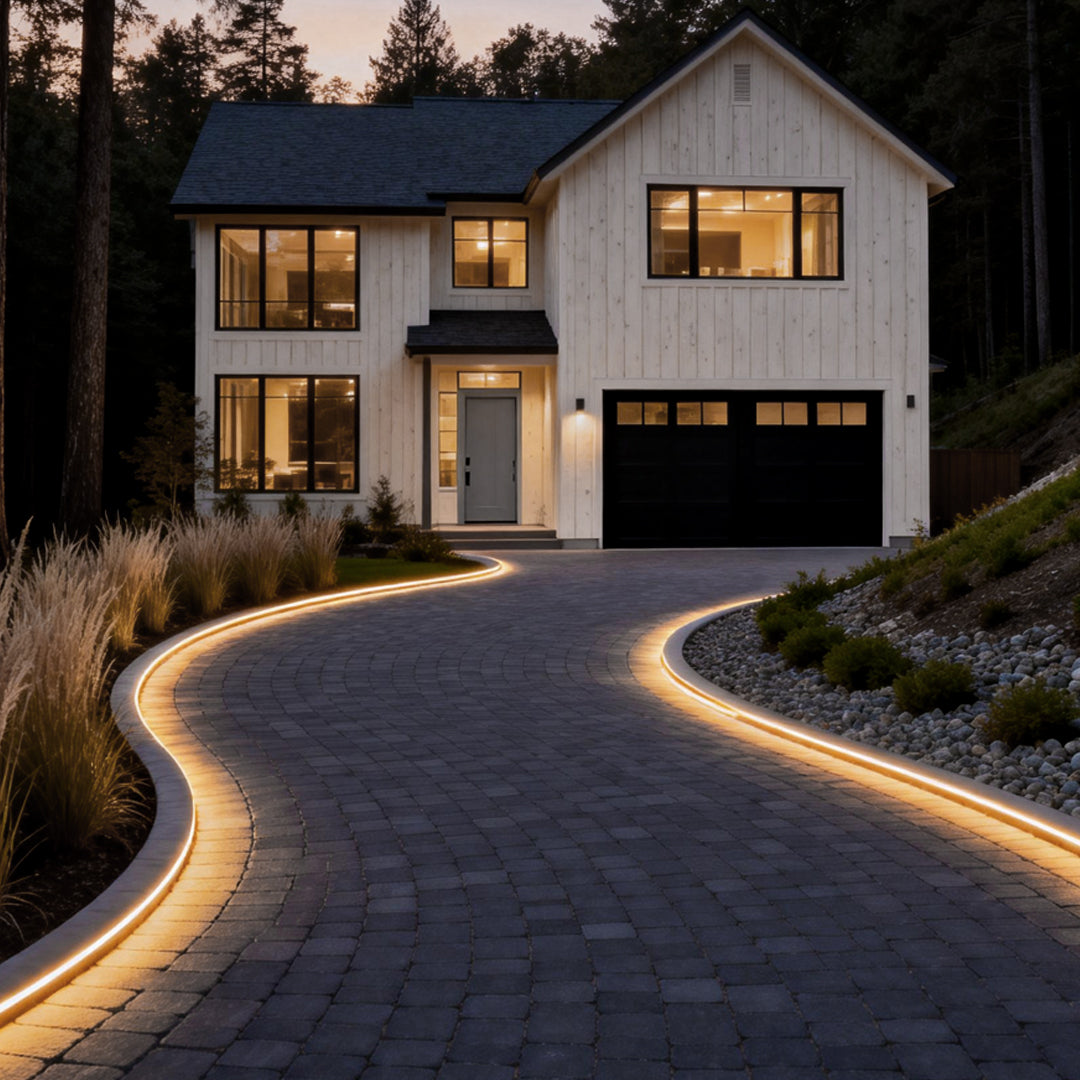
Waterproof LED Light Strips Solar Remote Control Flexible Lights
Best For: Driveway edges, pathway outlines, curved garden borders, steps, and decorative outdoor accent lighting.
| Price | $145.99 |
| Power Supply | Solar |
| Material | PVC |
| Control | Remote Control / Solar Light Control |
| Charging Time | 5–6 Hours |
| Waterproof Rating | IP66 |
Common Mistakes To Avoid
Using 16/2 For Everything
16/2 can work well for short, small LED zones, but it should not be treated as a universal choice. If the cable will travel a long distance or support many fixtures, consider 12/2 or 10/2.
Forgetting The Return Path
Voltage loss is affected by the full circuit path, not only the visible distance from the transformer to the last light. That is why long runs matter even when the fixtures are low wattage.
Mixing Fixture Types Without Checking Power
Do not connect every outdoor product to the same low-voltage cable by assumption. Check whether each fixture is low-voltage, solar, or line-voltage hardwired before planning the wire.

Final Advice: Choose The Wire After You Know The Layout
If you want one simple rule, start with 12/2 for most residential low-voltage landscape lighting projects. Move down to 16/2 only for short, low-load areas. Move up to 10/2 when the run is long, the fixture count is higher, or the property layout demands more voltage stability.
For the best result, choose fixtures and wire together. Plan the number of lights, estimate the total wattage, map the cable distance, and decide whether the yard should be divided into zones. If you are upgrading a full exterior plan, explore Dazuma Outdoor Low Voltage Lights, Solar Path Lights, and related landscape lighting collections to build a system that looks intentional from the curb to the backyard.