
Who This Is For: This guide is for homeowners whose living room feels pleasant in daylight but too bright, too dim, or oddly flat once fall sunsets arrive. It is especially useful if the same room hosts reading, television, conversation, and guests.
Introduction
In summer, a living room may coast from afternoon into evening on daylight. In fall, a book becomes hard to read earlier, the windows turn into mirrors, and the ceiling light suddenly seems to be carrying the whole room. A cozy setting needs more than a warm bulb. It needs enough light to move around and see faces, a brighter patch where someone reads, and a few quieter surfaces that give the room shape.
Layering does not mean filling every outlet or buying a matching set. It means assigning each light a job. Start with the room you have: where people sit, what they look at, which routes stay open, and how the room connects to the kitchen or hall. Then place a small number of sources at useful heights and give them independent controls where possible.

The Quick Answer: Give Each Layer a Job
Use a soft ambient layer to keep the room navigable and faces visible. Put a dedicated task light beside the chair or sofa where someone actually reads. Add restrained accent light to a wall, bookshelf, or object that gives the room depth. Keep exposed bulbs out of normal seated sightlines, and control the sources separately so television time does not require the same brightness as reading or hosting.
Warm white light around 2700K to 3000K is a useful starting point for most residential evening settings. Keep adjacent sources reasonably close in appearance, but do not expect a Kelvin number alone to create comfort. Shade opacity, beam direction, brightness, and what the light hits all change the result. Try the arrangement after sunset before deciding you need more fixtures.
If you are choosing a new mix, the living room lighting collection offers several fixture types, but choose by the missing function in your own room. A dark reading chair calls for a different answer than a large blank wall or a poorly lit walking route.
Read the Room After Sunset, Not at Noon
Before changing anything, spend ten minutes in the room at the time you normally use it in fall. Turn on only the lights you usually reach for. Sit in each seat and look toward the television, other people, the windows, and any artwork. Then walk from the entry to the sofa and from the sofa to the next room. Note the specific failures: a book is dim, a bulb is glaring, the corners vanish, or the TV reflects a lamp.
Describe the problem before naming a product. “Reading chair needs light on the page” is more useful than “buy another lamp.” A dark wall may need a shaded lamp or a sconce. Compare solutions by effect.
Watch the Windows Change Roles
During the day, a window brightens the room. After sunset, glass can reflect the lamp behind the sofa or the ceiling fixture across from it. The light you placed near a window for balance may appear twice from a favorite seat. Close the curtains or move the lamp slightly and check again. Reflections are especially noticeable while watching television because the screen and nearby room are kept relatively dim.
Also compare the living room with the rooms connected to it. If the open kitchen remains brightly lit, the living room can feel gloomy even when its own light is adequate. Lowering the kitchen's general lighting after dinner may restore the balance more gracefully than making the sofa area brighter.

Check From the Seats People Use
A room can look balanced in a doorway photograph yet be uncomfortable from the corner chair. Sit down and identify the brightest thing in your field of view. If it is the bare bulb rather than a softly lit wall or shade, adjust that source before adding another.
Try moving a portable lamp a few inches and turning its shade. Small position changes can remove a window or screen reflection without changing the entire scheme.
Build a Soft Ambient Base for Movement and Conversation
Ambient lighting gives the room a general sense of visibility. It can come from a dimmable ceiling fixture, light reflected from a pale ceiling, several shaded lamps, or a combination. The goal is not a rigidly even level everywhere. People should see one another and move to the doorway without crossing a black patch, while the sitting area retains some depth.
If the room has a central ceiling fixture, try dimming it and adding one lower source rather than turning it off completely. A central light at full output can flatten the room and expose its brightest element to every seat; fully switching it off may leave the route to the door too dark. A modest base layer often lets the other lights do their work without struggling against deep contrast.
In a room without a useful ceiling source, a shaded floor lamp near a wall can spread light upward or outward. A torchiere pointed at a light ceiling can open up the room, while a directional lamp lights a chair. Choose according to the missing layer.
Work With Wall and Ceiling Surfaces
A softly lit vertical surface often makes the room feel larger and easier to read than a bright pool on the coffee table alone. Pale paint reflects more light than dark paneling; textured wallpaper may catch narrow beams in a distracting pattern. Aim at a surface, sit down, and see whether it creates a gentle glow or a glaring hotspot. Do not point a high-output lamp directly at a person's eyes merely to reach the far corner.
For a broader explanation of ambient light across several rooms, see the guide to cozy ambient lighting at home. The fall-specific question here is how your room changes when daylight drops out earlier and the windows begin reflecting interior sources.
Give Reading and Hobbies Their Own Clear Light
Cozy does not have to mean squinting. If someone reads on a sofa, knits, works a puzzle, or writes at a side table, make that activity visible without raising every light in the room. A lamp beside the seat is more efficient for that purpose than a distant ceiling fixture that puts the reader's head between the beam and the page.
Set the lamp so light reaches the page or work surface and the bright bulb stays hidden by the shade from the normal sitting position. Sit where the person actually sits; try both sides of a sofa if several people share the space. A lamp that works for a tall person in an upright chair may shine directly into the eyes of someone reclining on the sofa. Reposition or select an adjustable head according to the actual task.
Use table lamps when a sturdy side table is already in the right place. In a tight seating arrangement, a floor lamp may preserve tabletop space, while a swing-arm wall fixture may work if furniture placement is unlikely to change. Whatever you choose, keep cords out of the walking route and make the switch reachable without standing up.
Make a Reading Island
Light the page and a little of the surrounding chair, leaving the rest of the room at a comfortable lower level. This gives the reader a practical pool of light without making a partner watching TV sit under the same intensity.
Test whether the shade reveals the bulb when the reader looks up to speak. A glare-free task light supports conversation as well as close work.

Use Accent Light to Give the Room Depth
Accent lighting is the quiet layer that helps a room feel intentional. It might graze a bookcase, reveal a fireplace surround, or give a wall behind the sofa a soft wash. Choose one or two features worth seeing after dark. Lighting every object at once makes nothing feel special and can compete with the television.
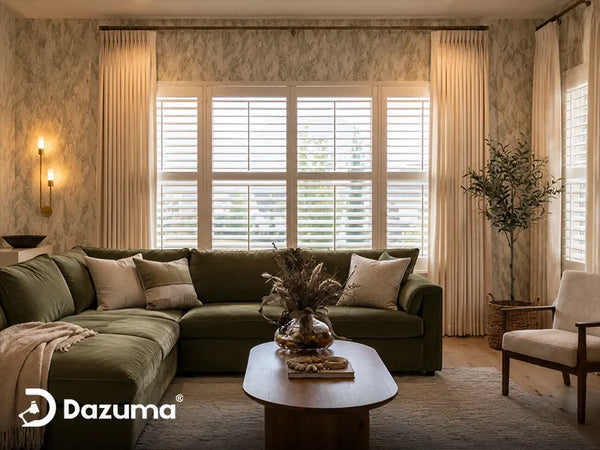
A wall sconce can add light at a useful height when a side table is crowded or the floor has little space. Check how the shade distributes light: an upward wash may soften the wall and ceiling, while a narrow beam can create a dramatic pattern that feels too sharp for a relaxed evening. Position the fixture so seated guests do not stare into the source.
There is also a difference between an accent and a task light. A sconce that makes the fireplace look lovely may not illuminate a book in the chair beside it. If you need both functions, look for a design or combination that serves both explicitly rather than assuming any nearby light will do.
Firelight can be part of the scene, but it changes as the fire burns down. Leave a dependable electric layer for movement and reading. Place fixtures and cords away from heat and follow the fireplace and lighting manufacturers' clearances. Decorative candles should remain well clear of curtains, throws, and paper decorations.

Light One Feature, Then Step Back
Turn off the other accents and view the room from its main seats. If the feature draws attention without becoming the brightest distraction, it is doing its job. If it throws a hard stripe across the wall or reflects on the screen, soften or redirect it.
An accent should complement the ambient base and the reading spot, not become another demand for attention.
Set Three Practical Scenes for a Fall Evening
You can make these scenes with ordinary switches and plug-in lamps. Smart controls are optional. The important feature is that one activity can receive enough light without forcing every source to the same setting.
| Scene | Keep On | Reduce or Aim Away | Test From |
|---|---|---|---|
| Conversation and guests | Soft ambient light and one or two wall or side-table sources | Harsh overhead output and direct face-level beams | Every sofa and chair |
| Reading or crafts | Dedicated task light and enough ambient light to move | Unneeded accent sources that cause glare | The actual page or work surface |
| TV or movie | Low indirect light away from the screen and a visible walking route | Lamps reflected on the screen or window | Primary viewing seats |
For television, the goal is comfortable contrast, not total darkness. A low, indirect glow can help people navigate and reduce the abrupt jump between a bright screen and a black room. Avoid aiming a lamp at the screen or placing an exposed bulb immediately beside it in the viewer's line of sight. Sit through a few minutes of an actual program to check the result.
Choose Color and Control Glare From Seated Height
Most people describe a cozy fall room as warm, but color temperature is only one part of that impression. Warm white around 2700K often suits a relaxed sitting area; 3000K can still feel inviting while looking a little crisper. If a task lamp is slightly different, judge whether the colors clash when the sources operate together. Bulb packaging can help you compare, but shade fabric, wall paint, and dimming behavior alter the scene.
Do not assume every dimmer works with every LED. Check the bulb or integrated fixture and the control for compatibility, then test the low setting for flicker, buzzing, or an abrupt shutoff. Some products change color as they dim; others hold a fairly steady white. If you want a particular effect, verify the feature rather than assuming “dimmable” describes the color behavior.
Glare often matters more than a small change in kelvins. From each seat, look toward the lamp, then toward the person opposite it. If the source is brighter than the face or page you want to see, try a shade, repositioning, or lower output. Reflective coffee tables, framed art, and windows can reproduce the same problem even when the bulb itself is hidden.
If you are weighing a ceiling update, consider whether the room needs a broad base or a directed accent. Ceiling spotlights versus recessed lights for living rooms explains how their aims and visual profiles differ. Neither replaces a well-positioned reading light beside a favorite chair.
Balance the Screen, Wall, and Window
In the evening, a lamp behind the viewing sofa may appear in the window and on the television. Shift it toward a side wall or use a shaded, indirect source, then check the image from the seat. Closing a curtain can remove the window reflection, but the screen may still catch the lamp.
Keep enough low light to locate the floor and doorway when someone gets up. The room can stay calm without requiring complete darkness.

Try a One-Evening Reset Before Buying More Lights
- Begin at dusk. Turn on only the lights you normally use and note where visibility or comfort fails.
- Choose one ambient source. Lower a harsh overhead fixture or move a shaded lamp near a wall so the room stays navigable.
- Fix the main task. Put a lamp where the reader's page or hobby surface receives direct light without an exposed bulb.
- Pick one accent. Illuminate a bookshelf, textured wall, or fireplace surround at a restrained level.
- Test every seat. Look for glare from the source, the television, framed glass, and the dark window.
- Try all three scenes. Set the room for conversation, reading, and television using the switches and plugs you actually have.
- Keep the route clear. Tuck cords safely out of walkways and make sure the door and any steps remain visible.
Living room lighting tends to improve in small, visible steps. Move one lamp, lower one ceiling source, and test from the sofa before shopping. If a permanent fixture or dimmer needs installation, follow the product instructions and use a qualified electrician where appropriate. Do not use an overloaded or poorly placed extension cord as a lasting solution.
Final Advice
Cozy fall evenings come from a room that can change with the people in it. A modest ambient base keeps the space usable, a task light makes reading pleasant, and a small accent gives the walls depth. As daylight fades earlier, test the arrangement from the real seats and watch for reflections in the windows and television.
The best result does not announce how many fixtures are on. It lets someone read comfortably, another person watch a movie, and a guest cross the room without thinking about the lights at all.