
This guide is for homeowners who love the sparkle of a crystal chandelier but want practical help choosing the right size, room placement, hanging height, style, and maintenance level before buying.
Introduction
A crystal chandelier can completely change how a room feels. It can make a dining room feel dressed, a foyer feel grand, a bedroom feel softer, or a living room feel more intentional. But crystal chandeliers can also be tricky. Pick one too large and the room feels crowded. Hang it too high and it loses impact. Hang it too low and it gets in the way. Choose the wrong style and the sparkle starts to feel disconnected from the rest of the home.
The older way of shopping for crystal chandeliers was simple: choose something pretty and hope it fits. A better way is to start with the room, the ceiling height, the furniture below it, and the kind of mood you want after dark. A chandelier is both lighting and architecture. It needs to look beautiful, but it also has to make sense in everyday life.
This updated guide answers 15 common crystal chandelier questions with clearer rules, corrected sizing logic, and practical examples for modern homes. Use it as a planning guide before browsing Crystal Chandeliers, so the fixture you choose feels elegant, balanced, and easy to live with.

Quick Answer: Are Crystal Chandeliers Still A Good Choice?
Yes, crystal chandeliers are still a strong choice when the size, style, and room placement are right. They are no longer limited to formal dining rooms or traditional foyers. Today, crystal chandeliers can work in modern, transitional, farmhouse, glam, classic, and even minimalist spaces when the design is chosen carefully.
The key is restraint. A crystal chandelier does not need to be huge to feel luxurious. Sometimes a smaller chandelier with clean lines looks more expensive than a large fixture with too many details. In a modern home, the best crystal chandelier often mixes sparkle with structure: a simple frame, balanced proportions, and a warm bulb color that makes the crystals glow instead of glare.
If your home leans more contemporary, you can also compare crystal styles with Modern Chandeliers to find a cleaner silhouette with less traditional ornament.
Crystal Chandelier Sizing Rules That Actually Help
The most common sizing rule is simple: add the room length and width in feet, then use that number in inches as a rough chandelier diameter. For example, a 12 ft by 12 ft room gives you 24, so a chandelier around 24 inches wide can be a starting point.
This rule is helpful, but it is not the whole answer. A chandelier over a dining table should also relate to the table width. A chandelier in a foyer should relate to the ceiling height. A chandelier above a bed or sofa should respect clearance and sightlines. Treat the formula as a first draft, not a final decision.
| Situation | Useful Starting Rule | Adjust If |
|---|---|---|
| Open room with no table below | Room length + width in feet = diameter in inches. | The ceiling is very low, very high, or the chandelier is visually heavy. |
| Dining table | Choose a chandelier about 1/2 to 2/3 of the table width. | The table is very narrow, the fixture is wide, or the room is compact. |
| Foyer or tall entry | Scale up for ceiling height and vertical volume. | The fixture can be seen from a second floor or through front windows. |
| Bedroom or sitting area | Use a softer, lighter chandelier with generous clearance. | People walk directly beneath the fixture. |

Use Formulas, Then Use Your Eyes
Formulas help you avoid obvious sizing mistakes, but they cannot judge every room. A chandelier with open arms feels lighter than a dense crystal drum. A clear crystal fixture feels lighter than a dark metal frame. Always combine the numbers with the visual weight of the fixture.
For large vertical spaces, compare regular chandeliers with Staircase Chandeliers, because tall spaces often need height as much as width.
How To Choose A Crystal Chandelier By Room
Different rooms need different chandelier personalities. A dining room can handle a more dramatic fixture because the table anchors it. A bedroom usually needs something softer. A foyer can go taller because people pass through the space. A living room needs balance with seating, ceiling height, and other lighting layers.
In a dining room, the chandelier should center over the table, not necessarily the whole room. In a bedroom, it should not hang where you will bump it when getting out of bed. In an entryway, it should feel visible and welcoming, but not so low that it blocks the view. In a living room, the chandelier can center over the main seating area, especially if the furniture layout is more important than the exact room center.

Hanging Height And Clearance Rules
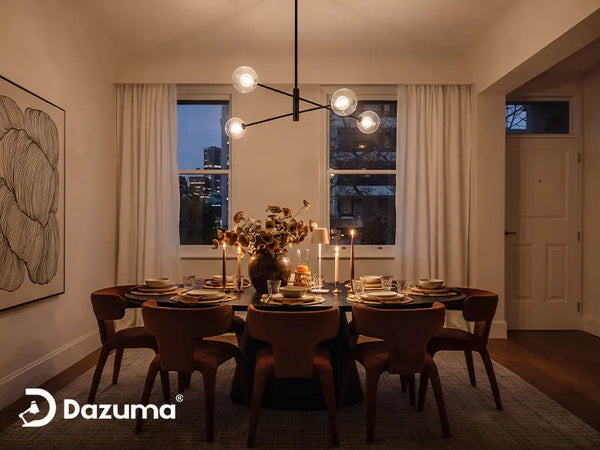
Hanging height is where many chandelier guides become confusing. A better rule is to focus on clearance, use, and sightline. Over a dining table, the bottom of the chandelier often works around 30 to 36 inches above the tabletop. This keeps the fixture close enough to feel connected to the table without blocking conversation.
In open walk-through areas, the bottom of the chandelier should usually clear the floor by at least 7 feet. In two-story foyers or stairwells, the fixture can hang lower within the vertical space, but it should still feel safe, balanced, and visible from the main viewing angles.
Do not use a percentage of ceiling height to decide chandelier height above a table. That can create unrealistic results. A 10-foot dining room ceiling does not mean the chandelier should sit only a few inches above the table. Furniture, clearance, and real-life movement are more useful guides.
Think About People First
A chandelier should not block faces at the dining table, crowd a walking path, or hang so high that it feels disconnected. Before final installation, imagine people sitting, standing, carrying food, walking through, and looking across the room.
If you prefer a softer classic mood without heavy crystal, Candle Chandeliers can offer a lighter traditional look.

Glass Vs Crystal Chandeliers
Glass and crystal can both look beautiful, but they do not create the same effect. Glass usually feels lighter, simpler, and often more budget-friendly. It can be a good choice for modern or casual rooms where you want shine without intense sparkle. Crystal is usually chosen for brilliance, refraction, and a more luxurious visual effect.
The practical difference is mood. Glass can blend into a room. Crystal wants to be noticed. If your room already has marble, polished metal, mirrors, or formal furniture, crystal can feel natural. If the room is relaxed, minimal, or rustic, a cleaner glass chandelier may feel easier to live with.
15 Common Crystal Chandelier Questions
1. Can you have a crystal chandelier in every room?
Yes, but not every room needs the same level of sparkle. Dining rooms, foyers, living rooms, bedrooms, and dressing areas can all work with crystal chandeliers when the size and style fit the space. In kitchens, bathrooms, or compact rooms, use smaller, simpler, or damp-rated options when appropriate.
2. Can you have too many crystal chandeliers?
Yes. Too many crystal chandeliers can make a home feel busy or overly formal. Use one main statement fixture per visual zone, then support it with simpler ceiling lights, sconces, or lamps.
3. What size crystal chandelier works for a 12x12 room?
For a 12 ft by 12 ft room, a 24-inch-wide chandelier is a useful starting point. Go slightly smaller for low ceilings or dense designs, and slightly larger for open frames or taller rooms.
4. How do I choose a crystal chandelier for each room?
Start with the room’s purpose. Dining rooms need table-focused light. Bedrooms need softness and clearance. Foyers need vertical presence. Living rooms need balance with seating and other lighting layers.
5. What is the rule for chandelier size?
A common room formula is length plus width in feet, converted to inches for chandelier diameter. For dining tables, use about 1/2 to 2/3 of the table width. Then adjust for ceiling height and fixture weight.
6. How do I know if a chandelier is too big?
It is probably too big if it overwhelms the room, blocks views, hangs too close to walls, crowds furniture, or makes the ceiling feel lower than it is.
7. How high should a crystal chandelier hang?
Over a dining table, start around 30 to 36 inches above the tabletop. In open areas, keep the bottom of the fixture around 7 feet or more above the floor for comfortable clearance.
8. What size chandelier works for a wide table?
Choose a chandelier about 1/2 to 2/3 of the table width. For a 40-inch-wide table, something around 20 to 26 inches wide is usually a reasonable range, depending on the style.
9. What size chandelier works above a sofa seating area?
For a sitting area, size the chandelier to the seating group rather than the sofa alone. A chandelier should visually center the arrangement while leaving enough headroom if people walk under it.
10. Does a chandelier need to be centered in the room?
Not always. Center it over the most important feature: the dining table, seating group, bed, or entry axis. Furniture-centered placement often looks better than strict room-centered placement.
11. How far down should a chandelier hang over a bed?
Use generous clearance. If the chandelier hangs over the bed center, make sure it does not interfere with sitting up, changing bedding, or walking around. In many bedrooms, a lighter semi-flush or compact chandelier is safer than a long drop.
12. What size crystal chandelier works with 9-foot ceilings?
Nine-foot ceilings can usually handle a chandelier, but avoid overly tall designs in walk-through areas. In dining rooms, the table gives you more freedom because people are not walking directly below the fixture.
13. How big should a chandelier be for a 20-foot ceiling?
A 20-foot ceiling usually needs a larger or taller chandelier to avoid looking lost. Consider multi-tier or vertical designs, especially in foyers, stairwells, and great rooms.
14. Are crystal chandeliers still in style?
Yes, especially when the design feels edited. Modern crystal chandeliers often use cleaner frames, fewer unnecessary details, and warmer light to keep the look current.
15. Which is better, glass or crystal?
Crystal is better when you want sparkle, refraction, and a more luxurious focal point. Glass is better when you want a lighter, simpler, or more casual look. Neither is always better; the room decides.

Choose Crystal For Sparkle, Glass For Lightness
Crystal draws attention and creates a stronger focal point. Glass is often easier to blend into everyday rooms. The better choice depends on whether you want the chandelier to lead the room or quietly support it.
Buying Checklist
- Room size: Use the length-plus-width formula as a starting point.
- Furniture below: Size dining chandeliers to the table, not just the room.
- Ceiling height: Keep walk-through clearance in mind.
- Visual weight: Dense crystal designs feel larger than open designs.
- Light temperature: Warm bulbs usually make crystal feel softer and more flattering.
- Cleaning access: Choose a design you can realistically dust and maintain.
- Style match: Repeat finishes or shapes elsewhere so the chandelier feels connected.

Final Advice
A crystal chandelier is worth choosing carefully because it changes the room even when the light is off. Start with the room’s function, then check size, hanging height, ceiling clearance, style, and maintenance. If the chandelier is over a table, relate it to the table. If it is in a foyer or stairwell, relate it to the vertical space. If it is in a bedroom or living room, relate it to comfort and sightlines.
Most mistakes come from choosing by sparkle alone. A chandelier can be stunning in a showroom and still feel wrong at home if the scale, height, or room style does not fit. Use the formulas, but do not let formulas replace judgment. The right crystal chandelier should feel like it belongs there, creating a soft glow, a clear focal point, and a little everyday luxury without making the room feel crowded.
When you are ready to compare styles, start with Crystal Chandeliers, then narrow by room, ceiling height, and the level of sparkle you want. That is the simplest path to a chandelier that looks beautiful today and still feels right years from now.